
Evolution of Iranian Military Aviation: From the 1979 Revolution to the 2020 Arms Embargo - Part Two
Military Watch Magazine Editorial Staff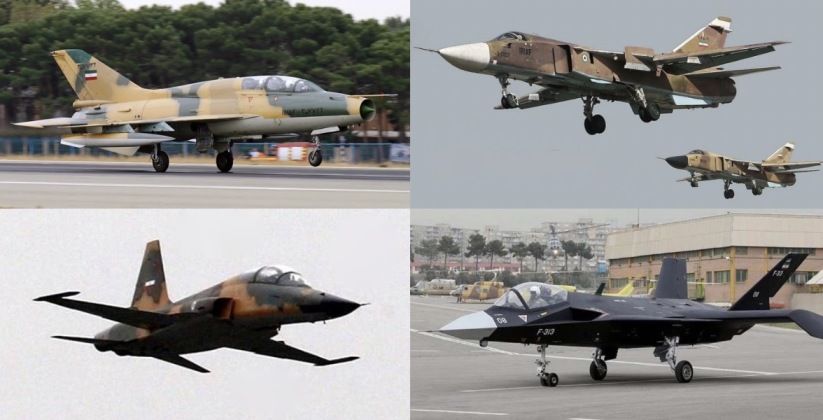
Iranian J-7, Su-24, Qaher-313 and Kowsar (clockwise from top left)
Continued from Part One
The 2010s not only saw a period of growing tensions with the United States, but also a greater willingness on the part of Russia to cooperate militarily with Iran. Reasons for the latter development included a change in administration in Russia with Vladimir Putin becoming president in 2012, a common interest in countering Western threats to Tehran and Moscow's mutual ally Syria, and the growing political rift between Russia and the Western Bloc nations after the Western-backed overthrow of Ukrainian government and resulting crisis and ciivil war in the country. China by this time had also begun to offer a range of advanced combat aircraft for export, including the JF-17 and superior J-10 single engine lightweight jets and the JH-7 strike fighter - although no medium or heavyweight Chinese platforms with an air to air capability were offered for export. Due to a United Nations arms embargo imposed on Iran in 2006, which had been drafted by the Western members of the UN security council over the country's pursuit of nuclear weapons, neither China or Russia was able to openly export combat aircraft to the country. The signing of the Joint Comprehensive Plan of Action (JCPOA) nuclear deal in 2015 by Iran and the permanent UN Security Council members, as well as Germany which was also allowed to participate, stipulated that Iran would have all UN restrictions on its arms imports lifted in October 2020.
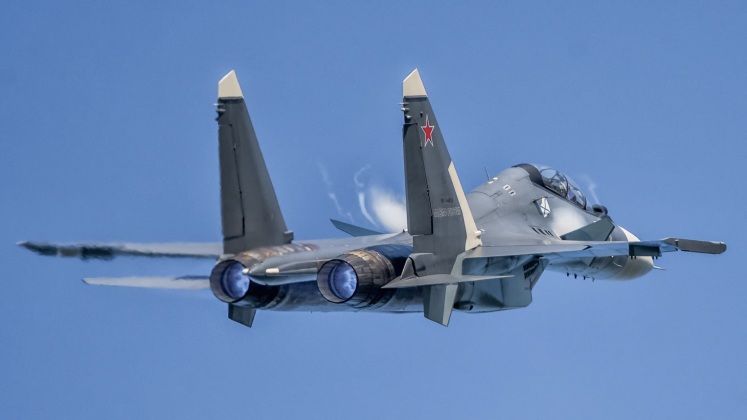
Iran reportedly entered into negotiations with Russia for the licence production of Su-30SM '4+ generation' heavyweight fighters in the country shortly after the JCPOA was signed, with unverified reports indicating that the country had also shown a strong interest in both the Chinese J-10 lightweight platform and the Russian Su-57 next generation fighter. Awaiting the JCPOA-stipulated lifting of the arms embargo, Iran's own defence sector would accelerate the development of an indigenous fighter jet which it had been pursuing for over a decade. Images of a number of prototype aircraft had been released - all close derivatives of the American provided F-5E which was the lightest and least complicated jet in the Iranian inventory. The F-5 was considered light by the standards of third generation aircraft, but next to fourth generation designs such as the J-10 or F-16 it could be considered a 'very light' fighter with a much smaller radar, weapons payload and range. Iran nevertheless unveiled its first F-5 derived design to go into serial production in 2018, the Kowsar, which it claimed featured fourth generation level avionics, electronic warfare systems and sensors. Given the Iranian defence sector's extensive experience working with fourth generation technologies, its tendency towards reverse engineering and its access to Chinese and Korean support, this claim was likely to be true.
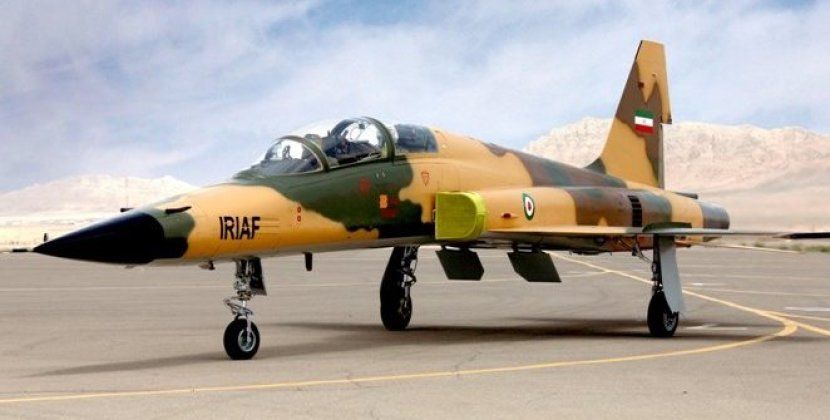
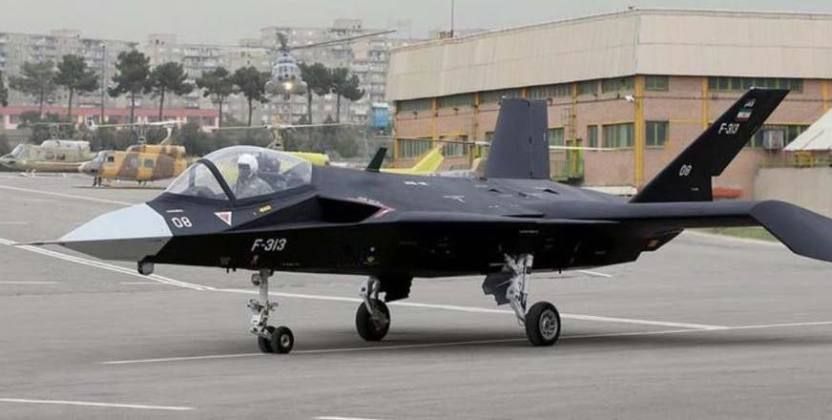
A major weakness of the Kowsar design was its lack of modern air to air missiles comparable to the Chinese PL-12 or Russian R-77 or to the AIM-120 platform used by the United States and its regional defence clients. A lack of modern air to air missiles was a major issue across the Iranian Air Force, with only two of seventeen fighter squadrons, the F-14 squadrons, equipped with active radar guided long range air to air missiles. While Taiwan had modified its F-5 aircraft to carry an indigenous missile with similar capabilities, the Sky Sword II, and Germany, Greece and Singapore had integrated the AIM-120 onto their F-4 and F-5 jets, Iran had failed to do so with either foreign or indigenous missiles for its F-4s, F-5s, J-7s, MiG-29s or its Kowsar fighter. This shortcoming meant that a reliance on foreign aircraft was unavoidable. With Iran continuing development of the Kowsar program, and making parallel investments in the Qaher-313 program which reached a non-flight prototype stage and an unnamed program for a heavier fighter, the possibility remains that it will either acquire a licence to integrate Chinese air to air missiles onto its indigenous fighters or that it will miniaturise the Fakour 90 missile to allow it to be carried by normal sized fighters rather than the F-14 alone.
Speculation regarding the kinds of fighters Iran intends to purchase after October has been widespread, but the Chinese J-10C '4++ generation platform' has presented a particularly attractive option due to its low operational costs and maintenance requirements and its extremely high level of sophistication. The fighter entered service in China in 2018 and benefits from a wide range of next generation technologies including three dimensional thrust vectoring engines, an AESA radar, stealth coatings, a powerful IRST, a high composite airframe and helmet mounted displays. What is particularly outstanding about the aircraft are its missiles, with the PL-15 long range platform capable fo engaging targets 250-300km away - almost triple the range of the AIM-120C which is the primary platform used by the U.S. and its allies, and using an AESA radar for guidance rather than a passive radar which is used by all American missiles. The PL-10, deployed for short range engagements, can pair with the J-10C's helmet mounted display to engage targets at much more extreme angles than rival missile designs such as the Russian R-73 and French Magic.
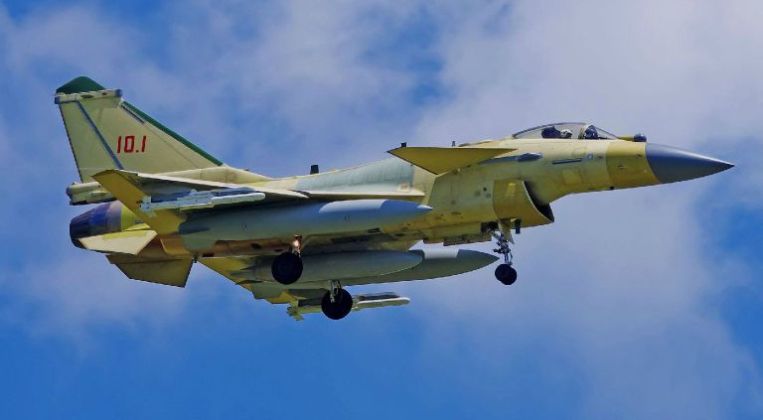
While the J-10C is a frontrunner to modernise the Iranian fleet, other competing designs include the Russian Su-30SM, Su-57 and MiG-35 - all of which are from different weigh ranges to the J-10 and could be acquired alongside it. It remains uncertain whether Iran's acquisitions of foreign jets will come at the expense of its domestic defence sector, but it has been reported that there is a fierce competition over funds with some in the military leadership advocating a greater emphasis on domestic production even after the arms embargo is lifted. It has also been speculated that Iran could seek to acquire an airborne early warning system, possibly the Chinese KJ-500, to coordinate the defence of its airspace and provide a force multiplier to new fighter squadrons. Ultimately the future of Iranian military aviation remains highly uncertain, as does the fate of its three ongoing fighter programs, but it is likely that the country's air force will be strengthened considerably over the coming decade as the Tehran both further cements defence ties with Moscow and Beijing and as China emerges as a world leader in the field of military aviation able to supply world leading technologies to its export clients.
