
Milestone for Iranian Military Aviation? Implications of the Kowsar Fourth Generation Fighter’s Entry Into Mass Production
Military Watch Magazine Editorial Staff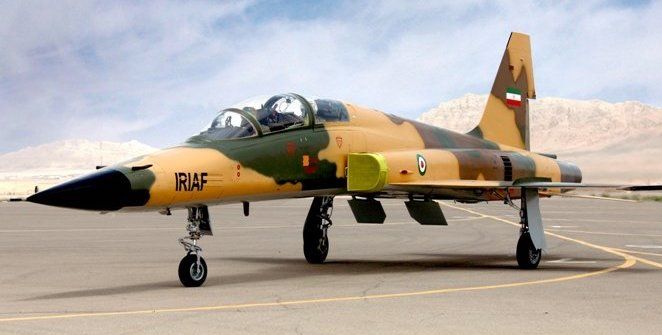
Iranian Air Force Kowsar Light Fighter
Following the unveiling of the Kowsar fourth generation twin engine light fighter on August 22nd, the Iranian military has reportedly put the new aircraft into mass production - marking a considerable milestone in the development of the country’s military aviation. While Iran has developed a number of indigenous fighter designs in the past, most prominently including the Saeqeh which closely resembled the Kowsar but made use of twin tail fins rather than a single one, the country has shown considerably more faith in the capabilities of the new design - hence it becoming the very first to enter large scale production. The fighters will provide a much needed reinforcement to the Iranian fleet, which in the past forty years, other than relatively small orders for Soviet MiG-29 and Chinese J-7 fighters in the Cold War’s final years, has seen few new additions to its fleet.
Speaking at a ceremony marking the launch of the Kowsar’s mass production, Iranian Defense Minister Amir Hatami stated: "Soon the needed number of this plane will be produced and put into service with the Air Force." The number of fighters expected to be manufactured remains uncertain, but if the fighters is as capable as the military has claimed in the past then production of over 100 jets, possibly many more, remains likely. The beginning of mass production coincided closely with renewed U.S. economic sanctions against the Islamic Republic, and can be interpreted as a sign of Tehran’s defiance amid growing tensions with the Western Bloc. Minister Hatami stated regarding the jet’s entry into service: "Today, we declare proudly that we spare no effort in obtaining peaceful defensive technologies to defend our national security, the values of the Islamic Revolution, and the boundaries of our country."
The Kowsar’s airframe appears to be closely derived from the American F-5E Tiger, several hundred of which were acquired by the Iranian Air Force under the Pahlavi dynasty during the Cold War - alongside heavier and more elite F-4E and F-14 air superiority fighters. The F-5 airframe’s versatility and its ability to incorporate advanced upgrades has led a number of countries to continue to rely on the jet into the 21st century, with a number of modern air forces using the jet including Singapore, Taiwan, Switzerland, Thailand and South Korea. The Swiss Air Force has notably expressed a preference for the upgraded F-5 over the fourth generation F-16 Fighting Falcon due to the Tiger’s far lower maintenance needs and very similar combat capabilities. Should Iran be manufacturing the Kowsar as an advanced derivative of the F-5, possibly even integrating advanced technologies reverse engineered from the F-14 or MiG-29, the fighter could well be a force to be reckoned with and play a key role in the country development into a major aerial power. Given Iran’s interest in acquiring Russian Su-30 air superiority fighters in large numbers, the Kowsar could well be intended to be fielded as a lighter compliment to the elite jets.
