
A Look at Iran’s New Kowsar Fighter; A Revolutionary Combat Jet or a Modernised Iteration of an Older Design?
Military Watch Magazine Editorial Staff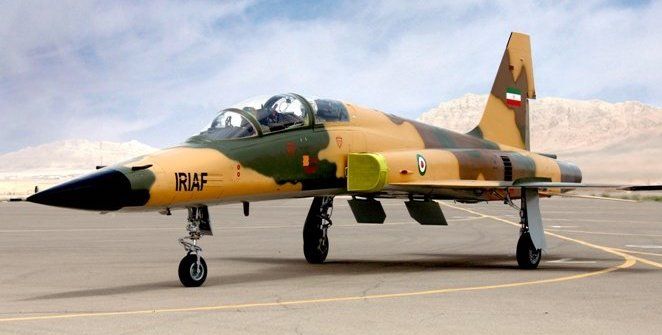
Iranian Kowsar Light Fighter
On August 22nd the Iranian armed forces revealed a new fighter jet, the Kowsar, which was reportedly a fourth generation combat platform manufactured entirely indigenously. While the fighter drew considerable attention worldwide, with several sources referring to it as the country’s first ever domestically manufactured combat jet, a closer look at the platform’s origins and its capabilities give a number of interesting revelations regarding the state of Iranian military aviation. In fact the Kowsar is far from Iran’s first fighter jet - with the similar looking Saeqeh having made use of an almost identical airframe, officially held its first flight in 2004 and entered service from 2007. Much as the Kowsar is closely derived from the Saeqeh, so too is the Saeqeh a close derivative of the U.S. F-5E Freedom Fighter - a Vietnam War era third generation fighter exported to Iran alongside the heavier and more capable F-4E Phantom, and later the elite F-14 Tomcat. Iran received almost 300 F-5 fighters, 166 of which were of the elite E variant, and though older variants were lated sold second hand to South Vietnam the Freedom Fighter played a critical role in holding the line against the vast Iraqi air fleet during the Iran-Iraq War. Key to the light fighter’s success, particularly compared to the more complex and heavier F-4 and F-14, was its simplicity and low cost - which made maintenance and the procurement of parts for the widely used fighter relatively simple.
With Iran seeking to develop combat jets domestically, the country’s lack of experience in the field and poor industrial base meant that the F-4E, a high end platform which had entered service in the U.S. military in 1965, was far too complex to consider reverse engineering - let alone the elite F-14 Tomcat which until the advent of the fifth generation was the most complicated and high maintenance Western fighter in service. The F-5 however proved an ideal candidate for reverse engineering, and the Saeqeh and earlier but less successful Azarakhsh built on the aircraft’s capabilities, with the former entering service in considerable numbers and considered a fully combat capable jet. The Saeqeh made use of twin rather than a single vertical stabiliser - much like the American YF-17 and F-18 Hornet which were themselves heavily derived from the F-5 design. The fighters also boasted new wing strakes and square jet intakes, and their entry into service was a key milestone for Iran’s military aviation.
Despite its advancements on the F-5E jets sold to Iran, the Saeqeh nevertheless lacked the capabilities of other fighters with a similar origin in service with the United States and its allies, including the F-18C Hornet and the heavily upgraded F-5E jets in service in Singapore, Taiwan and to a lesser extent in Switzerland and Thailand. New avionics, heads up displays, full glass cockpits and beyond visual range air to air missiles were among the key new features which allowed the F-5 design to remain viable - most of which Iran’s own F-5 derived fighter lacked. In particular, the ability to deploy AIM-120B air to air missiles with a 75km engagement range - and in the case of Taiwan’s F-5 fleet the use of longer ranged indigenous Sky Sword II air to air missiles, has been key to the success of the fighter's life extension programs - an asset Iran lacks entirely. While the Saeqeh’s airframe was formidable, it appears to be armed only with visual range missiles derived from the U.S. AIM-9 Sidewinder and guided bombs - seriously hindering its prospects in air to air combat - allowing hostile jets to engage it at considerable ranges while leaving it unable to retaliate.
The new Kowsar fighter, while incorporating a number of state of the art features including the use of heads up displays, digital military data networks, multi purpose digital monitors, ballistic calculation computers, smart mobile mapping systems and new radar and avionics systems, nevertheless represents not an entirely new fighter design - but rather a further development of the F-5 design building on the success of the Saeqeh. With the fighters estimated to be manufactured at an extremely low cost of $5 million per aircraft, possibly much less should it enter mass production, Iran may well seek to acquire the Kowsar in larger numbers than it did the Saeqeh - making it the prime light fighter for its air fleet. While the country’s F-14 fleet and Soviet built MiG-29 twin engine jets will continue to for the elite of the Iranian air fleet, with the fast and higher flying F-4 Phantoms largely being allocating anti shipping roles rather than air superiority, the Kowsar could well form the mainstay of the country’s light multirole combat fleet in a complementary role to the to the more sophisticated foreign built platforms. Indeed, with Iran reportedly considering acquiring the Russian Su-30 air superiority jets in large numbers, the Kowsar could well be the ideal light complement to the elite heavy fighter - much as the Indonesian F-16 and in future the India Tejas are set to fulfil a complementary role to Su-30 jets in their own fleets. The key question remains however as to whether Iran will be able to develop sophisticated munitions for its new fighter, in particularly beyond visual range air to air missiles, the lack which was notably a key weakness of the Saeqeh which seriously restricted its ability to engage light jets deployed by rival powers such as the U.S. F-18 or the F-16 widely fielded by Arab Gulf states and Israel.
