
$400 Billion China-Iran Deal Could Pave Way For J-10C Fighter Sales: Why Firebird Jets Are the Best Choice For Iran
Military Watch Magazine Editorial Staff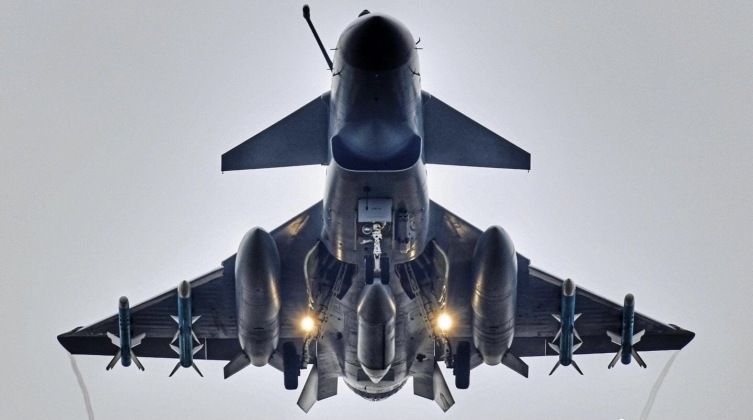
J-10C
On April 3rd China and Iran signed a $400 billion deal for extensive Chinese investments in the Middle Eastern country over 25 years in exchange for oil sales. The deal follows a prior Sino-Iranian military and economic pact signed in July 2020, and comes as the U.S. has sought to prevent Iran from exporting oil with extensive unilateral economic sanctions and offensive actions against Iranian merchant shipping. It also notably follows the expiration of a UN arms embargo on Iran in October 2020, which has long been expected to be followed by major arms sale to the country. While Iran’s defence sector has become relatively self reliant, and has been able to acquire most of what it does not produce itself from North Korea which ignored the arms embargo, a notable weakness has been its inability to acquire modern fighter aircraft. The country is overwhelmingly reliant on obsolete third generation aircraft acquired in the 1970s from the United States, with a small number of early fourth generation fighters in service including two MiG-29A and one Su-24 squadrons from the Soviet Union and two indigenously upgraded American F-14A fighters. As a result of its requirements for a more capable combat fleet, China’s J-10C lightweight ‘4++ generation’ fighter has been highlighted as a leading potential candidate to modernise the Iranian Air Force.
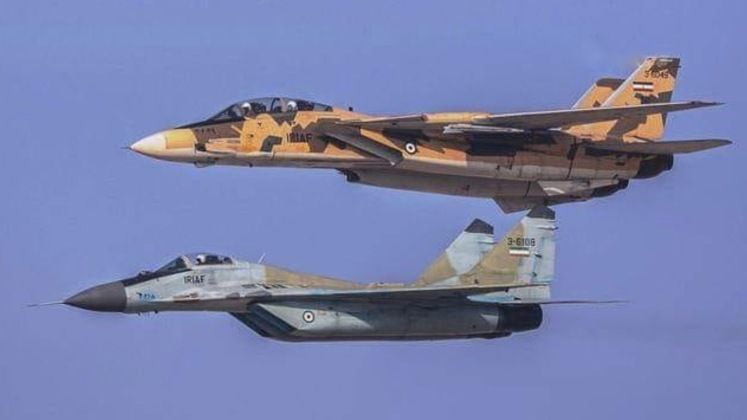
Although Iran acquired fighter aircraft from Russia in the Soviet era, it is expected to look to China in future for new acquisitions. This has in part been for political reasons as Russia has been seen to frequently make major concessions to the Western Bloc and to Israel regarding its arms sales to the Middle East since the collapse of the USSR. Examples have included freezing of a deal to provide Iran with more MiG-29s and possibly MiG-31 aircraft under Western pressure in the early 1990s, freezing of S-300 air defence systems Iran had ordered in the early 2010s under the Dimitri Medvedev administration, and cancelling plans to provide Tehran’s close defence partner Syria with S-300s. Iranian media has also reported that Russia provided Israel with valuable intelligence including sensitive codes for Syria’s air defence network - which allowed the Israeli Air Force to more easily strike targets in the country. Should these claims represent the view of Iran’s military intelligence, it would seriously undermine the appeal of acquiring Russian armaments.
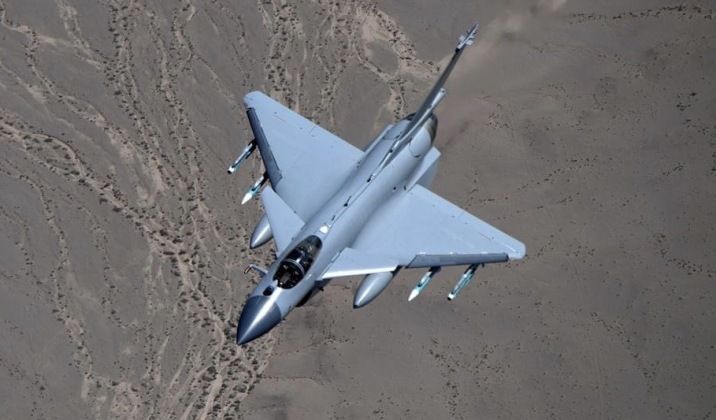
Aside from political considerations, the J-10C is arguably a much better fighter for Iran than anything Russia can offer. The single engine aircraft has a much lower operational cost than heavyweight jets like the Su-35 or Su-34, and it benefits from far superior air to air missile classes and more advanced avionics and electronics. Moreover, the J-10C is produced on a much larger scale than any Russian fighter with over 200 having entered service in three years since 2018. Comparing this to its closest Russian competitor the MiG-35 - only around a dozen of the Russian jets have entered service since they were first delivered to the air force in mid-2019. The J-10C is arguably the most capable single engine fighter ever developed, and benefits from a defence industrial base with much more experience with next generation AESA radar technologies and network centric warfare capabilities than that of Russia. Its PL-15 long range active radar guided air to air missile boasts a much longer range than its competitor the American AIM-120 or the Russian R-77, and uses an advanced AESA radar where the U.S. and Russian designs use PESA radars.
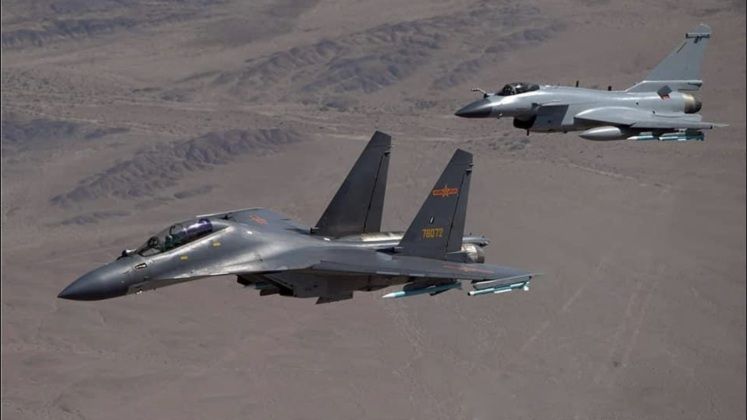
The J-10C retains a high operational altitude, endurance and speed for a light single engine jet, and is cheap to operate meaning it could help the Iranian Air Force to reduce operational expenditures if replacing an older more maintenance intensive aircraft such as the F-4. Iran’s closer economic ties to China could pave the way for a J-10C export contract and help finance such a deal. This would not only provide China with a foothold in Middle Eastern military aviation markets, but would also provide an opportunity to acquire data to improve the design in a theatre with higher tensions and closer run ins with hostile Western aircraft. Although the J-10C has already proven highly formidable during combat testing, such an opportunity would be valued. Iran may well eventually seek to acquire other combat aircraft classes alongside the J-10C, possibly including lighter Sino-Pakistani JF-17 Block 3 jets which are significantly cheaper but yet to be offered for export. The J-10C’s only major shortcoming is that its relatively short range, although quite long for a single engine fighter, makes it less well suited for power projection operations too far beyond Iranian borders than heavier aircraft such as the J-16 or Russian Su-34. Considering the current overwhelmingly defensive orientation of the Iranian fleet, and its reliance on drones for most offensive operations, this is not likely to be seen as a major drawback.
