
U.S. Completes First B-21 Nuclear-Capable Stealth Bomber Prototypes: First Flight Delayed to 2022
Military Watch Magazine Editorial Staff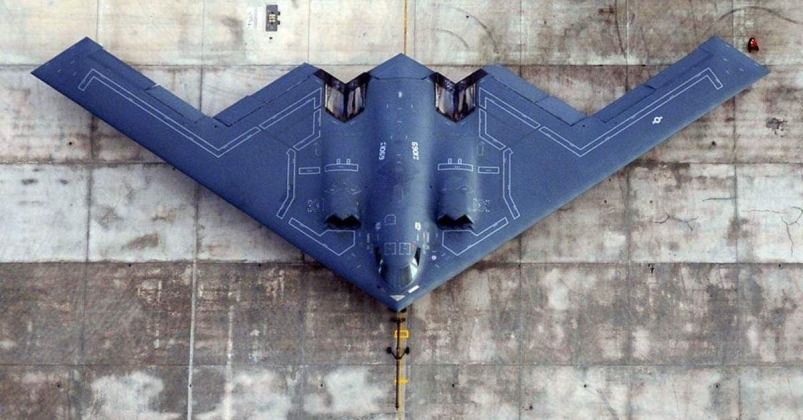
B-2 Spirit Stealth Bomber
Following the announcement in July 2019 that construction of the first prototype B-21 Raider next generation stealth bomber had begun, the completion of the first prototypes was announced by the U.S. Air Force’s Assistant Secretary of the Air Force Acquisition, Technology & Logistics, Darlene Costello. She informed the House Armed Services Committee on June 8th that the aircraft had been finished at Northrop Grumman’s Air Force Plant 42 in Palmdale, California, but that the first flight of the new bomber had been delayed to 2022. The B-21 is are expected to achieve an initial operational capability by 2030 and to be fully combat ready by approximately 2035, with each estimated to cost $550 million. According to some sources, this figure may be the ‘off the shelf’ flyaway cost, and would not factor in research and development costs that could make the jets considerably more expensive. The first B-21 unit its expected to be based at Ellsworth Air Force Base in South Dakota, followed by further deployments at Whiteman Air Force Base in Missouri and at Dyess Air Force Base in Texas.
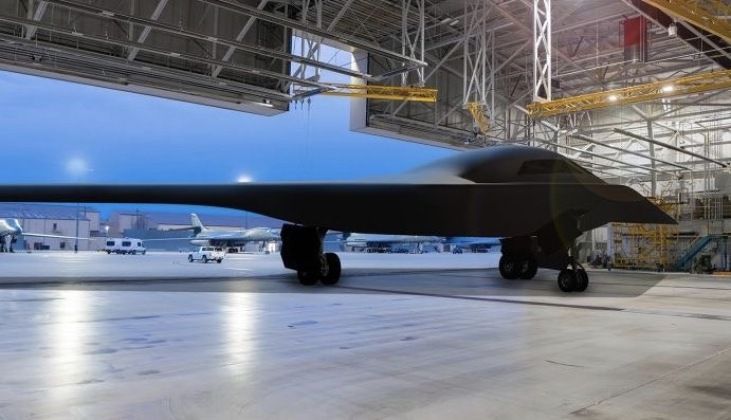
Estimates for the number of B-21 Raiders that will enter service have varied widely, with conservative estimates citing a figure of around 100 and others speculating that the production run could exceed 200 airframes to significantly expand the number of bomber squadrons in the U.S. Air Force. The aircraft will replace the B-1B Lancer and B-2 Spirit bombers in service, and serve alongside the venerable Vietnam War era B-52H which the Air Force intends to keep in service for several more decades to come. The B-21 is being built with an intercontinental range to be able to engage targets anywhere in the world. While the B-1B and B-2 were built with targets in the Soviet Union in mind, the B-21’s most challenging potential mission is expected to be penetrating Chinese defences to neutralise nuclear assets located in western China.
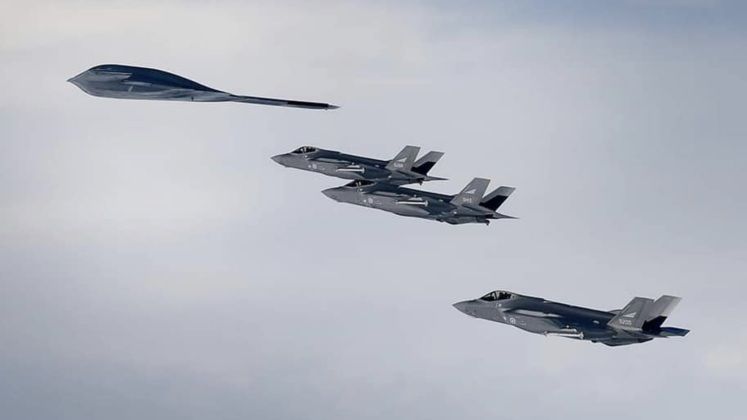
The B-21 will be the first Western bomber class to enter service since the 1990s, and is far from the only bomber program under development with China’s H-20 and Russia’s PAK DA being close competitors. The former is thought to have already been flying for some time, while the Russian program remains somewhat behind its American and Chinese competitors with the first prototype having begun construction in May 2020. Russia is currently manufacturing Tu-160M intercontinental range bombers for its fleet, which are widely considered the most capable in the world and use the most powerful engines of any military aircraft worldwide. The U.S. and Russia are the only countries that currently deploy intercontinental range bombers, and although China has the world’s largest bomber fleet its H-6 bombers which are currently in production are built exclusively for theatre operations with a focus on East Asia and are significantly smaller than the B-21, B-2 or Tu-160.
