
Taiwan Activates First F-16V Fighter Squadron Under 'Phoenix Rising' Program to Counter Chinese Mainland
Military Watch Magazine Editorial Staff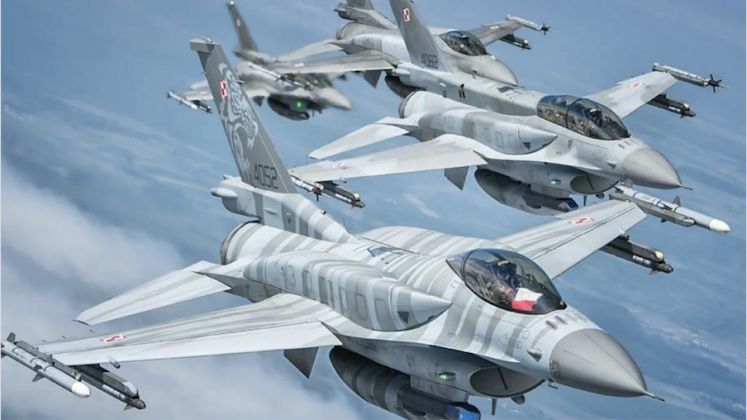
F-16 Fighters
Taiwan’s air force, officially called the Republic of China Air Force (ROCAF), has activated its first squadron of F-16V Fighting Falcon ‘4+ generation’ fighter jets. The unit is comprised of some of the oldest F-16 airframes in service anywhere in the world - F-16A Block 20 aircraft which are a design that has served since the late 1970s - but these have been upgraded to the F-16V standard domestically. The ROCAF received its first domestically upgraded F-16 in October 2018, with upgrades carried out by Taiwan’s state owned Aerospace Industrial Development Corporation (AIDC). In parallel to the upgrades, Taiwan has also developed indigenous sustainment facilities for its Fighting Falcons to conduct depot level maintenance and repairs - thereby forgoing the need to send the fighters to the United States for upgrades and repairs. The program to upgrade the F-16A fleet, known as Phoenix Rising, will cost an estimated $5.3 billion. It includes providing the F-16s with Northrop Grumman AN/APG-83 Scalable Agile Beam Radar, new mission computers, an improved electronic warfare suite, modern avionics and the ability to integrate precision guided weapons.
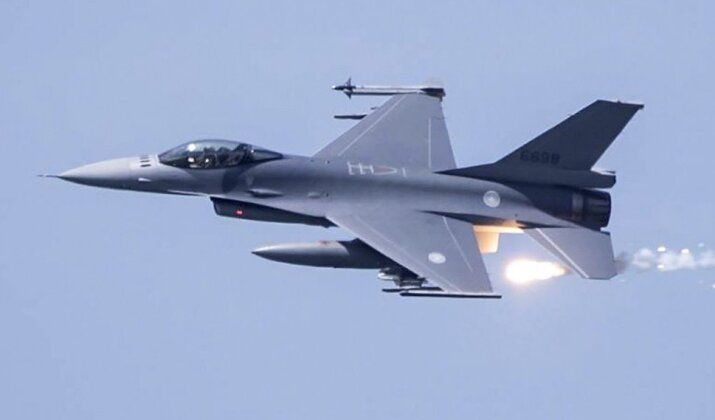
Taiwan received 150 F-16s in the 1990s, and while the F-16A has widely been retired in countries which operated them such as Israel, Egypt, and the U.S., only Taiwan, Pakistan and Venezuela remain as its only major operators. Although the F-16 has widely been derided as obsolete by experts in the U.S. and in allied states which also operate the aircraft, Taiwan is expected to rely much more heavily on the fighters in the coming decades than was originally anticipated when the Phoenix Rising program was initiated. This is largely because Taipei’s efforts to acquire F-35 fifth generation stealth fighters from the U.S. failed, and although the F-35 was the natural successor to the F-16 the U.S. was concerned that widespread support for the Chinese mainland on Taiwan would lead to its technologies being lost through espionage. As a result Taiwan purchased 66 F-16 Block 70 fighters under an $8.2 billion contract in 2019 - with these advanced F-16 variants often themselves referred to as ‘F-16V’ due to their considerable similarities. The newer F-16s will have lower maintenance requirements and use newer engines and materials than the upgraded F-16As. The age of the older airframes is thought to have contributed to a high crash rate, with the entire fleet grounded in November 2020 following a major accident.
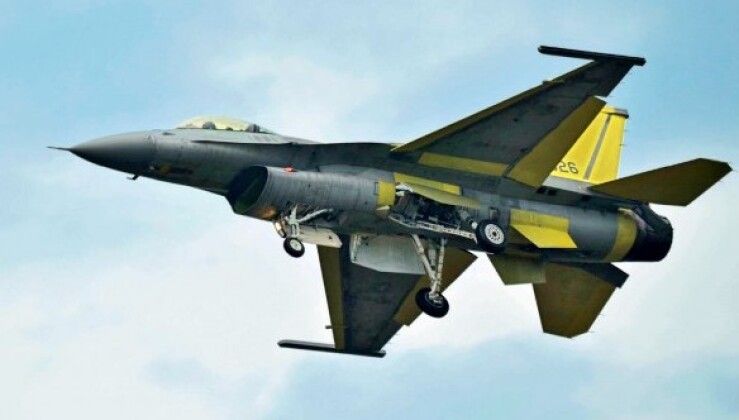
Until the arrival of the first of the newly built F-16s, which is scheduled for 2023, the F-16Vs upgraded under Phoenix Rising will be Taiwan’s most capable fighters. 22 modernised fighters are now in service under the 4th Tactical Fighter Wing at Chiayi Air Force Base in southwestern Taiwan, and although the official ceremony for their entry into service has not been held they are already ready for combat operations. The aircraft use the AN/APG-83 active electronically scanned radar, which replaced the older mechanically scanned radar initially delivered with the F-16A and provides a significantly reduced radar signature and a much needed enhancement to its survivability and situational awareness. The new radars could potentially allow the aircraft to deploy more modern AIM-120D air to air missiles in future, with the current AIM-120C missiles considered effectively obsolete in the face of the elite fighter squadrons of the Chinese mainland.
Although Rising Phoenix has improved the F-16’s capabilities markedly, the aircraft are still overwhelmingly outmatched by the Chinese People’s Liberation Army, which fields much longer ranged air to air missiles with superior guidance systems as well as its own stealth fighters and much more sophisticated ‘4++ generation’ fighter designs such as the J-10C and Su-35. Without the F-35 the qualitative gap between the mainland and Taiwan, which are still technically at war, remains wide and will continue to grow rapidly. Almost all of Taiwan, including Chiayi Air Force Base, is within range of surface to air missile systems on the Chinese mainland which are designed to neutralise much faster and stealthier targets such as F-22 fighters or hypersonic missiles, meaning the old F-16's survivability will be very limited.
