
Taiwan Takes Delivery of First Domestically Upgraded F-16 Fighting Falcons - But Can it Make a Difference?
Military Watch Magazine Editorial Staff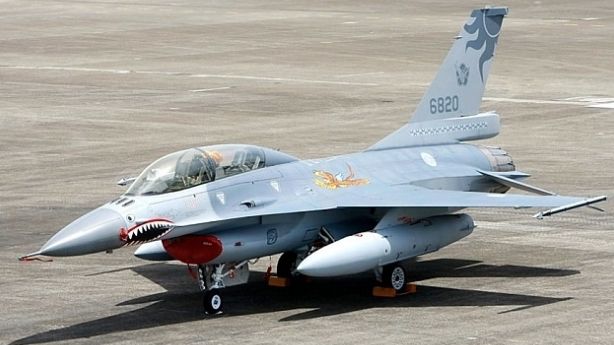
Taiwanese F-16A Fighting Falcon
Taiwan’s Air Force (officially the Republic of China Air Force, ROCAF), has take delivery of its first domestically upgraded F-16 Fighting Flacons, with plans for the entire fleet of U.S. built combat jets to receive indigenous enhancements amid both growing tensions with the Chinese mainland and the United States’ unwillingness to provide a next generation replacement to the aircraft. Approximately one third of the ROCAF’s combat fleet is currently comprised of F-16A/B fighters, the oldest variant of the design which as of 2018 has been in service for 40 years. The ageing single engine light fighter jets, while considerably outmatched by their Chinese counterpart the J-10 and China’s elite heavier platforms such as the J-11B and J-16, continue to play a critical role in Taiwan’s contingency plans for a war with the Chinese mainland - and as such continuous upgrades remain critical. The delivery comes shortly after the initiation of an upgrade program for Taiwan's indigenous Ching Kuo light fighters.
Upgrades to the F-16 fleet have been carried out by Taiwan’s state owned Aerospace Industrial Development Corporation (AIDC) - and the jets are reportedly able to meet the F-16V (Viper) Block 70 standard despite their age. Taiwan also plans to further develop an indigenous sustainment facilities for its Fighting Falcons to conduct depot level maintenance and repairs - thus forgoing the need to send the fighters to the United States for upgrades and repairs. While only a single fighter was delivered in October, AIDC plans to deliver three more F-16s by the end of the year - and is likely to go on to provide similar services to the entire fleet of approximately 150 fighters. The program to upgrade the fighters, known as Phoenix Rising, will cost an estimated $5.3 billion - and includes providing the Fighting Falcons with Northrop Grumman AN/APG-83 Scalable Agile Beam Radar, new mission computers, an improved electronic warfare suite, modern avionics and the ability to integrate precision guided munitions.
First unveiled in 2012, the F-16V is among the most capable variants of the Fighting Falcon ever designed - alongside the F-2 and F-16E. With the U.S. fleet over over 1,100 F-16 fighters increasingly obsolete in the face of the growing capabilities of near peer adversaries, the Viper was designed as an upgrade program to keep the aircraft viable against modern threats - at least in a supporting role for more advanced and survivable platforms such as the F-22 Raptor. The aircraft’s AN/APG-83 is an active electronically scanned radar, replacing the older mechanically scanned system, which will significantly reduce the Viper’s radar signature and provided a much needed enhancement to its survivability. While the ROCAF previously claimed its Mirage 2000 jets were the most advanced of the four fighter classes in its inventory - which also includes the F-5 and Ching Kuo, the upgrading of the F-16 fleet to the F-16V is likely to change this. Whether these upgrades will make any real difference for the balance of power in the Taiwan Strait remains to be seen, but given the latest munitions and combat jets China has been able to deploy - from PL-15 air to air missiles and the wide array of hypersonic surface to air missiles deployed by Chinese S-400 batteries to J-20 air superiority fighters, there remains a significant chance that the impact of the upgrade program will be negligible to non existent.
