
China’s Russian Su-35s vs. Taiwan’s American F-16V: Comparing the New Foreign Fighters in the Taiwan Strait
Military Watch Magazine Editorial Staff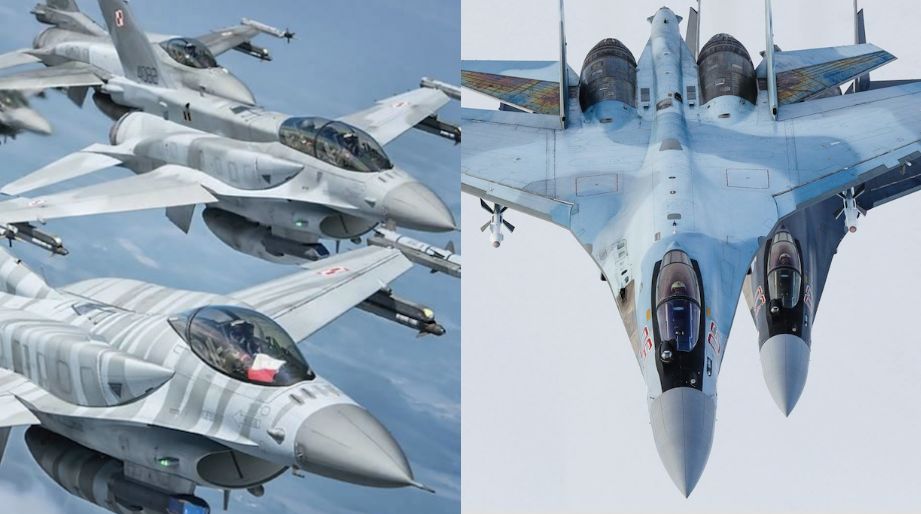
F-16 Fighting Falcons (left) and Su-35 Flankers
In 2014 China’s People’s Liberation Army (PLA) placed its largest order for foreign fighter jets in over a decade - a $2 billion contract for two dozen Su-35 ‘4++ generation’ air superiority fighters from Russia. The most capable fighters in the Chinese fleet has previously been the Su-30MKK, acquired from Russia in the late 1990s, and the indigenous J-16 strike fighter which reportedly entered service in 2013. Both of these fighters were considered ‘4+ generation’ jets - enhanced twin seat derivatives of the Soviet Su-27 Flanker design. The heavyweight design was intended for a high end air to air combat role, and had a long range, high manoeuvrability, high altitude ceiling and could accommodate extremely powerful sensors and a high weapons payload - all of which were inherited and improved on by subsequent derivatives.
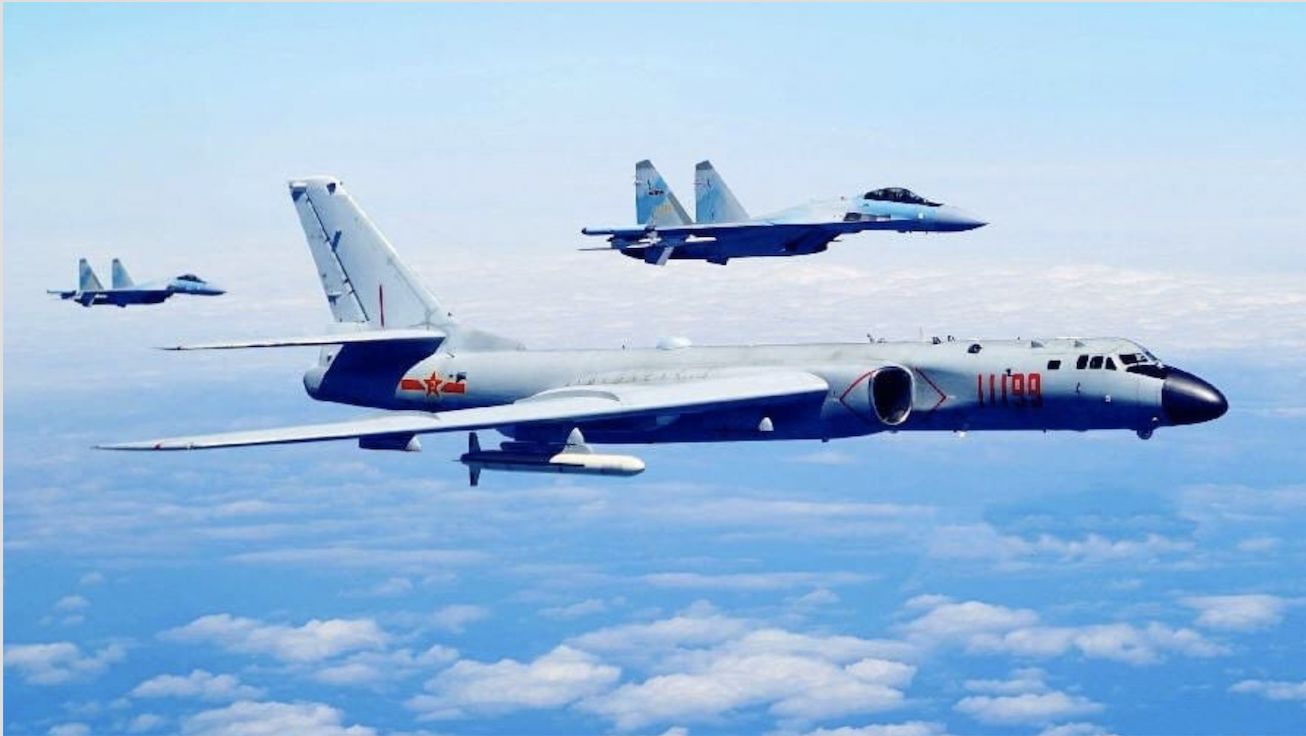
The Su-35 was considered the premier Russian fighter designed to go head to head with the U.S. Air Force’s elite F-22 Raptors, and boasted considerable enhancements over the original Flanker. The fighter boasted a new highly potent radar, the Irbis-E, higher use of composite materials for a lighter but stronger airframe, new AL-41 engines, an expanded weapons payload of up to 14 missiles, and new three dimensional thrust vectoring systems for unrivalled manoeuvrability. Changes to the airframe also resulted in the fighter’s radar cross section being reduced by over a third, while new engines provided greater thrust and superior efficiency and electronic warfare systems were significantly improved. The fighters have been deployed in Chinese service to carry out a number of patrols over the South China Sea, and many of the Su-35’s technologies acquired through licensed transfers are expected to be integrated onto the J-11D air superiority fighter.
Where the PLA has acquired a small unit of Su-35 fighters to complement the capabilities of new indigenous fighters, with the ‘4++ generation’ J-10C and fifth generation J-20 having entered service since in 2018 and 2017 respectively, the Republic of China Armed Forces (ROCAF) based on the other side of the Taiwan Strait have not resumed production of the indigenous F-CK Ching Kuo fourth generation fighters in modernised form and has instead elected to rely solely on F-16V fighters from the Untied States. While the analogue to the Flanker in the West was the F-15 Eagle, its high operational and acquisition costs meant that the U.S. and many of its allies came to rely primarily on the lighter and significantly cheaper F-16 Fighting Falcons. These single engine jets were not designed to go head to head with the elite of the Soviet fighter fleet such as the Su-27, and were considerably slower, had lighter and weaker sensors and lower weapons payloads, and were far more restricted in range and altitude than platforms from a higher and more elite weight ranges such as the Eagle and Flanker.
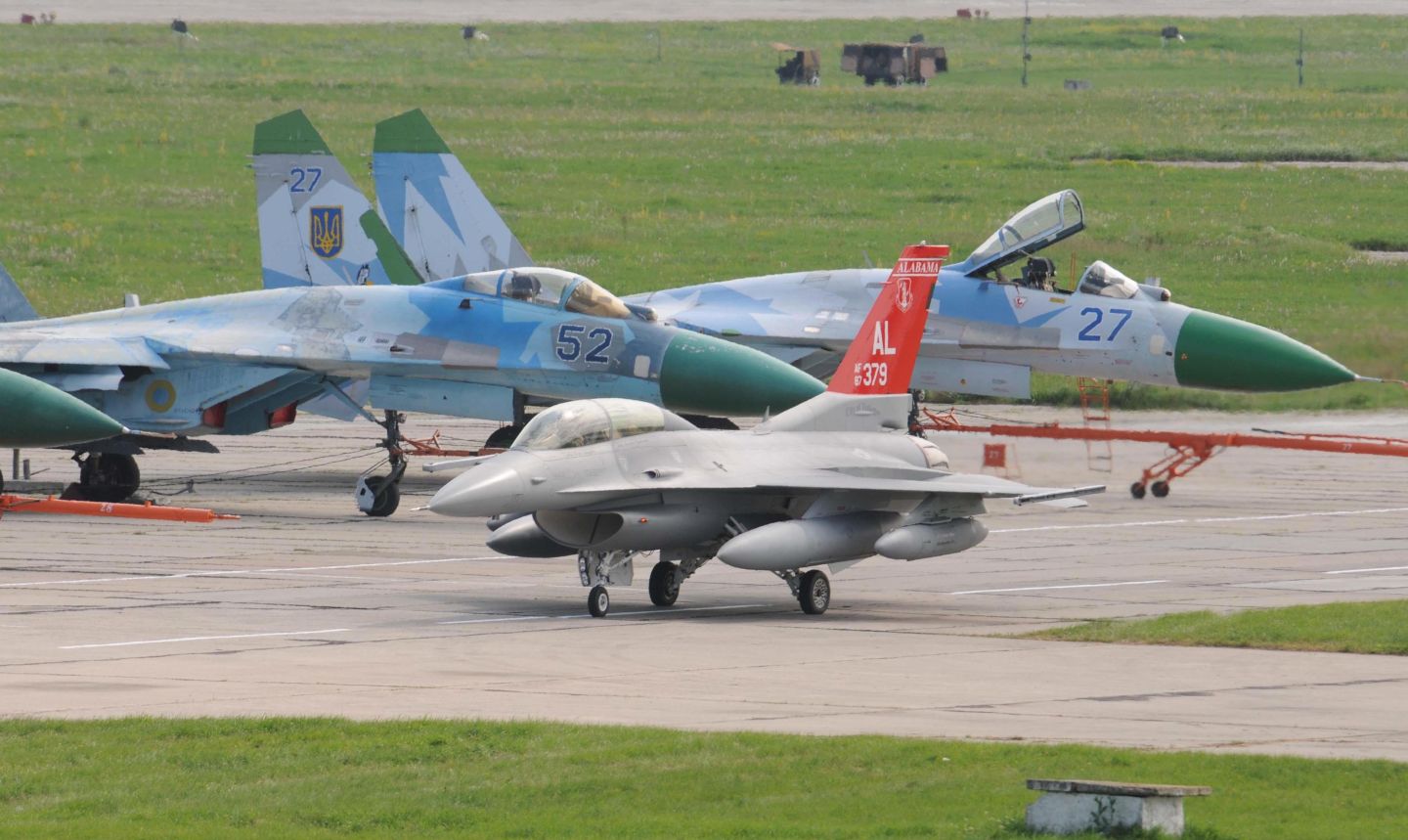
The F-16V represents a farmer partial upgrade over the original fourth generation design - lacking a new airframe, new engines a higher missile carriage, compatibility with new missile types or new features such as thrust vectoring engines. The fighter also inherits the same relatively high radar cross section of its predecessor, and unlike the Su-35 does not incorporate any stealth features. The benefits of the design, however, include a new active electronically scanned array (AESA) radar and new electronic warfare systems and avionics. While the fighter’s radar is powerful and highly sophisticated, it is limited in its capabilities by its small size due to the limited accommodation inside the fighter’s nose cone - unlike the F-35A and F-15X which can accommodate far heavier radars or the Su-35 with the heavyweight Irbis-E. Unlike more comprehensive enhancements to the F-16 design such as the F-2, F-21 and F-16E, which benefit from features such as high use of composite materials and new more powerful engines, the F-16V’s new electronic and radar systems serve to increase its weight relative to thrust and compromise manoeuvrability.
Should the F-16V be required to engage the Su-35 over the Taiwan Strait, a likely prospect in the event of the enhanced Flanker’s deployment in a cross straits war, the fighter would likely struggle to hold its own. The F-16 is restricted to deploying six air to air missiles where the Su-35 can deploy an arsenal over twice the size. The maximum engagement range of the fighter’s air to air missiles is approximately 105km using the AIM-120C, whereas the Su-35’s R-77 and R-27ER, ET and EA have ranges of 110km and 130km respectively. The Su-35 is also capable of deploying the R-37M hypersonic air to air missile with a considerably longer range, although it remains uncertain whether China has or plans to acquire these. The PLA has previously integrated its Su-30MKK fighters with indigenous PL-15 air to air missiles, with a range estimated at up to 200km, and it remains highly likely that the Su-35 will be deployed with the same missiles. Thus the fighter will comfortably outrange the F-16V. The power of both fighters’ sensors, and the relatively high radar cross sections of both jets even with the Su-35’s limited stealth capabilities means that both will be able to detect and track the other at will beyond the maximum range of their missiles - which advantages the Su-35 due to its longer engagement range.
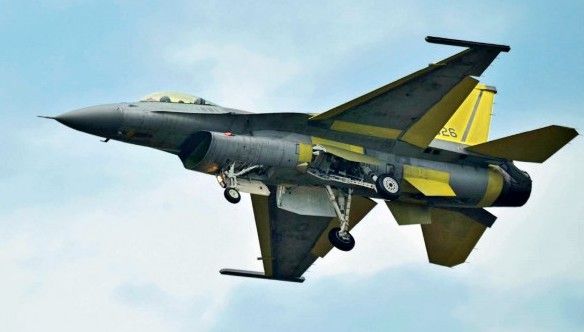
Should the fighters be able to engage one other at range, the Su-35 will benefit from its far superiority manoeuvrability - not only due to its higher thrust/weight ratio and the generally superior evasive capabilities of the Flanker design, but also due to three dimension thrust vectoring engines. These are designed to allow the fighter to evade enemy missiles far more effectively at extreme ranges. A number of Indian reports have given some inclination as to the effectiveness of these measures, with the country’s Su-30MKI fighters comfortably evading five attacks by AIM-120C missiles fired by Pakistani F-16s - despite the Indian jets’ weaker engines and two rather than three dimensional trust vectoring engines. The F-16V by contrast is rather poor in its manoeuvrability among F-16 variants, let alone compared to more advanced fighters such as the F-22 or Russian Flankers.
Should the F-16V engage the Su-35 in visual range combat, its disadvantages will be even more pronounced, as the enhanced Flanker’s edge in this field is overwhelming. Indeed, Western sources repeatedly indicate that the fighter would have an advantage even against advanced high end American jets such as the F-22 in visual range engagements, with its three dimensional thrust vectoring engines in particular coming to the fore by allowing the aircraft to perform formidable manoeuvres. For the relatively unmaneouvrable F-16V, even if operating with a significant numerical advantage, the Su-35 would almost certainly overcome it in visual range combat.
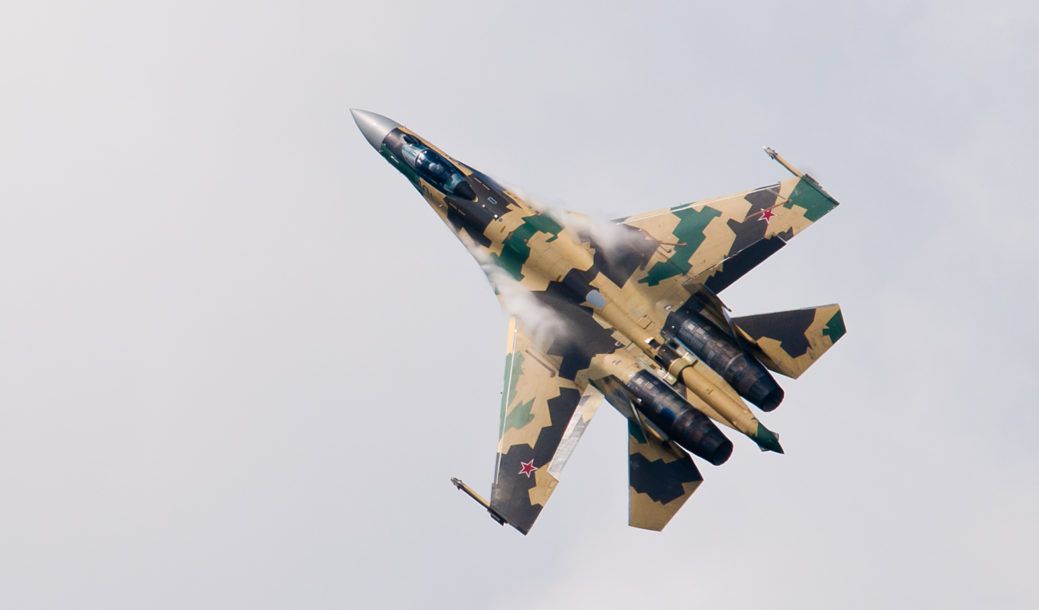
Ultimately while Taiwan is paying approximately 50% more per airframe to acquire the F-16V relative to the cost of the Su-35, the Flanker appears to surpass the lighter fighter’s combat capabilities by a significant margin across the spectrum. The lower operational cost of the F-16 can only partially compensate for this. Taiwan was previously denied access to more advanced American fighters which could fare better against the Su-35, such as the F-35B, due to the sensitivity of their technologies, and its investment in mediocre American jets as the future of its Air Force Isi set to only worsen its existing disadvantages relative to the PLA. This goes without mentioning the more advanced fighters deployed by the PLA such as the J-20 and upcoming J-11D - or the vulnerability of non-stealth airframes operating over the Taiwan Strait due to the range coverage of the PLA’s S-400 hypersonic anti aircraft missile batteries.
