
Why the U.S. is Willing to Sell F-16V Fighters to Taiwan - But Not the F-15 or F-35
Military Watch Magazine Editorial Staff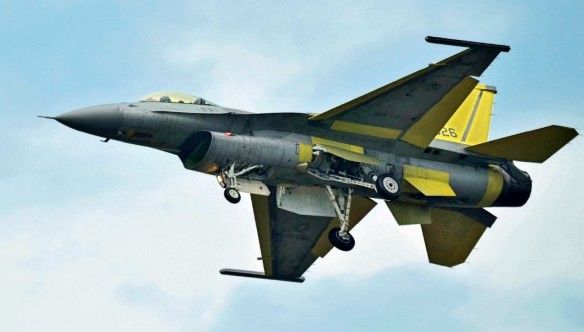
Republic of China Air Force F-16V
Following a number of reports that Taiwan was seeking to acquire high end heavy American combat jet, namely either an advanced derivative of the F-15 Eagle heavy air superiority fighter or the unspecialised by stealthy F-35 fifth generation light multirole fighter, Taipei has reportedly settled on acquisition of the F-16V as a less capable alternative. This notably came as a result of the United States’ reluctance to sell its longstanding ally other higher end combat jets, which was due to a number of factors relating to the security of its latest defence technologies. Equipment sales to to Taiwan have to take into account the possibility that the technologies could fall into the hands of the Chinese People’s Libation Army, which could occur by a number of means. Espionage from the mainland, which enjoys considerable sympathies among much of the Taiwanese population and is situated under 130km away, is just one possible way the could occur. Concerns were repeatedly raised by the United States regarding the potential for the sensitive technologies of the F-35B fighters sold to Taiwan being compromised by espionage - which was a key factor which led the U.S. to deny the sale.
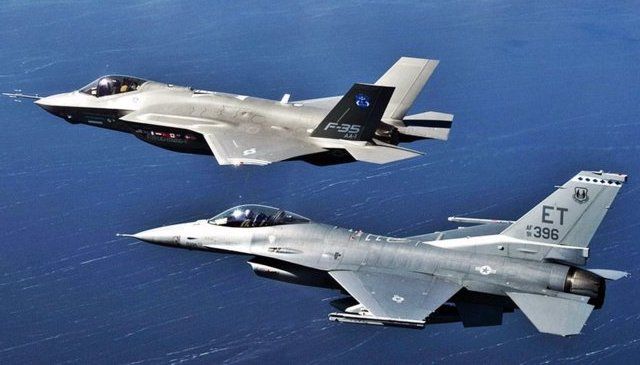
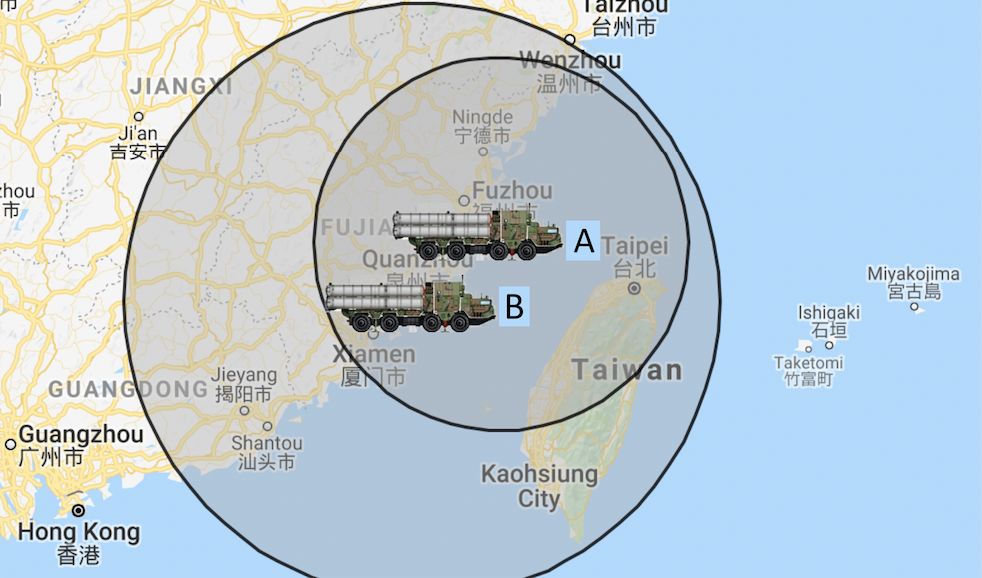
Another possibility would be that high end combat jets could fall into the active inventory of the PLA should Taiwan reunify with the mainland, which while it does not appear imminent at the moment remains a possibility looking on to the 2030s. This would effectively provide the People’s Liberation Army Air Force with top of the line American next generation combat jets for evaluation and reverse engineering - the information from which would almost certainly be shared with allies Russia and North Korea seriously undermining the jets' capabilities and their usefulness in a potential future war in the hands of either the United States military or its allies. A concern raised regarding the F-35 in particular, which applies less to an advanced F-15 variant, is that the fighter relies heavily on stealth capabilities and is built around an advanced radar cross section reducing airframe. China’s most advanced surface to air missile system, the S-400, retains a detection range of 600km against enemy aircraft, and while the F-35 cannot be detected at such ranges due to its advanced radar evading profile, at shorter ranges of under 250km, where it will almost certainly be operating, it will provide the PLA with ample opportunity to study its radar evading profile with their sensors and and over time obtain valuable data which will hep with the targeting of the F-35 in future wartime scenarios. Again, this information will almost certainly be shared with Russia and North Korea which will use it to better develop strategies and technologies to target American stealth aircraft with their own fighter jets and air defence platforms such as the S-400 and KN-06.
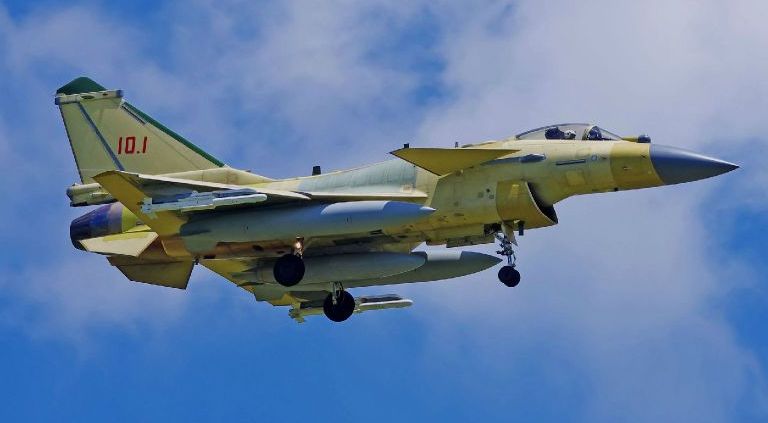
By contrast to the F-35 and high end F-15 variants, the F-16’s airframe does not represent a highly sensitive technology - even when upgraded to the F-16V standard. The Chinese People’s Liberation extensively study the design fo the Fighting Falcons operated by its allied neighbour Pakistan, with the airframe itself as well as the experience of Pakistani F-16 pilots reportedly playing a key role in the design of China’s own more advanced analogue the J-10 as well as the lighter export intended JF-17 fourth generation single engine platforms. Furthermore, former U.S. ally Venezuela operates almost two dozen F-16s and has developed close defence cooperation with both China and Russia - providing further opportunity to study the Fighting Falcon. Caracas for its part has on several occasions indicated its willingness to provide U.S. adversaries with F-16 technologies - at one stage even threatening to sell the Fighting Falcons to Iran. The engines of the F-16V are notably no more capable than those of the standard F-16 models operated by Pakistan - unlike the more capable F-16E sold to the United Arab Emirates Air Force and currently being marketed to India. While the F-16V’s electronic warfare and radar systems are high end, they are arguably no more capable, and in many ways are considerable inferior, to those of jets the PLA already operates - particularly new aircraft such as the J-10C and J-20.
Ultimately while China’s acquisition of the F-35 or an advanced F-15 variant would provide a key asset to the PLA and its allies and undermine the defence interests of the United States and its own defence partners, the F-16V, making use of an airframe over 40 years old which is already operated by Chinese allies, does not pose such a risk to the U.S. Taiwan is thus set to adopt the F-16V as the mainstay of its fleet, and as a ‘4++ generation’ fighter compatible with high end munitions - and set to be widely operated by U.S. allies meaning investments in upgrades and new munitions will continue - it will likely remain viable into the 2050s if not further. Whether the fighter will eventually enter service in the PLA Air Force depends on the state of cross-strait relations and nature of reunification, but the aircraft are unlikely to provide much of an asset in PLA hands beyond possible use for aggressor training given the advanced state of China’s own defence sector.
