
Taiwan and U.S. Sign Controversial Agreement for Sale of 66 F-16V ‘4+ Generation’ Fighters
Military Watch Magazine Editorial Staff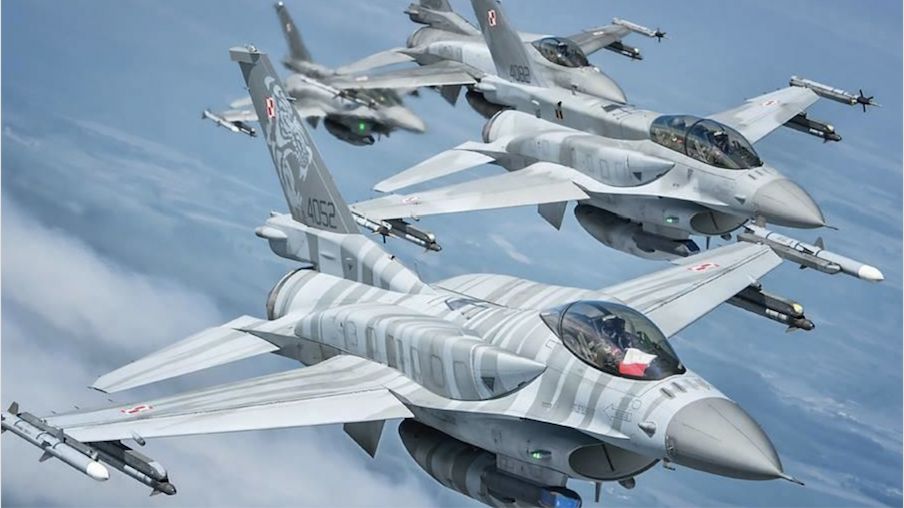
F-16 Fighting Falcons
Taiwan and the United States have signed a Letter of Offer and Acceptance (LOA) for the sale of 66 F-16V ‘4+ generation’ fighter jets, which will be delivered alongside armaments, parts and other equipment under an $8.1 billion contract. The agreement was signed in Taipei by representatives of the American Institute in Taiwan, and is the largest of several major arms sales to Taipei recently agreed on alongside M1 Abrams battle tanks, surface to air missile systems and other equipment. Taiwan’s military position has deteriorated rapidly since the early 1990s from a position of near parity with the Chinese mainland to an overwhelming disadvantage, and the territory’s fighter jets and battle tanks are today overwhelmingly outmatched by their counterparts in the Chinese People’s Liberation Army. The F-16V represents an upgrade over the original F-16 design which entered service 41 years ago in 1978, and is equipped with modern avionics and electronic warfare systems and a powerful active electronically scanned array radar. The aircraft notably does not improve on the flight performance or the radar cross section of the original jet, and is less manoeuvrable due to the added weight of new internal systems. Taiwan already fields a small fleet of F-16 fighters, and has upgraded a portion of its existing F-16A fighters to the F-16V standard domestically under licence.
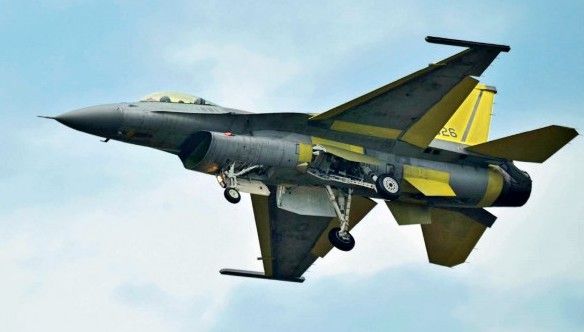
Despite its considerable cost, the F-16V’s capabilities are considered far inferior to those of frontline PLA fighters such as the J-10C and J-16, and even older platforms such as the J-11B retain many very considerable advantages. The fighter is approximately 50% more costly per unit than the Su-35, of which the PLA has received two dozen from Russia, while the twin engine Russian heavyweight fighter exceeds the F-16V’s capabilities across the spectrum - and with the possible exception of electronic warfare systems does so by a considerable margin. Taiwan for its part has developed its own ‘4+ generation’ fighter under the Brave Eagle program, which is equipped with an AESA radar and domestically developed hypersonic air to air missiles. The cost of the F-16V contract has raised serious questions regarding whether Taipei’s choice of investment is intended to best secure its territory, or is a political favour to Washington in return for continued American protection. Investment of funds into the Brave Eagle, or a more ambitious indigenous program, would very likely have provided Taiwan with a far cheaper and more capable fighter considering the historical strengths and efficiencies of its own defence sector. The sale of the F-16V has thus been subject to serious criticism both within Taiwan, as well as in Beijing which views American moves to arm Taiwan as illegal. Taiwan, officially the Republic of China, is not a member state of the United Nations and enjoys negligible International recognition, meaning weapons sales can be interpreted as moves to arm a non-state actor.
