
Taiwan’s Ching Kuo Fighter Returns to Production With Next Generation Features as the ‘Brave Eagle’
Military Watch Magazine Editorial Staff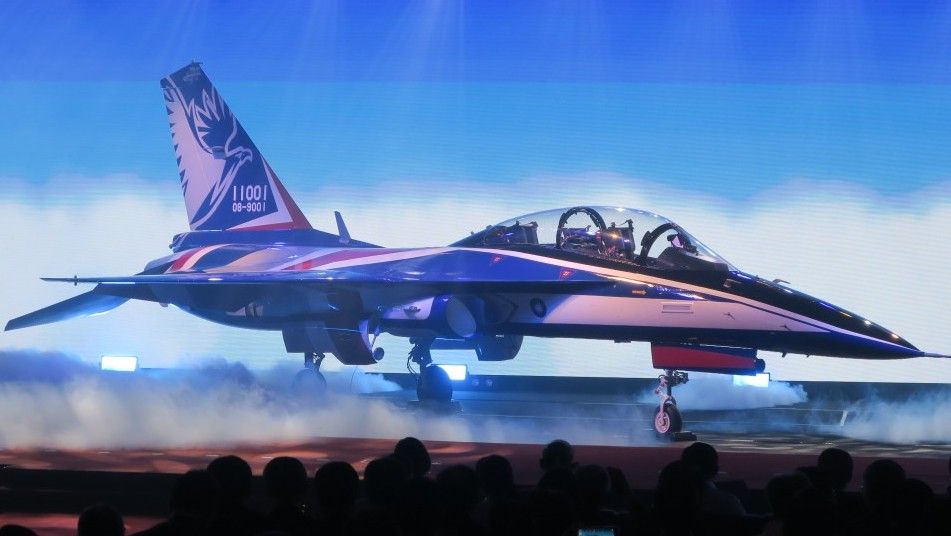
Taiwanese Brave Eagle Fighter Prototype
Taiwan has debuted a new class of indigenous fighter jet, the Brave Eagle, which was announced by President Tsai Ing-wen on September 24th at a dedication ceremony in the city of Taichung. The President stated regarding the $2.2 billion program: “Through the construction of the [Brave Eagle], we have not only increased global exchanges [on production], but have also created job opportunities ... to promote talent at home.” She notably highlighted Taiwan’s advanced military aviation capabilities by emphasising the success in reaching a prototype stage for the fighter in under three years. While the Brave Eagle has been dubbed a trainer, Taiwan’s armed forces have long used viable frontline fighters in a training role and such jets are expected to play a major role in the event of a war across the Taiwan Strait. Trainer jets in Taiwanese service, while prized for their lower operational costs, thus deploy advanced sensors and modern armaments just as frontline fighters do.
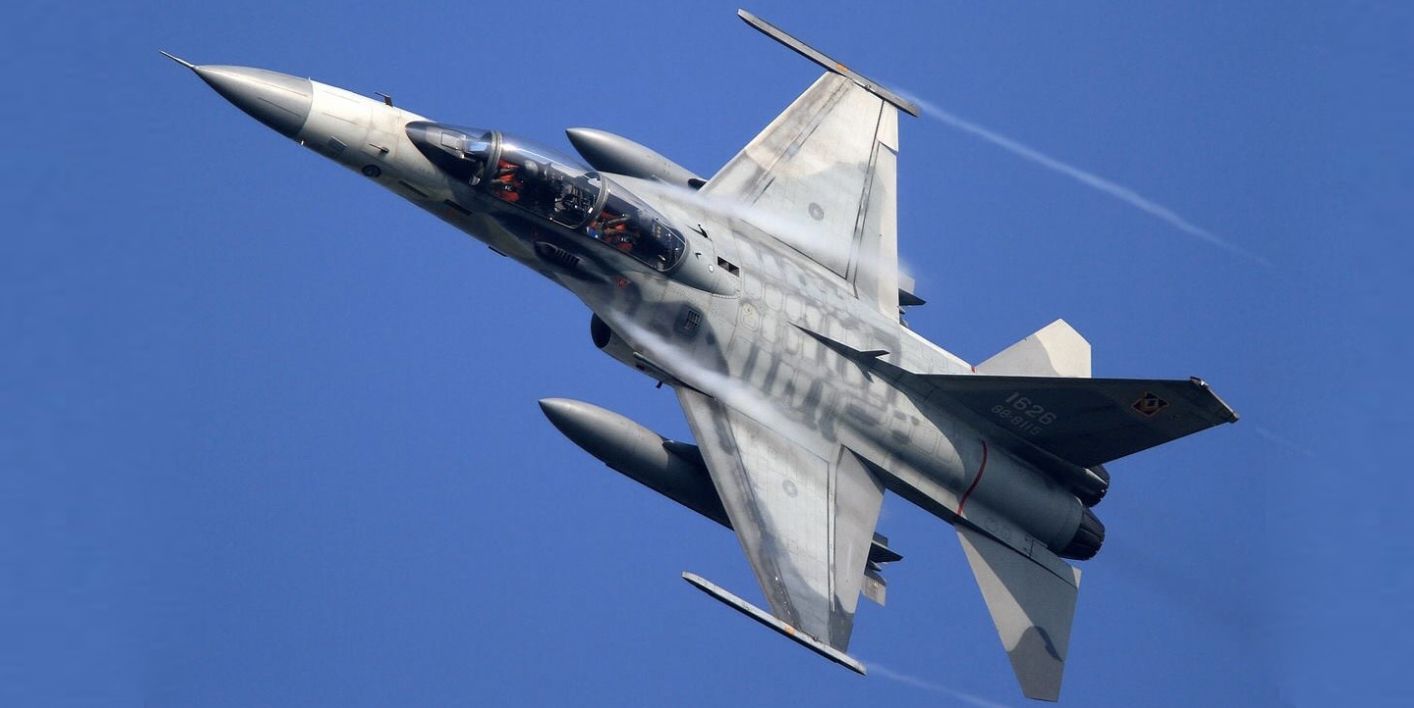
Taiwan’s Aerospace Industrial Development Corporation notably gained extensive experience manufacturing over 300 third generation F-5E multirole fighters under licence, and subsequently developed the F-CK Ching Kuo twin engine light fighter in the 1980s as an indigenous alternative to the American F-16 Fighting Falcon. While production of the Ching Kuo was cut short by Taiwan’s decision to diversify its fleet, fielding two squadrons alongside a further two of American F-16As, the the Brave Eagle notably very closely resembles the older indigenous design and appears to be a modernised iteration of the same concept. Based on the capabilities of the Ching Kuo, the Brave Eagle is likely to be a formidable fighter surpassing the capabilities of any aircraft currently in Taiwanese service. The aircraft use the same F125 engines as the Ching Kuo, but 80% of their components are new. These include greater use fo composite materials, new avionics and electronic warfare systems, thicker wings and an increased fuel capacity for higher endurance. Maintenance requirements will also be lower than those of the original Ching Kuo fighter, and are likely to fall below those of the F-16 possibly to a comparable level to the F-5E.
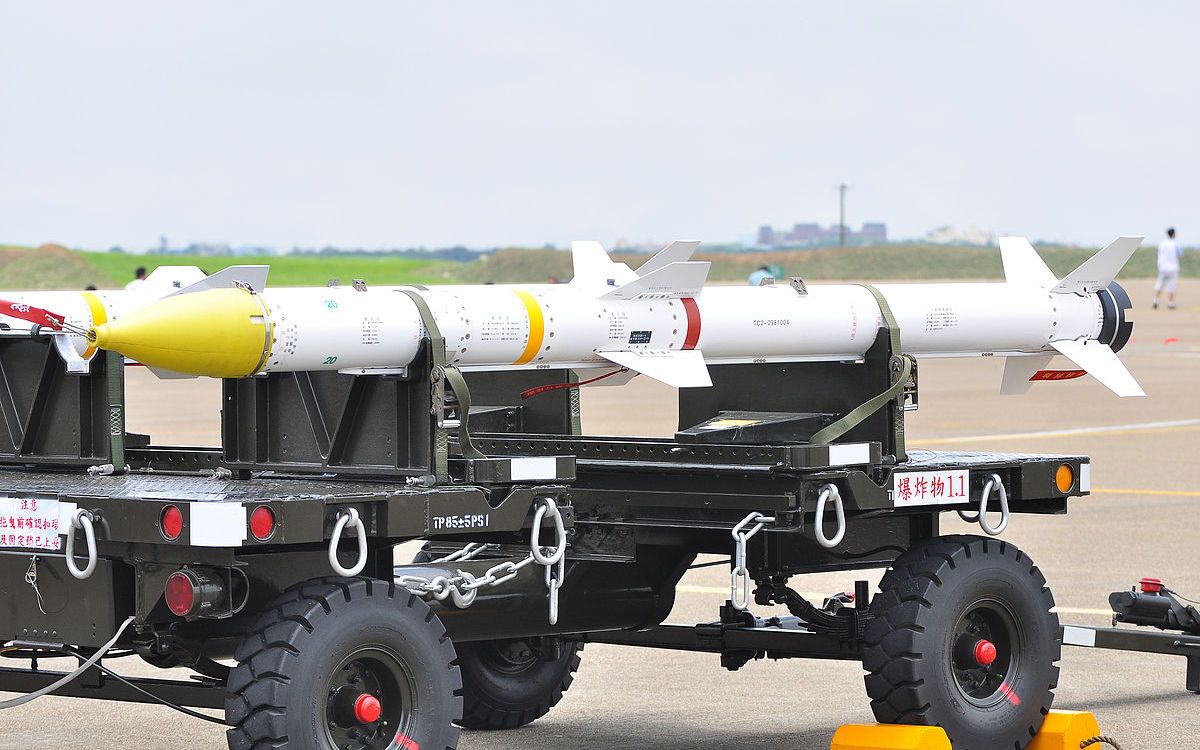
The Brave Eagle will be slightly larger than the original Ching Kuo, and will notably be compatible with the advanced indigenous munitions designed for the fighter including the Sky Sword II hypersonic long range air to air missile and the Wan Chien radar evading cruise missile. While the prototype does not yet integrate advanced sensors, Taiwan’s National Chung-Shan Institute of Science and Technology is reportedly developing an active electronically scanned array (AESA) radar system with a low radar signature for the platform. Tron Future Tech, a private firm, has also developed an AESA radar for the fighter - with the armed forces yet to announce which will be integrated. Another major change to the design is the integration of a new ram air scoop, which has been redesigned with two aluminium laser powder bed fusion parts to replace the 22 original components. The fighter can be expected to deploy new variants of the Sky Sword II air to air missile which are likely to be developed with longer ranges, and may improve on the four missile payload of the original Ching Kuo fighter to carry six air to air missiles. The Brave Eagle is likely to represent a formidable resurrection of the Ching Kuo design with many ‘4+ generation’ features, and while it is unlikely to measure up to its counterpart of a similar weight range fielded by the Chinese mainland, the J-10C, its capabilities will likely be cause for far greater concern in the Chinese People’s Liberation Army than anything previously in Taiwanese service.
