
How Capable is Syria’s MiG-29 Fighter Fleet? Upgrades and Newly Delivered Airframes Improve Air Defences
Military Watch Magazine Editorial Staff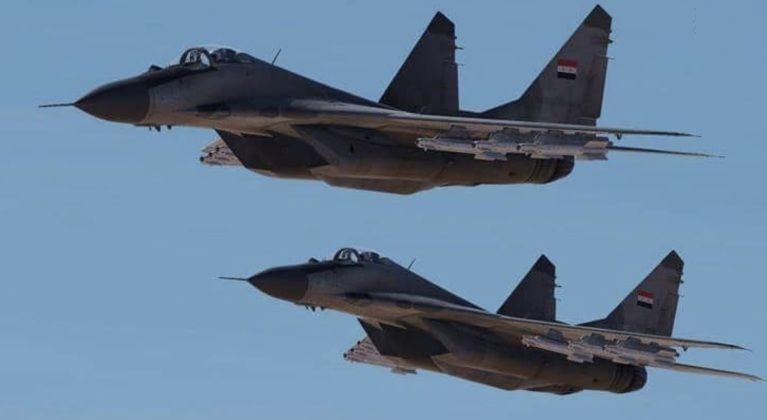
Syrian Arab Air Force MiG-29A Fighters With IR Guided Missiles
With Syria’s long war against a range of insurgent actors coming to a close, the country’s Air Force has again begun to place a greater emphasis on air to air combat capabilities to counter potential threats from state actors - most notably Israel and Turkey. Aside from the MiG-25 Foxbat heavy interceptor, which is not thought to have been significantly modernised in Syrian service and has operational costs which may be prohibitively high for the cash strapped state, the most capable aircraft in the country’s inventory in terms of air to air combat performance today is the MiG-29 Fulcrum medium weight fighter. A number of sources indicate that Syria has invested since 2019 not only in expanding its MiG-29 fleet with newer and more advanced variants of the aircraft, but also in increasing operational readiness of and modernising its older MiG-29 airframes which were received during the Cold War.
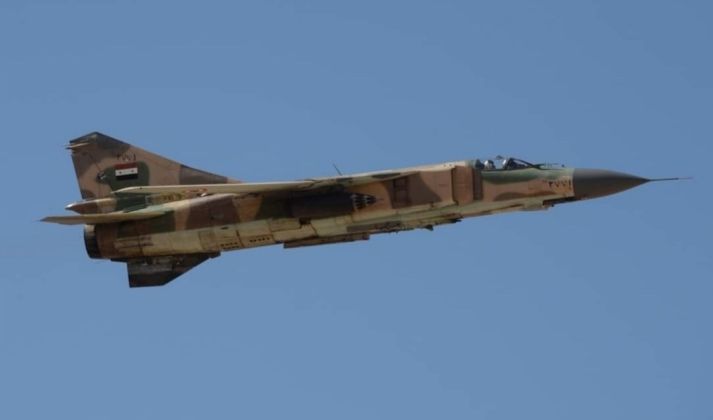
Before receiving its first MiG-29 fighters in the late 1980s, Syria had been the leading foreign client for the Russian MiG-23 Flogger variable swept wing fighter during the Cold War, and was the first to acquire the aircraft in 1974 with deliveries continuing through much of the 1980s so that by the end of the decade close to 150 of the jets were in service. These included the latest strike variants of the Flogger, the MiG-23BN, and advanced variants built for air to air combat such as the MiG-23ML and MiG-23MLD. With production of the MiG-23 ceasing in 1985, the MiG-29 was a natural replacement to form the staple of the fighter fleets of Soviet defence clients across the world - from North Korea and the Warsaw Pact states to Syria, Iran and Iraq which were among those to receive the MiG-29A in the final years of the Soviet Union. The MiG-29 was designed to be able to outperform the U.S. Air Force’s F-16 and F-18 light and medium weight fighters in air to air engagements, and when evaluated in Germany following the country’s unification it was found to have a superior flight performance and superior missiles with its R-73 short ranged air to air missiles in particular providing a very significant advantage over all Western fighters at close ranges.
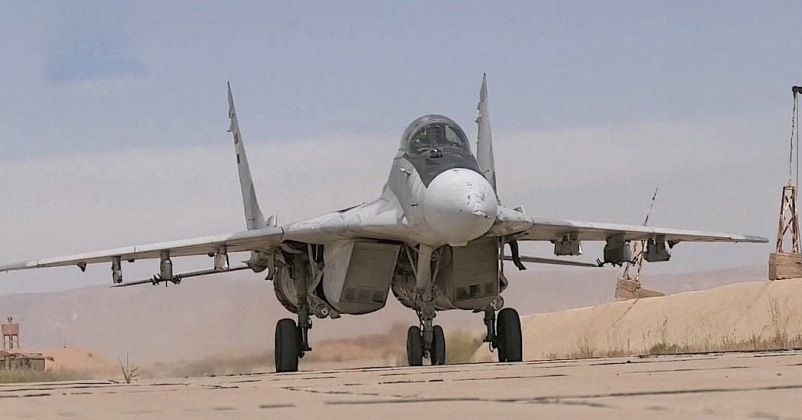
The collapse of the Soviet Union seriously disrupted Syria’s modernisation plans and undermined the Syrian Air Force’s combat effectiveness to a degree from which it has still not recovered. When the Soviet Union collapsed only five of the Syrian Air Force’s twenty nine fighter squadrons were equipped with modern fighters capable of engaging Western fourth generation jets on favourable terms - including 30 MiG-29As split between three squadrons and 30 MiG-25 interceptors split between two squadrons. The Soviet collapse meant an end to ‘friendly’ prices for new armaments and a total end to military aid, which led to reduced training hours and lower availability rates for Syria's large MiG-21 and MiG-23 fleets Syria already had, and little chance of replacement with MiG-29s. The Soviet collapse also forced post-Soviet Russia to seriously cut its own MiG-29 fleet of 700 aircraft and place much of it in reserve, cut production of the MiG-29, and roll back plans to modernise the MiG-23 which had been set to receive new avionics, upgraded sensors and a range of new air to air missiles.
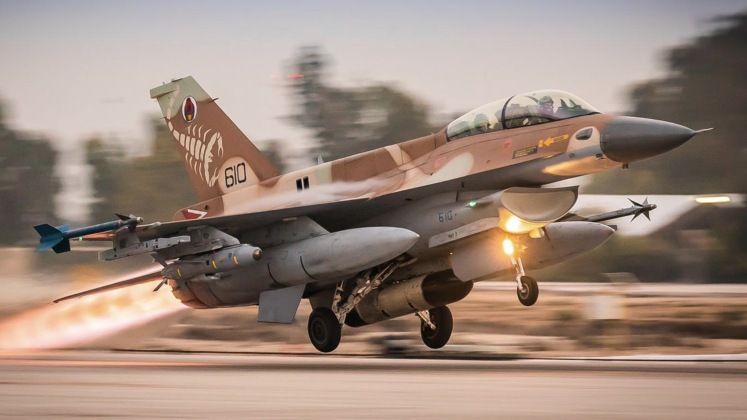
Syria today faces considerable threats from neighbouring Turkey and Israel which both rely on the F-16C/D/I as their primary fighter - with Israel also deploying a smaller number of heavier and more capable F-15s which have violated Syrian airspace in the past. While the MiG-29 is well suited to engaging the F-16, and overall is a more capable aircraft in air to air combat, Syria’s Soviet-supplied MiG-29A fleet is not only terribly outnumbered by its neighbours’ fleets, but the aircraft are also much older and could face a disadvantage against newer F-16 models. The situation will only be further exacerbated by the more limited training Syrian pilots have access to, and by Syria’s lack of airborne early warning and control (AEW&C) aircraft to support its fighters which are assets both Turkey and Israel have access to. The Syrian Air Force has thus invested in both modernising its existing MiG-29s and acquiring new aircraft to bridge the gap with its neighbours.
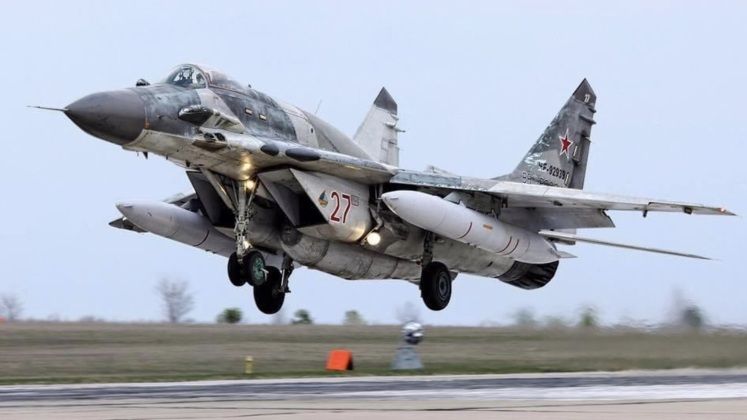
Syria received its first new MiG-29 aircraft from Russia in 2020, after the delivery of these had been delayed due to the ongoing conflict. While Syria was previously reported to have placed an order for MiG-29M aircraft shortly before the war, it received less capable MiG-29SMT jets which according to some sources may have been provided free of charge. The MiG-29SMT represents a basic MiG-29A airframe upgraded and modified to bring it performance specifications closer to those of the MiG-29M, including integration of the Zhuk-ME radar which provides much greater situational awareness and allows each to engage more targets simultaneously. The fighter has a hands on throttle and stick (HOTAS) cockpit with colour liquid crystal multi function displays and its avionics and sensors are much better suited to operating advanced guided air to surface weapons.
The MiG-29SMT has a conspicuously larger spine than the MiG-29A which accommodates more internal fuel and thereby extends the fighter’s flight range to 2,,100km - with a modest range being a notable shortcoming of the original MiG-29A. The extra weight from more fuel is compensated for by the integration of RD-33 series 3 engines which each put out 81kN of thrust - more than the older RD-33 engine used by prior MiG-29 variants. Unlike the MiG-29M, however, the aircraft do not use new composite materials in their airframe which is overall very similar to that of the origin MiG-29A.
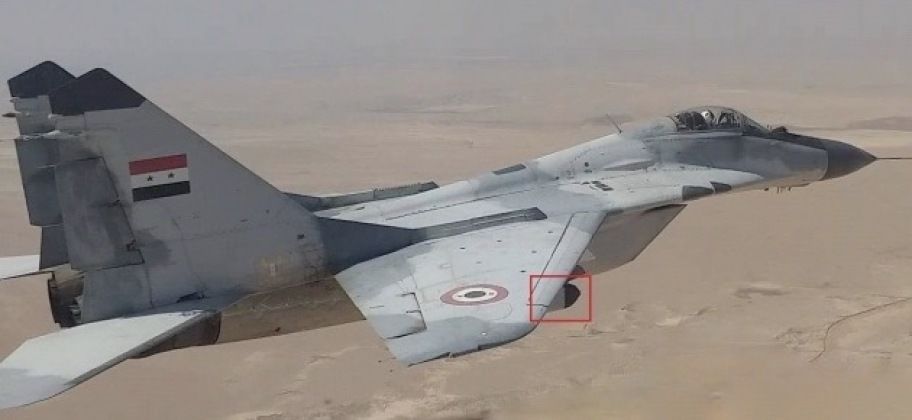
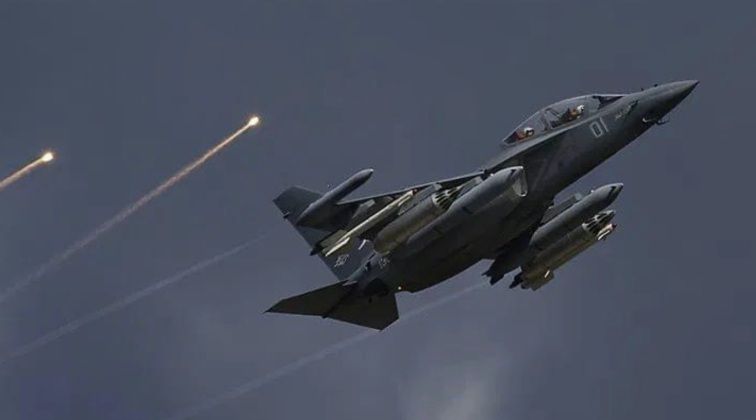
Alongside induction of the MiG-29SMT, Syria has also sought to modernise its MiG-29A fleet. The aircraft were notably modified in the 2000s to deploy R-77 active radar guided air to air missile, which provided ‘fire and forget’ capabilities and had a similar range to the AIM-120C missies used by Israel - far superior to the olde AIM-120B used by Turkey. More recently, the fighter appear to have integrated the Belarusian ‘Talisman’ onboard defence systems — a powerful electronic warfare system designed to protect combat aircraft from air to air and surface to air missile attacks. This electronic warfare system has been observed on Syrian MiG-29A jets from 2019, and will likely provide an electronic warfare advantage over Turkish F-16s while narrowing the gap with those in the Israeli Air Force. These efforts have been paired with orders for new Yak-130 trainer jets from Russia, which will allow the Syrian Air Force to increase the capabilities of its pilots more efficiently and provide experience operating aircraft with more modern avionics.
While progress to modernise the Syrian Air Force’s MiG-29 fleet has been significant, even the newer MiG-29SMT still remains at the lower end of combat aircraft being produced in Russia with Syria’s ability to purchase higher end Russian combat jets such as the MiG-35 largely dependant on whether its economy can recover from wartime damage. Economic factors will also determine the extent to which the country can further expand its MiG-29 fleet, with the very large size of its MiG-23 fleet indicating that it could potentially look to place very large orders for MiG-29s in future under the right economic conditions. Extensive Western economic sanctions against the country, however, have slowed efforts towards post-war economic recovery.
