
Will Russian MiG-35s Soon Fly Combat Missions Over Syria?
Military Watch Magazine Editorial Staff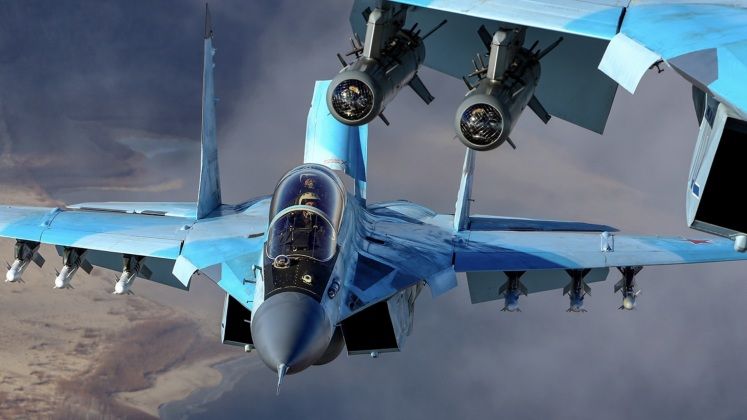
MiG-35
Marking a year since its entry into frontline service in June 2020, the MiG-35 ‘4++ generation’ medium weight combat jet is the Russian Air Force’s newest and in many ways its most sophisticated fighter. The aircraft boasts a wide range of advanced features, including three dimensional thrust vectoring engines - the first even integrated onto a fighter of its weight range - as well as the first nose mounted AESA radar on a Russian fighter and even limited application of artificial intelligence for pilot support. With the Russian Air Force conducting an ongoing air campaign in Syria, and having provided its close partner the Syrian Arab Air Force with new fighter jets, the possibility has been raised that the MiG-35 could soon appear in the Middle East carrying out combat operations against Western backed islamist insurgents in the theatre. A look at the precedents for Russian arms sales and for its deployments of combat aircraft to the Syrian theatre indicates that the chances of this occurring are far from insignificant.
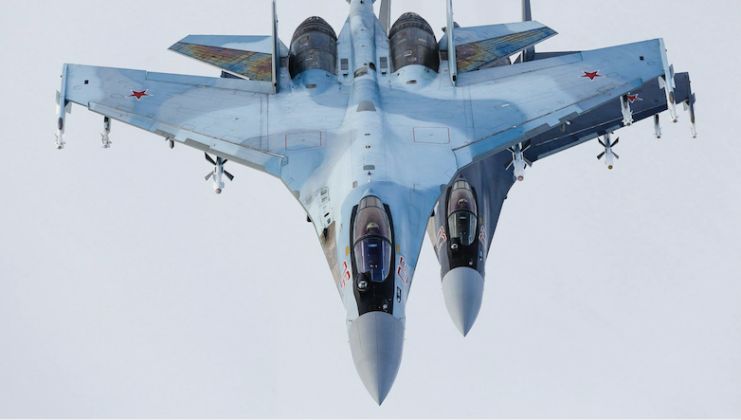
Russia has deployed all of its new fighter classes to the Syrian theatre for combat testing, starting in 2015 with the Su-27SM3 and Su-30SM multirole heavyweight platforms and Su-24M and Su-34 dedicated strike platforms, and followed in the next two years by the Su-35 air superiority fighter, the MiG-29SMT medium fighter and even the Navy’s MiG-29K and Su-33 carrier based jets. In February 2018, it even went so far as to deploy four Su-57 next generation heavyweight jets for brief and limited combat operations - despite these aircraft only being advanced prototypes and being neither serially produced nor in active service in the Russian Air Force. While some diversity among the fleet is needed to optimise operations, with the strike fighters, for example, complemented by Su-35 which provides cover from potential air attacks, the very wide variety of jets deployed for relatively limited air operations from a single airbase strongly indicates a motive beyond maintaining combat efficiency. These deployments are thought to have been initiated due to a number of factors, including the benefit of giving pilots of a wide range of aircraft combat experience, the benefit of testing various aircraft under combat conditions to optimise their performances, and the benefit of displaying the aircraft in combat which is thought to have succeeded in increasing international interest and boosting exports.
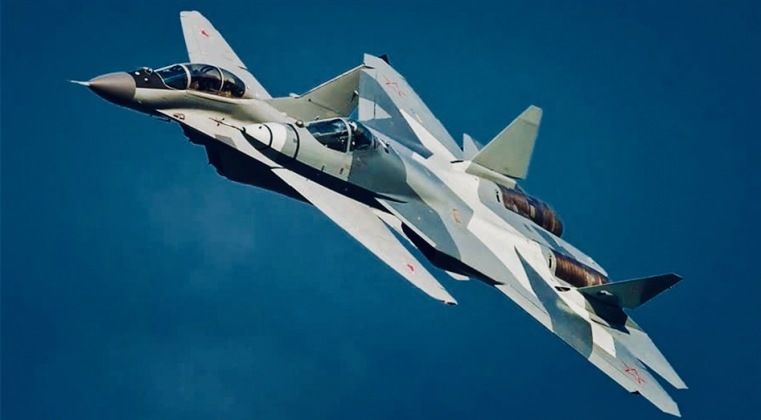
The MiG-35 today, which is far more combat capable than the Su-57 was at the time of its deployment, is conspicuous by its absence from Syria. Although the vast majority of fighters deployed by the Russian Air Force to the theatre have been heavyweight platforms, the deployment of the MiG-29SMT, a direct predecessor to the MiG-35 from the same weight range and using much of the same maintenance infrastructure, means the possibility that the newer jet will be seen in the country is considerable. This is particularly likely given the fact that the MiG-35 was developed largely with exports in mind, as while the Russian Air Force itself relies primarily on heavyweight fighters and has only a few squadrons deploying jets outside this weight range, Russian defence clients such as India, Belarus, Angola and Egypt rely far more heavily on medium and lightweight aircraft which are considerably cheaper to operate. Should the fighter demonstrate its advanced capabilities in the theatre, particularly if carrying out precision strikes with its wide range of new standoff air to ground weapons or intercepting Israeli and Turkish incursions into Syria airspace as the Su-35 previously did, this could significantly increase interest from potential export clients.
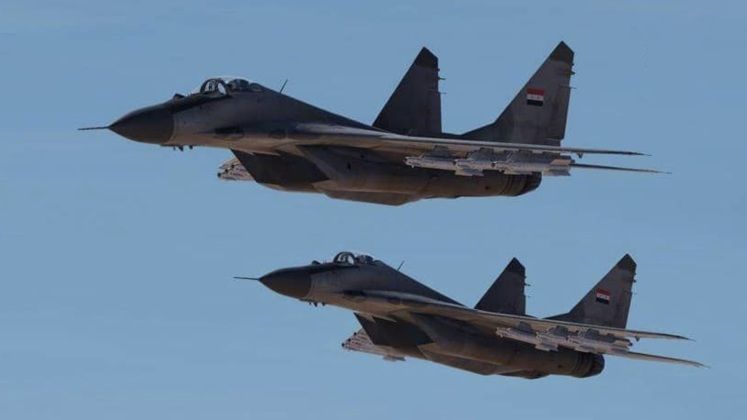
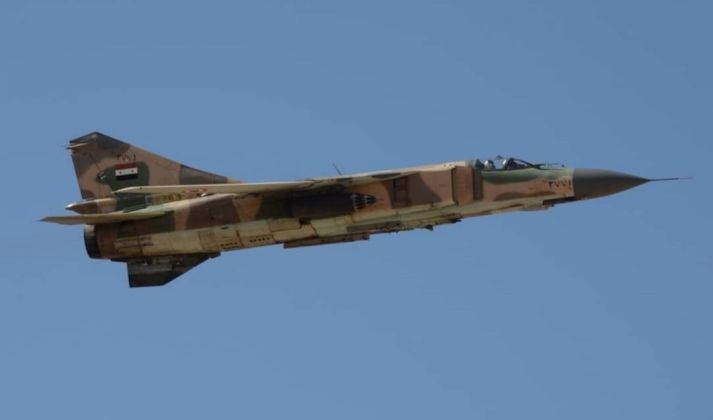
Deploying the MiG-35 for combat operations in Syria could help to provide experience for pilots and lead to improvements to the design based - much as was the cases for the Su-35 and other previously deployed jets. Other than a temporary deployment to Russia’s Khmeimim airbase in Syria, the possibility also remains that the fighters could be transferred to the Syrian Air Force itself in future as a cost effective means to modernise the fleet. Syria received a small unit of MiG-29SMT fighters from Russia in June 2020, which complement its much older Soviet-supplied MiG-29A fighters in a frontline role. The bulk of the Syrian fighter fleet, however, is comprised of MiG-21BiS and MiG-23 third generation platforms which the Air Force is likely to seek to replace in the coming decade. Syria reportedly previously showed interest in acquiring MiG-31 interceptors to modernise its air to air capabilities, with these jets being the heaviest in the Russian inventory and the most capable in air to air combat but also the most expensive to operate.
The MiG-35 represents a considerably more modern and affordable option, and the fighter not only comfortably outperforms the F-16s deployed by neighbouring Turkey and Israel, but is also capable of challenging Israeli F-15 heavyweight fighters which is a capability Syria has lacked for over four decades. Although the F-15 is heavier and faster, the technological disparity favouring the MiG-35, which was developed several decades later, is very considerable. This combined with the MiG-35's low operational cost, reportedly 80% lower than that of the older MiG-29, its relatively low acquisition cost, and its high compatibility with existing hardware, means a purchase is likely in the coming years. Whether this will occur after the fighter demonstrates its capabilities in combat in the hands of Russian pilots, and possibly after more orders for cheaper MiG-29 jets are made, remains to be seen.
