
Belarus Looks to Modernise its Military: Five New Russian Weapons Systems it Could Prioritise Purchasing
Military Watch Magazine Editorial Staff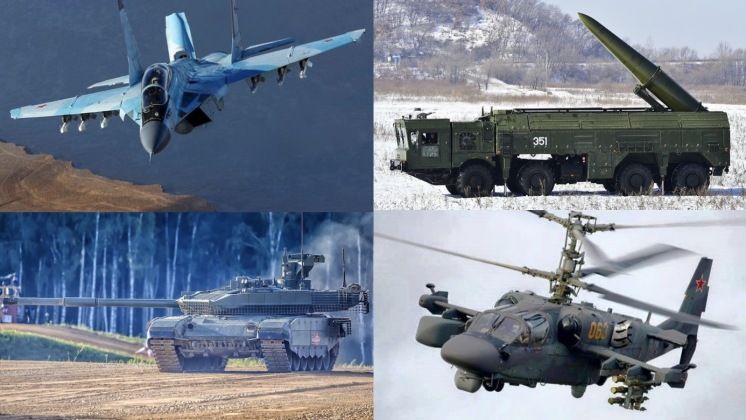
Belarusian Possible New Weapons: MiG-35, Iskander, Ka-52, T-90M
Belarus is expected to invest heavily in modernising its armed forces in the 2020s, with Minsk having cited the threat of a growing NATO deployments near its borders including the planned construction of major U.S. military facilities in Poland, as well as the American withdrawal from the INF Treaty and possible plans to deploy medium and intermediate range missiles to Europe, as a potential threat to which it is ready to respond. The perceived threat has only been exacerbated by Western support for riots in the country in August which led to a further deterioration in relations between Belarus and NATO member states, and brought the country closer to its longstanding defence partner and traditional ally Russia. While Belarus has refused to provide Russia with an airbase on its territory, which is expected to remain the case unless Western pressure on the country increases substantially, the Belarusian Armed Forces are expected to purchase a range of new Russian weapons systems over the coming decade to counter the growing capabilities the NATO alliance near its borders. These purchases are expected to become easier should Belarus integrate its economy more closely with that of Russia - which could allow it to purchase arms at lower prices closer to those offered to the Russian Military itself. A look at the five major weapons systems Belarus is most likely to acquire from Russia over the coming decade is given below.
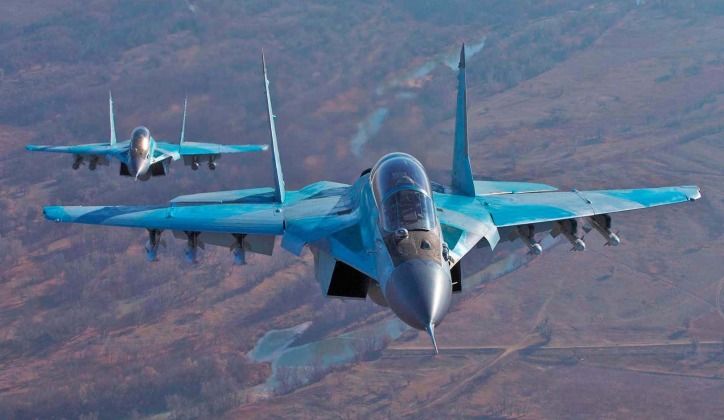
MiG-35 Medium Weight Multirole Fighter Jet
Belarus is considered a leading client for the MiG-35 ‘4++ generation’ medium weight fighter, the latest fighter to enter service in the Russian Air Force with the class first commissioned in July 2019. The backbone of the Belarusian Air Force is currently comprised of around 38 MiG-29C medium weight multirole fighters, with the country having inherited a sizeable MiG-29 fleet after the collapse of the Soviet Union but selling off several units and modernising two squadrons’ worth to the MiG-29C standard. With these airframes passing their thirtieth year in service, and set to pass their fortieth by 2030, it is likely that the Belarusian Air Force will look to replace them, with the MiG-35 being the most natural successor. The newer fighter notably uses much of the same maintenance infrastructure and many of the same weapons, which will make the transition easier, and its operational cost is reportedly 80% lower than that of the MiG-29 meaning Belarus could potentially seek to field more medium weight fighters as their maintenance will become more affordable. Moves by neighbouring Poland to acquire F-35A fighters, and growing deployments of advanced American fighters such as F-22 Raptors to Eastern Europe, has made the need to replace the MiG-29 more urgent.
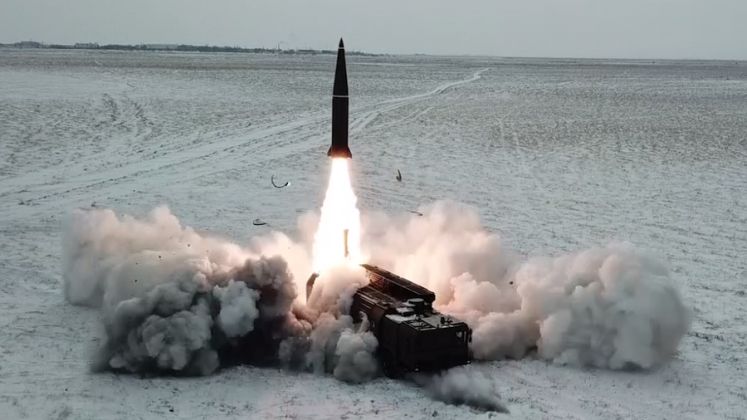
Iskander Hypersonic Tactical Ballistic Misslie
Belarus is currently thought to field the largest arsenal in the world of Soviet-built Scud-B and Tochka tactical ballistic missiles, which deploy from mobile transporter-erector launchers and provide a formidable asymmetric strike capability. Although highly capable, the last Tochka units are currently being phased out of service in neighbouring Russia, where the last Scud-B missiles were retired long ago, with both being replaced by the modern Iskander system. The Iskander has a 500km range, the maximum allowed for ground launched surface-to-surface missiles by the INF treaty, although the American withdrawal from this agreement in 2018 its expected to lead Russia to quickly field longer ranged variants. Derivatives of the Iskander in both North and South Korea, which are thought to make use of Russian technologies, notably have ranges well over 500km. The Iskander is prized for its precision and hypersonic speed, its high manoeuvrability, its short launch time, and the wide range of munition types it can deploy. The missile deploys advanced electronic warfare countermeasures and is extremely difficult to track with even more advanced NATO air defence systems - let alone intercept them. Belarusian President Alexander Lukashenko previously warned that the armed forces could look to modernise their missile capabilities should the United States Military deploy longer ranged missiles to the European theatre, and with the Iskander considered a highly cost effective asset an acquisition is likely even if this condition is not met by the U.S.. The deployment of more advanced NATO air defence systems, including likely deployment of Patriot systems in Poland, will only further stimulate Belarus to make such an investment.
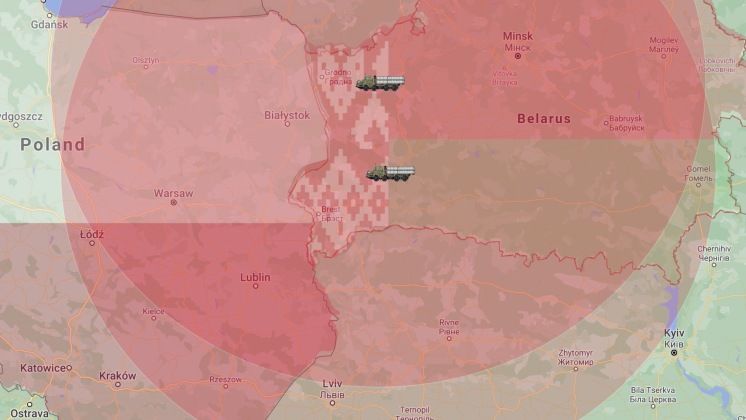
40N6E Surface to Air Missile
Belarus was a leading client for Russia’s S-400 long range surface to air missile system, and according to some sources was the very first in the world to receive the system from Russia due to Moscow’s strong interest in ensuring that its neighbour’s airspace remains secure in the case of a possible NATO attack. It remains uncertain, however, whether the country has integrated the 40N6E long range hypersonic missile onto the missile complex. The missile provides the S-400 with a 400km range, with the system otherwise restricted to an engagement range of just 250km, and allows it to intercept targets flying at low hypersonic speeds and at altitudes ranging from just 5 meters to 30km. It is also expected that newer and more capable missiles will be developed for the S-400 system, possibly based on S-500 technologies, and these could be used by Belarusian forces to further improve their systems' performance. With NATO forces looking to field a wide range of revolutionary new combat aircraft near the end of the decade or in the early 2030s, including F-X sixth generation fighter jets, B-21 stealth bombers and hypersonic surveillance and strike aircraft, upgrades to the S-400 system could provide one of the most cost effective means of countering these threats. The S-400 was notably designed with engagements against the U.S. Air Force’s F-22 Raptor fifth generation fighters in mind, and with the Raptor's lighter counterpart the F-35 expected to be deployed to Europe in its hundreds including in neighbouring Poland the S-400 provides an effective countermeasure.
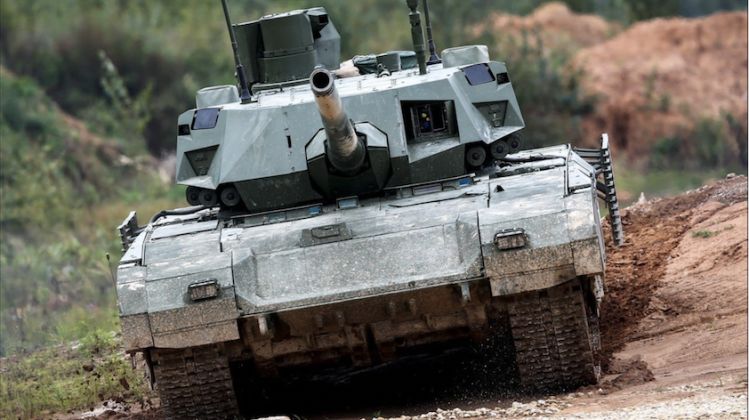
T-14 and T-90M Battle Tanks
Belarusian armoured units currently rely exclusively on the T-72 main battle tank, with the few T-80 tanks inherited from the Soviet Union thought to have been retired or sold on to North Korea for evaluation and study. A portion of armoured units have been upgraded to the T-72B3 standard, and are considered advanced third generation tanks which benefit from a range of new features including the latest Relikt explosive reactive armour, a 2A46M-5 gun, 9M119M Refleks missiles, and a more powerful V-92S2F 1,130 hp engine among others. Although the T-72B3 is a formidable platform, comfortably outperforming the Polish PT-91 and in the right hands able to go head to head with the German Leopard II and American M1A2 Abrams tanks, the deployment of more advanced NATO armour over the coming decade will leave the enhanced Soviet era platform effectively obsolete as a primary frontline tank. Most notable among the upcoming deployments is Poland’s consideration of the South Korean K2 Black Panther fourth generation tank, which would provide by far the most capable armour in NATO and could be acquired in large numbers. A German fourth generation tank designed to challenge the superiority of the Russian T-14 Armata tank is also under development. As a result, Belarus will likely seek to field a more capable tank variant than the T-72 - possibly the new T-90M platform which entered service in the Russian Army in 2020, or its heaver counterpart the T-14 which continues to be enhanced with new technologies. Both of these platforms are notably heavier than the T-72 and have a higher operational cost, meaning that their acquisition could force the country to downsize its front-line armoured units from the current size of around 550 tanks.
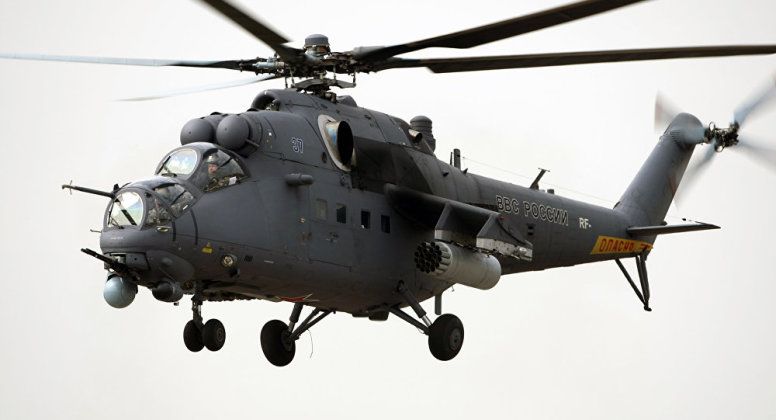
Ka-52 or Mi-35 Attack Helicopters
Belarus currently fields a relatively large special forces brigade of around 5,900, much of which are specialised in an air-assault role relying on both Mi-8 transports and 12 Mi-24P attack platforms. While the P variant is relatively modern, and replaced the aircraft’s standard 12.7mm machine gun with a fixed side-mounted 30mm GSh-30-2K twin barrel auto-cannon, compared to attack helicopters fielded by Russia or the AH-64E used by the U.S. and a growing number of its defence clients, the Belarusian gunships are considered out of date. Considering the Belarusian armed forces’ emphasis on air assault and helicopter units, it is likely that a new attack helicopter class will be acquired ether to replace or to complement the Mi-24 - with both the Mi-35 and the Ka-52 being leading potential candidates. The Mi-35 is a derivative of the same design, and though its capabilities are far superior it too will likely be considered very old by the mid-2030s. The Ka-52 is a much newer both more costly design, and is widely considered the world’s most capable attack helicopter with by far the heaviest and longest ranged armaments including, uniquely, access to Mach 3+ standoff cruise missiles.
