
South Korea Puts World’s Best Battle Tank Back in Production; Manufacture of Elite K2 Black Panthers Resumes
Military Watch Magazine Editorial Staff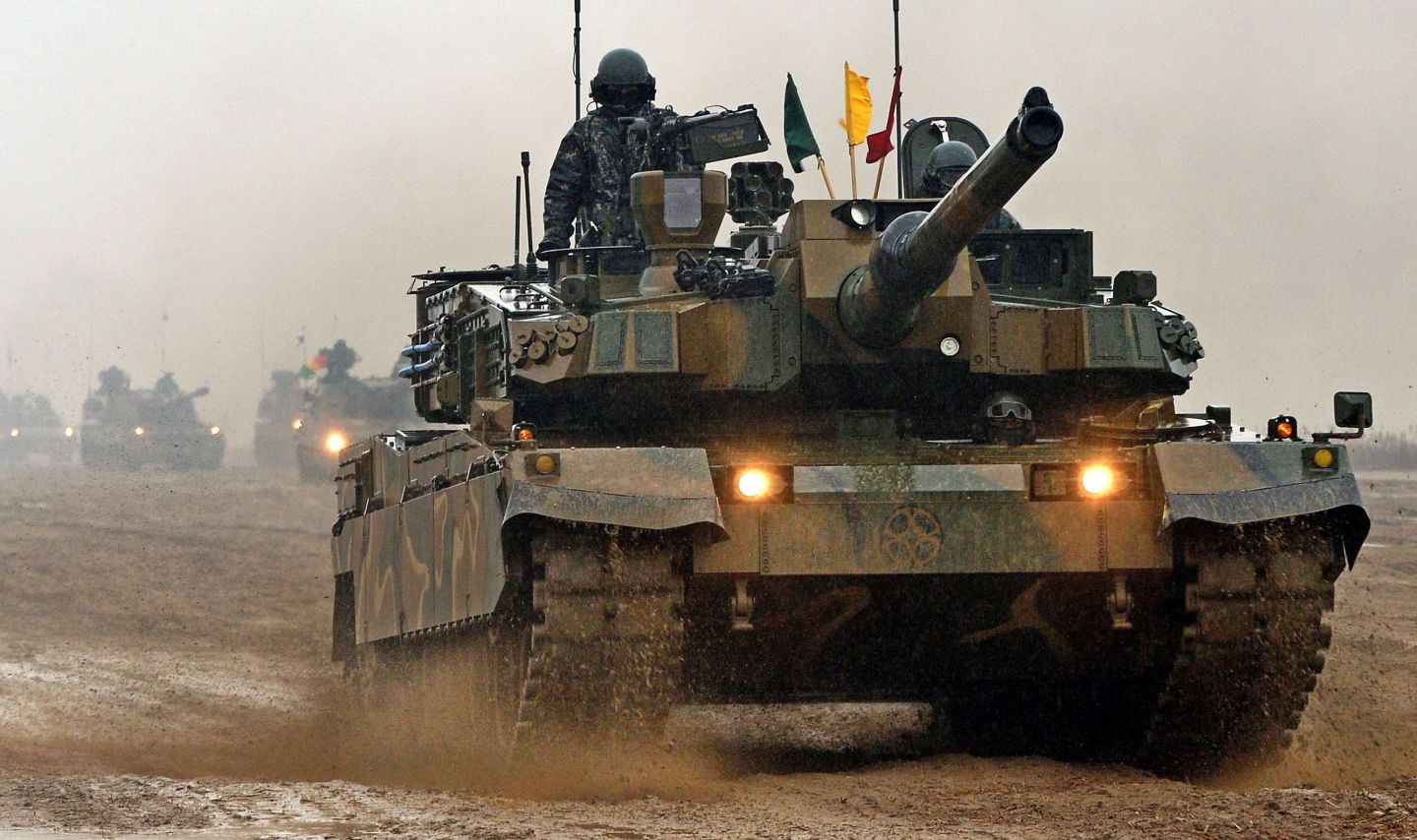
South Korean K2 Black Panther Battle Tank
Following a two year delay attributed to transmission issues, South Korea’s Hyundai Rotem has reportedly resumed production of the K2 Black Panther main battle tank. In the final week of May 2019 the company revealed two newly manufactured K2 tanks to government officials including representatives from the Defense Acquisition Program Administration, the Defense Agency for Technology and Quality, and the Agency for Defense Development. The new tanks were manufactured near Hyundai’s production facility in Changwon, South Gyeongsang Province. The K2 is one of just three fourth generation battle tanks in service today alongside the Japanese Type 10 and Russian T-14, and is fielded alongside the older third generation K1 and first generation M48 - though currently in relatively small numbers. With the M48 considered near obsolete, having entered service during the Korean War in 1953, and with the K1 heavily based on the American M1 Abrams with highly comparable capabilities, the K2 represents South Korea’s most modern battle tank and the first fully indigenous platform developed.
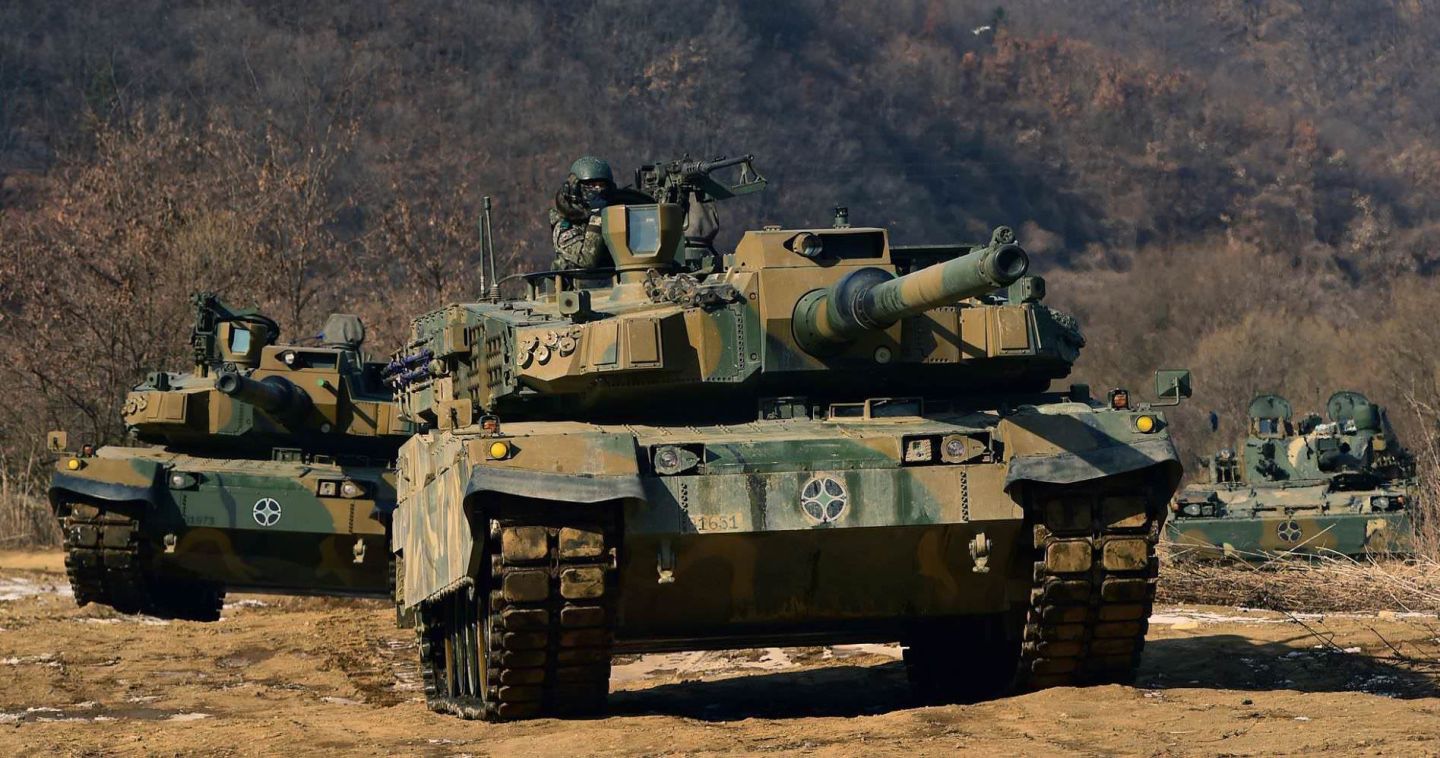
Under 300 K2 Black Panther tanks are currently in service, though the Army plans for several hundred more to phase more of its M48 tanks out of service. Design work for the tank was completed in 2006, and it began to enter service from 2014 - a year before the Russian T-14. The tank benefits from some of the most advanced composite armour, explosive reactive armour and non-explosive reactive armour in the world, combining them for an unparalleled degree of survivability. The platform’s sensors are also extremely powerful, with its fire control system linked to a high frequency radar deployed on the frontal arc of its turret which complements its crosswind sensors and laser rangefinders. The K2 also integrates a thermographic camera with a 'lock on' mode allowing it to track specific targets at ranges of 9.8km. Sensors are also capable of augmenting the tank’s survivability, with a millimetre band radar system capable of operating as a Missile Approach Warning System which complements the K2 computer's ability to triangulate incoming projectiles and fire visual and infrared screening smoke grenades. These serve to block the tank’s visual and infrared signatures.
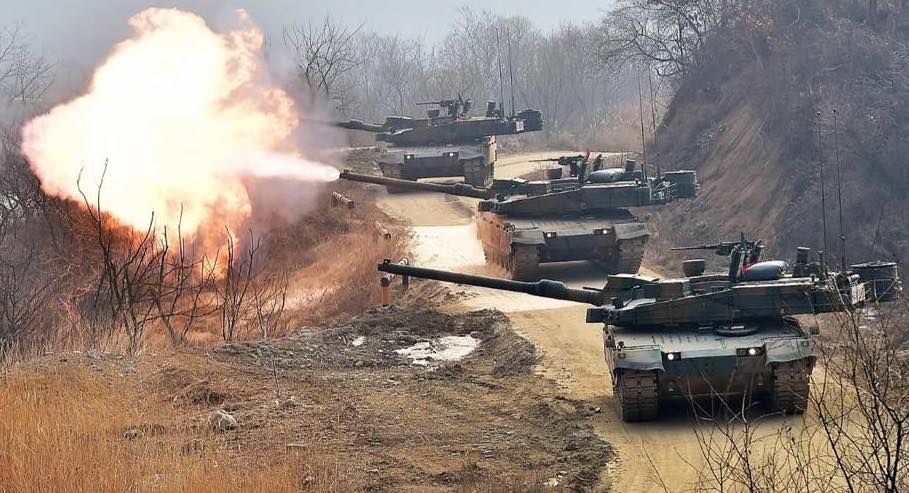
With the armed forces of neighbouring North Korea fielding growing numbers of the Pokpung Ho main battle tank, an advanced new platform with capabilities comparable to the Russian T-90, deployment of the K2 is necessary to ensure an advantage in the field. Unlike the Pokpugn Ho however, the K2 is not heavily optimised for mountain warfare which could place the North Korean platform in an advantage when fighting in its own highly mountainous terrain. The K2 has gained considerable foreign interest due to its advanced capabilities, with Turkey planning a massive order of up to 1000 of the tanks to replace both the American M60 and eventually the German Leopard 2 - the latter which has left much to be desired in its recent performance against insurgent groups in Syria and Iraq. The platforms will be manufactured under licence in Turkey as the Atlay. Oman and Qatar have also shown considerable interest in the tank, which was recently unveiled in desert camouflage and with special desert warfare features in an attempt to appeal to Middle Eastern clients. It is unclear at what rate South Korea will manufacture the K2 for its own armed forces, with the K2's considerable cost and the lack of urgency to upgrade armoured warfare capabilities meaning that induction of the tanks may come at a slow pace which could keep Hyundai Rotem’s production lines open into the 2020s.
