
Turkey's Elite Korean Battle Tanks; How the Ambitious Atlay Program Based on the K2 Black Panther Reflects Ankara's Aspirations
Military Watch Magazine Editorial Staff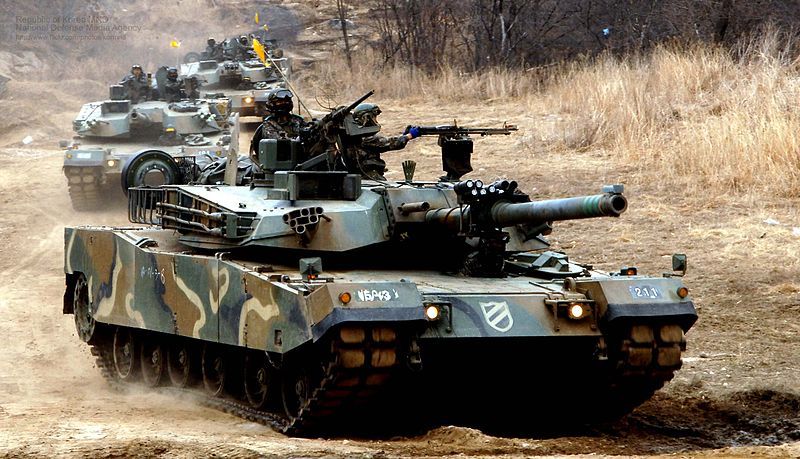
K2 Battle Tank
The Turkish government has recently signed a multi billion dollar contract to for the mass production of new Altay main battle tanks, in an attempt to provide its ground forces' armoured divisions with a much needed upgrade. The Atlay program begun in 2007, and sought to product a variant of the elite South Korean K2 Black Panther fourth generation battle tank domestically to enhance the armoured warfare capabilities of the Turkish Army. The program represents a major development in the longstanding defence partnership between Seoul and Ankara, which dates back to Turkey's involvement in the Korean War. With the Turkish Army's Western built battle tanks, including the supposedly near invulnerable German Leopard II, underperforming and suffering heavy losses during recent operations in Iraq and Syria, the military has turned to South Korea for more modern and reliable platforms. The K2 is among just three fourth generation tank types currently in service worldwide, and may very well be the most capable in the world. The vehicle's sophisticated technologies including its extremely resilient reactive armour and its unique ability to serve as an artillery platform make it highly attractive despite its price.
The K2's combination of combat prowess and reliance on South Korean and Turkish components, circumventing the need for a politically motivated Western supplier, have made it a prime choice for the Turkish military. This comes in light of both the United States and Germany seriously restricting the flow of both arms and upgrades for Turkey when these systems were used in ways which did not comply with their demands, and the imposition of extensive restrictions on the use of their weapons. This has been a recurring occurrence for Western arms producers which has repeatedly led Western clients seeking greater independence to look elsewhere for arms. Germany's freezing of upgrades for its Leopard 2 battle tanks were the perfect opportunity for Turkey to begin to seriously consider reducing its reliance on the European made platform entirely. The Atlay program is set to phase Western made platforms almost entirely out of service in the Turkish armed forces.
Turkish sources indicate that production of the first 250 Altay battle tanks is scheduled to begin in 2019, and 15 of the elite platforms are expected to be in service by the end of 2020. 20 more will be delivered by the end of 2021. The Turkish military is set to induct around 1,000 of the new tanks into service, giving it perhaps the largest and most capable armoured warfare divisions in Europe and by far the most capable in the Middle East. The Atlay program is projected to cost up to $30 billion, and production will continue over 20 years. The tank's capabilities will allow it to remain relevant up to and possibly beyond 2050 in a way current Western made battle tanks such as the Leopard and Abrams cannot.
While Turkey's new Atlay battle tank is set to be highly formidable, its insistence on producing components domestically rather than relying on more efficient Korean manufacturers means its cost is likely to far eclipse that of the already highly costly K2 on which it is based - making it possibly the most expensive battle tank in the world. Ankara has already sought cooperation with Qatar, Pakistan and Malaysia as potential customers - in line with its pan Islamist foreign policy which would see it for the center of a wider alliance of Muslim states. Developing a world leading battle tank, or producing one based on a Korean design, could well provide it with the prestige needed to further its goals. The fate of Turkey's Atlay main battle tank remains to be seen, but it remains a program with significant potential, even if extremely highly priced, which alongside the country's indigenous fifth generation fighter program represents the high extent of Ankara's ambitions to become a major world power.
