American SR-72 Hypersonic Spy Plane Reportedly Already at Prototype Stage - Bomber Variant Expected
Military Watch Magazine Editorial Staff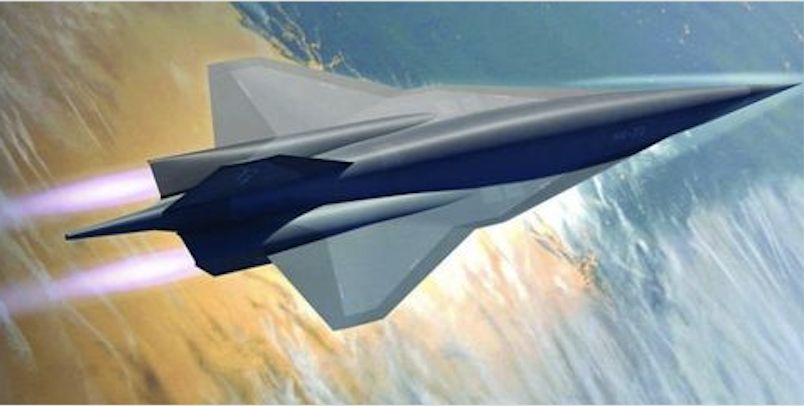
SR-72 Hypersonic Aircraft - concept art
The development of the Lockheed Martin SR-72 hypersonic spy plane has been reported since 2007 and since confirmed, with the aircraft intended to operate at extreme speeds and altitudes to survey enemy territory beyond the reach of enemy interceptors and air defences. The platform follows on from the Lockheed A-12 which took part in the Vietnam War and its successor the Lockheed SR-71 Blackbird which was retired in 1998, and conceptually is in many ways very similar - with all three relying on high speed and altitude to ensure survivability against high end enemy surface to air missile systems and combat aircraft. While both the A-12 and the SR-71 were accident prone, and were rendered effectively obsolete by developments in Soviet defences - namely the S-200 and S-300PMU-1 surface to air missile systems, MiG-25 and MiG-31 interceptors, and R-33 and R-40 air to air missiles, the new SR-72 is expected to operate a league ahead of the majority of existing Russian, Chinese and North Korean defence systems to allow it to penetrate enemy airspace relatively safely. The fact that the aircraft will be unmanned will not only reduce its cost, but also the risks to crew should it have a crash rate comparable to its predecessors.
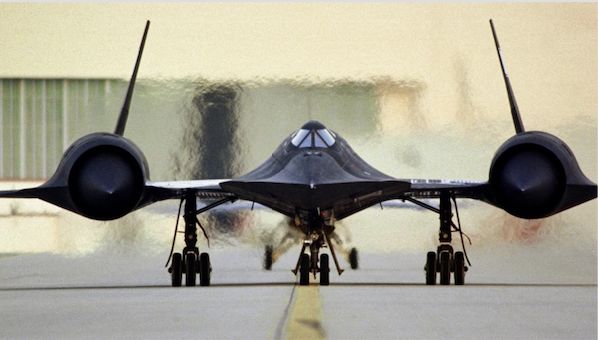
According to a number of recent reports, Lockheed Martin has already built a ‘demonstrator vehicle’ for the SR-72 - an early prototype which is reportedly flyable. A report from the American magazine Aviation Week stated regarding the prototype: “In the early hours of July, an ‘unmanned subscale aircraft’ was seen flying into the Air Force’s Plant 42 in Palmdale, California, where Lockheed Martin’s legendary Skunk Works division is headquartered.” According to the American magazine, visitors to the SAE International Aerotech Congress and Exhibition at Fort Worth, Texas, were able to observe the SR-72 prototype. The sensitivity of the military program means that details regarding the SR-72's development and the specifications of the design are not readily available. Executive vice president of aeronautics at Lockheed Martin Orlando Carvalho nevertheless expressed considerable faith in the new design and was optimistic about the technologies developed, stating: “Although I can’t go into specifics, let us just say the Skunk Works team in Palmdale, California, is doubling down on our commitment to speed… Simply put, I believe the United States is on the verge of a hypersonic revolution.” The vice president further noted regarding the nature of the design: “Hypersonics is like stealth. It is a disruptive technology and will enable various platforms to operate at two to three times the speed of the (SR-71) Blackbird… Operational survivability and lethality is the ultimate deterrent. Security classification guidance will only allow us to say the speed is greater than Mach 5.” Considering the SR-71’s speed of Mach 3.32, this indicates that the new aircraft could be capable of reaching speeds of around Mach 9 - faster than all but a few of the long range surface to air missiles fielded by America’s adversaries.
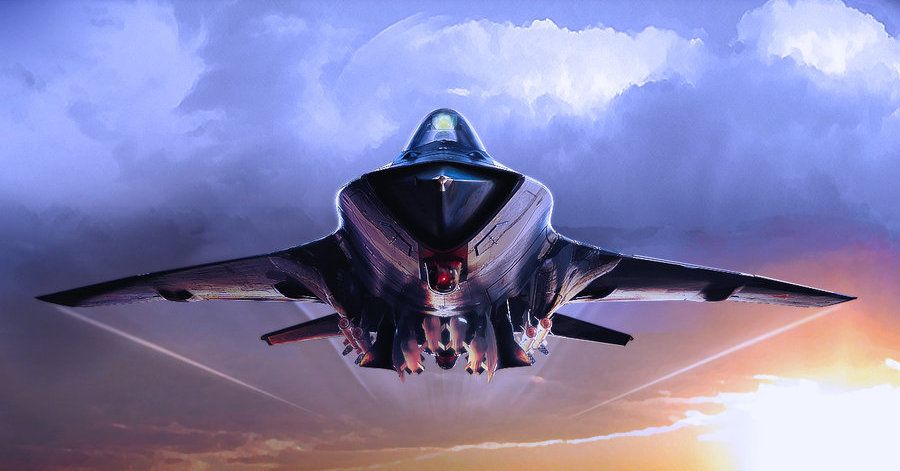
While officially the United States does not have any hypersonic aircraft in service, with the SR-71 remaining the fastest Western jet ever built, Iran’s armed forces have reported that American intelligence likely had access to such technologies for some years - claiming overflights of its airspace by hypersonic high altitude platforms which fielded disruptive technologies to disable its interceptors. Whether there is substance to the Iranian claims remains uncertain. A number of U.S. reports regarding the SR-72 indicate that the aircraft is also being developed into a hypersonic strike platform to deliver precision strikes against enemy targets from extreme altitudes - much like the B-70 Valkyrie Mach 3 heavy bomber was designed to do in the early Cold War years. The air defence forces of both Russia and China currently deploy hypersonic surface to air missiles capable of reaching extreme altitudes - the most capable of which is the 40N6E with a 400km range, 30km maximum altitude and speed of over Mach 14. This platform is deployed by the S-400 and S-300V4 surface to air missile systems, although it is unclear whether the radars on these platforms would be capable of tracking hypersonic aircraft at such extreme speeds. Russian interceptor aircraft are currently capable of flying at 21km altitudes and Mach 2.8 speeds and deploying R-37 air to air missiles with Mach 6 speeds, which while unrivalled in other countries is still insufficient to intercept hypersonic aircraft. Russia is set to deploy two new hypersonic systems to strengthen its defences, the S-500 hypersonic surface to air missile system which is capable of striking targets at extreme speeds and altitudes including targets in space and the MiG-41 hypersonic interceptor - which will also operate in space and deploy hypersonic missiles exceeding Mach 10 speeds. These technologies are likely to be passed on to China, particularly if the country is led to perceive a significant threat from American hypersonic aircraft. How the SR-72 will be deployed when it enters service, and how it will fare against the latest air defence systems being prepared to counter it, remains to be seen.