
‘AWACS Killer’ Incoming: U.S. Air Force F-15s Are Finally Getting Supersized Long Range Air to Air Missiles
Military Watch Magazine Editorial Staff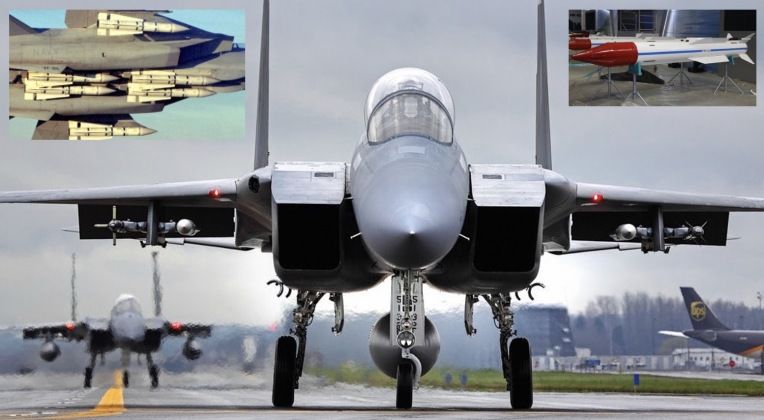
F-15 Fighters: AIM-54 and R-37 Missiles
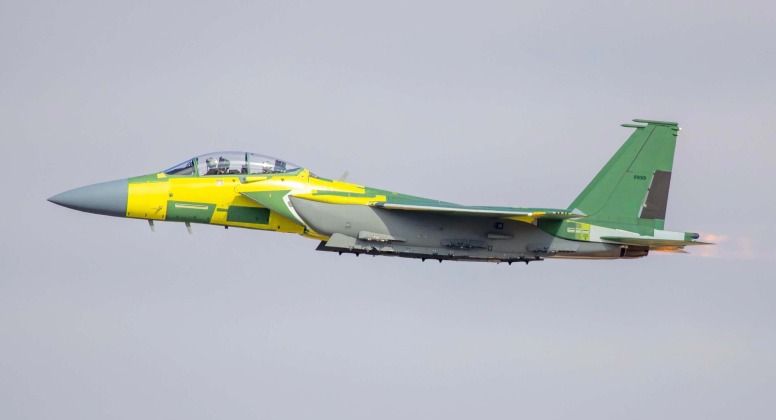
The U.S. Air Force is reportedly planning the induction of a new class of long range air to air missile for its new F-15EX Eagle heavyweight fighter, a fourth generation aircraft which made its first flight in February 2021. The missile is expected to be much larger than the AIM-120 missiles which all current American frontline fighters rely on. The weapon was described as an "outsize air to air weapon" - and the new Eagle fighter itself as an “outsize weapons truck” for its ability to deploy such abnormally large missiles. The F-15 is the heaviest class of Western combat jet developed for air to air combat - with the exception of the now-retired F-14 Tomcat and the troubled F-22 Raptor which is no longer in production and is scheduled for an early retirement. The Eagle is thus the most suitable class of fighter to carry an “outsize weapon.” These kinds of air to air missiles have the advantages of being able to strike targets much further away, carry more explosives, and integrate larger more powerful radars.
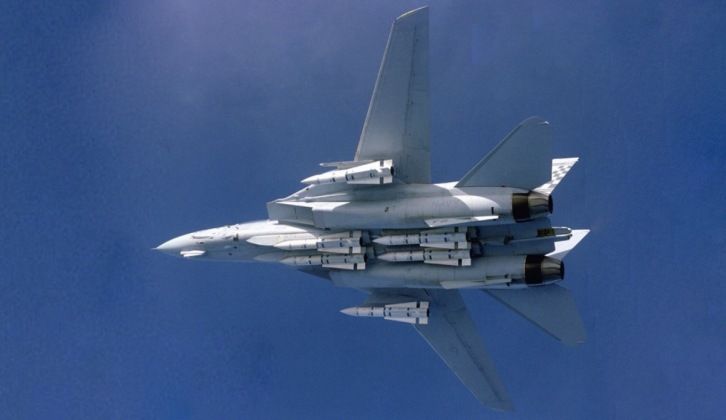
The most notable outsize air to air missiles in the past have included the Soviet and Russian R-40, R-33 and R-37, the American AIM-54, Iran's Fakour 90, and the upcoming Chinese PL-XX. The AIM-54 entered service in the early 1970s, and proved extremely effective in combat against all manner of aircraft during the Iran-Iraq War where the missiles were deployed by Iranian F-14s. The F-14 was a higher maintenance and more logistically troublesome aircraft than the F-15, but its more powerful radar and much larger size made it much better suited to deploying the heavy AIM-54. While integrating the AIM-54 onto the F-15 was considered, the fighter was not large enough to deploy it in any meaningful numbers without excessively compromising its flight performance, and its radar was too small and weak to make optimal use of the long range missile. Thus unlike the Russian and Kazakh air forces, or those of export clients for its R-40 missiles such as Algeria and Iraq, the U.S. Air Force has long lacked an outsize air to air missiles. This was particularly troublesome when its F-15s confronted Iraqi interceptors which could carry heavier and more powerful missiles in the Gulf War, and has long left American fighter units at a disadvantage against many kinds of potential adversaries.
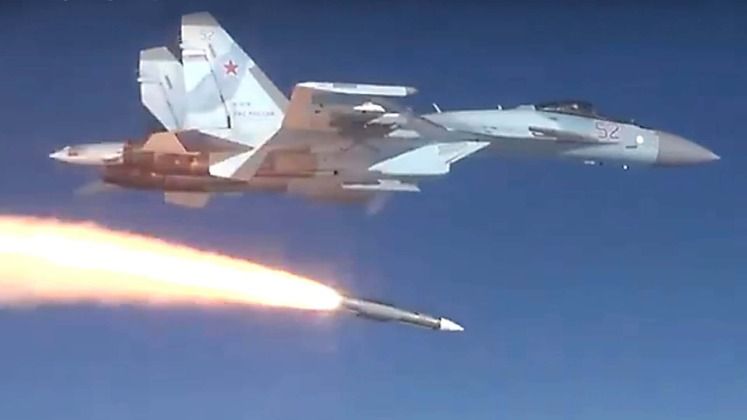
The F-15EX, unlike the original F-15, is much better suited to deploying very large air to air missiles, particularly as missile designs have become more sophisticated and as the fighter's sensor suite has become more powerful since the original Eagle first entered service 45 years ago. Fielding such a missile will provide the U.S. Air Force with an effective means of tackling larger enemy aircraft such as bombers and supporting airborne early warning (AEW) and tanker aircraft, which usually operate well out of range of missiles such as the AIM-120. The new missile will also help to close the gap with the Russian Air Force’s MiG-31 Foxhound interceptors, and with a growing number of smaller aircraft such as the Su-57 and Su-30SM which are beginning to deploy miniaturised variants of the R-37.
The new American long rang air to air missile is expected to be larger than the R-37, and could closely resemble China’s PL-XX which is being developed for its J-16 fighters - aircraft slightly heavier but from a similar weight range to the F-15. Each J-16 is expected to carry only a single PL-XX missile, but each missile is expected to have an extremely long 500-600km range and dual guidance from both infra red sensors and radars. To place this range in perspective, thee AIM-120C which is the primary beyond visual range air to air missile of the U.S. Military has a 100km range, while the AIM-54 had a range of around 200km. If the F-15EX’s new missile can match the PL-XX’s performance, it will be a highly formidable asset for the Air Force and a very unique kind of munition for a Western aircraft.
