
Why NATO Fears Russia's MiG-31 Interceptors: A Look at the Foxhound's Immense Combat Potential
Military Watch Magazine Editorial Staff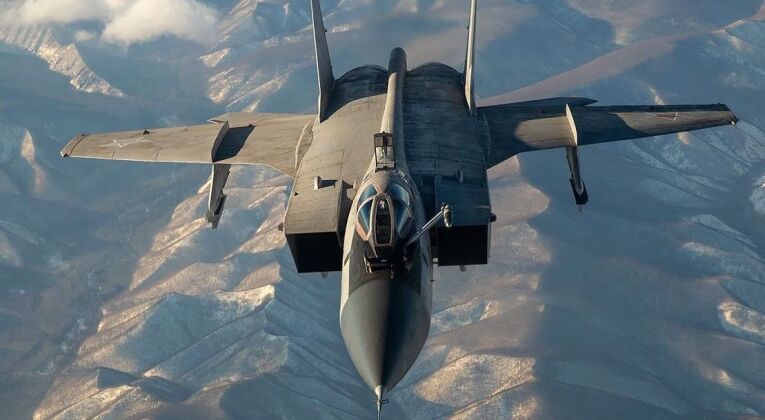
MiG-31 Foxhound
Entering service in 1981, the MiG-31 was the first fourth generation combat aircraft to join the Soviet military and is considered the most capable in the Russian Air Force today in terms of air-to-air combat performance. The platform was developed based on the MiG-25 Foxbat third generation interceptor, and was dubbed ’Super Foxbat’ in a report to Western intelligence by defecting MiG-25 Soviet pilot Viktor Belenko. The Foxhound was the first combat aircraft in the world to use a phased array radar, the Zaslon, and other than the Foxbat it remains the fastest combat jet to enter service anywhere in the world. The sheer size of the Zaslon as well as its sophistication placed the Foxhound in a league of its own in terms of situational awareness, and the aircraft was also totally unrivalled in several aspects of its flight performance. Able to cover all of the Soviet Union's vast northern and Central Asian territories, the MiG-31 had an extremely long range and was the first aircraft of its kind in the world capable of sustained cruising at supersonic speeds. The aircraft's maximum speed remains uncertain, with most sources indicating a speed of over Mach 2.8 and some estimating a speed of over Mach 3.
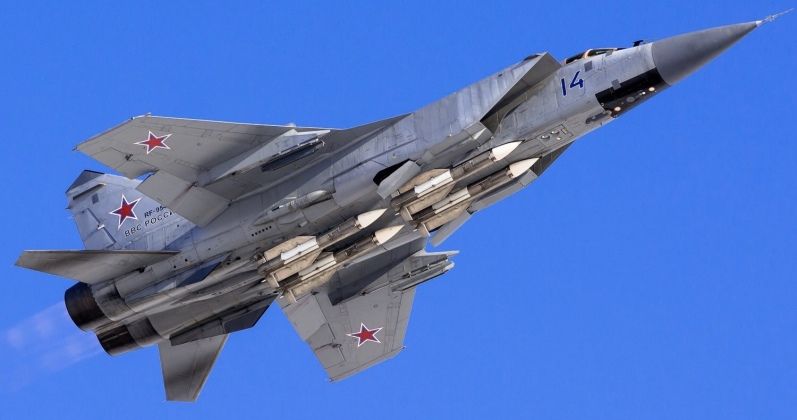
The MiG-31 is one of the most widely fielded combat aircraft in the Russian military, with several hundred more of the airframes in reserve. The Soviet Union initially intended to replace the aircraft with the newer MiG-31M next generation design, which was considerably larger and used new D-30F6M engines, digital flight controls and a multifunction cathode ray tube cockpit displays among other new features. Economic crisis in Russia led to the newer aircraft's cancellation shortly before the beginning of serial production in the mid 1990s, although many features from the MiG-31M including the greatly improved Zaslon-M radar and avionics were integrated onto the original MiG-31B Foxhound airframes to enhance them to the MiG-31BM standard. Although these were less capable than the MiG-31M they could still perform much better than the original Foxhound design. The large majority of Russia's active MiG-31 fleet have been upgraded to the MiG-31BM standard, with some having undergone further improvements to be brought up to the MiG-31BSM standard and benefitting from a higher cruise speed and a new central computer and aerial refuelling capability.
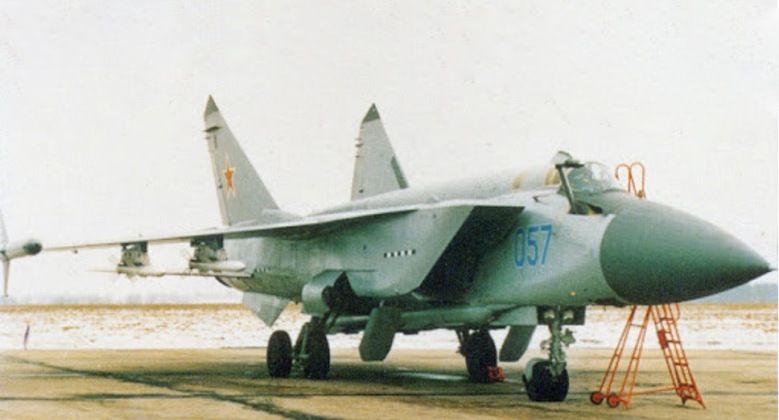
New Foxhound interceptors have been enhanced with R-77 and R-37 active radar guided missiles, which have engagement ranges of 110km and 400km respectively and of which the aircraft often deploy four of each. The R-37 is unrivalled in terms of speed and range and carries a very large 61kg warhead, and the ability to fire it at such ranges is facilitated by the power of the Zaslon-M radar which can detect large and medium sized aircraft over 400km away. It took several years for rival aircraft to begin deploying phased array radars built for air to air combat after the USSR began fielding the Zaslon, with Japan doing so 21 years later with the F-2 and the U.S. 24 years later with the F-22. The Foxhound's D-30F6 is also the most powerful engine by a considerable margin to ever be integrated onto a fourth generation combat jet, and its performance is sufficient to allow the aircraft to operate at extreme 25km altitudes. While most fighter and interceptor aircraft cannot fire missiles at high altitudes, the Foxhound can use its weapons at its full altitude ceiling which allows them to reach targets much further away.
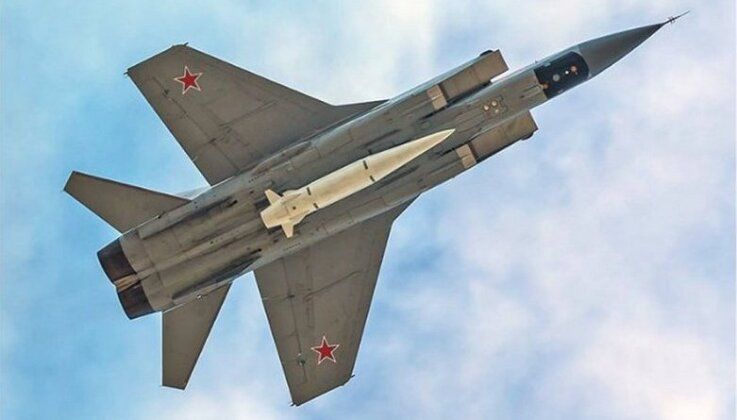
The MiG-31 is the heaviest combat jet built for air to air combat in service anywhere in the world at approximately 41,000kg depending on the combat and fuel load. This is approximately double the size of the F-15C Eagle - the U.S. Air Force's prime air superiority fighter during the Cold War and for over 15 years afterwards, and over 10,000kg heavier than the American F-22 which is currently the heaviest Western fighter in service. According to the chief designer at the Sokol Aircraft Plant where MiG-31s are refurbished, Aleksandr Osokin, new variants fo the Foxhound are approximately 2.6 times as capable as the original Cold War era models. The aircraft were designed not only to intercept all kinds of enemy aircraft, ranging from bombers and reconnaissance planes to fighters and airborne early warning jets, but also missiles with the aircraft highly capable of low altitude cruise missile interception. Capitalising on the Foxhound's very capable airframe, and the very large numbers of aircraft Russia has as its disposal, the aircraft has also been adapted for roles beyond air to air combat. This has included equipping the aircraft for anti satellite warfare to capitalise on their very high speeds and operational altitudes and their ability to carry very large missiless needed to reach targets in high orbit. The MiG-31K variant was inducted into service in early 2018 with a hypersonic tactical ballistic missile capability as a strike and maritime strike aircraft, with the Kh-47M2 missile able to threaten all manner of ground and surface targets at ranges of up to 2000km with high reliability and precision and a Mach 10 speed.
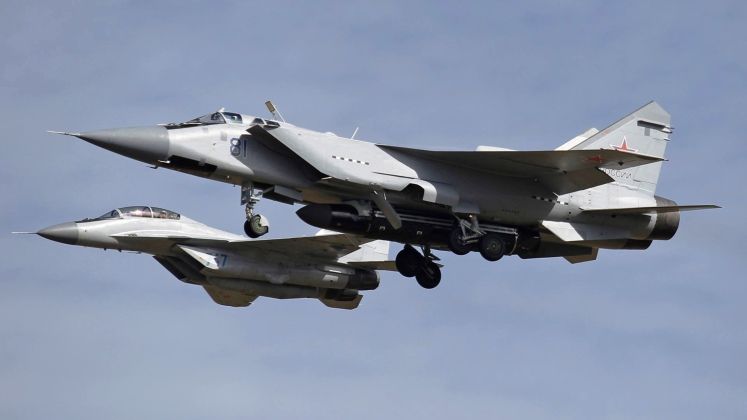
The Foxhound is expected to remain in service into the 2040s, and is quite possibly the most important combat jet in Russian service due to the wide range of roles it can perform and to its growing versatility as new weapons have been integrated. The aircraft have recently been relied on in both air superiority and strike configurations to guard the Russian Arctic, and are ideally suited to deploying from ice runways and enduring extreme temperatures. With each squadron able to cover a 1000-1200 kilometre area and to detect and engage targets very far away, no aircraft in the world is better suited to such a role. Russia is currently developing a successor to the MiG-31, the MiG-41, which will be able to perform similar roles but will have a far superior performance across the spectrum. The new aircraft will be able to fly hypersonically at speeds exceeding Mach 5, will have a higher altitude ceiling than the Foxhound to fly in near space. They will deploy more capable weapons including directed energy weapons and new classes of anti satellite weaponry. Other features, including integration of artificial intelligence, a revolutionary new sensor suite and new hypersonic weapons, have also been speculated. Ultimately the MiG-31 will likely remain Russia's most dangerous combat jet built for air to air combat for years to come - rivalled only by its Su-57 stealth fighter as the design further matures - and will continue to be respected for its considerable capabilities by Russian adversaries.
