
A New Role for the F-22: How Effective Was the Raptor as an Aerial Sniper Against the Taliban?
Military Watch Magazine Editorial Staff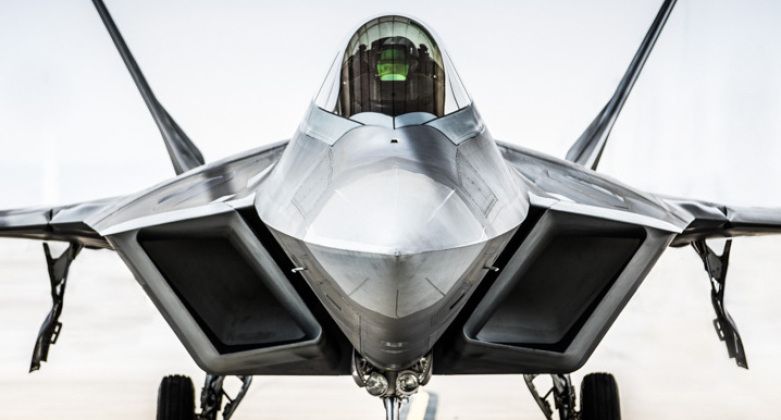
U.S. Air Force F-22 Raptor Stealth Fighter
Patrick Molnar
The F-22 Raptor was developed from the late 1970s as a dedicated air superiority fighter for the U.S. Air Force, with the program pursued in response to the Soviet development of the MiG-31 Foxhound heavy interceptor and Su-27 Flanker heavyweight fighter which had begun to conduct their first flights in 1975 and 1977 respectively. The Raptor entered service after considerable delays and several cost saving cuts to its design in December 2005, and was the world's first fifth generation fighter to become operational. The aircraft's very high maintenance requirements, and its operational costs which were over double those it had initially been intended to have, were key factors leading to its early termination from production - with the order given in 2009 less than five years after it entered service. This was a very short production run, with its predecessor the F-15, for example, remaining in production for over 45 years after the aircraft's initial entry into service. The U.S. Air Force nevertheless received 187 F-22s, which while just a fraction of the more than 700 F-15s it had fielded was still not an inconsiderable fleet.
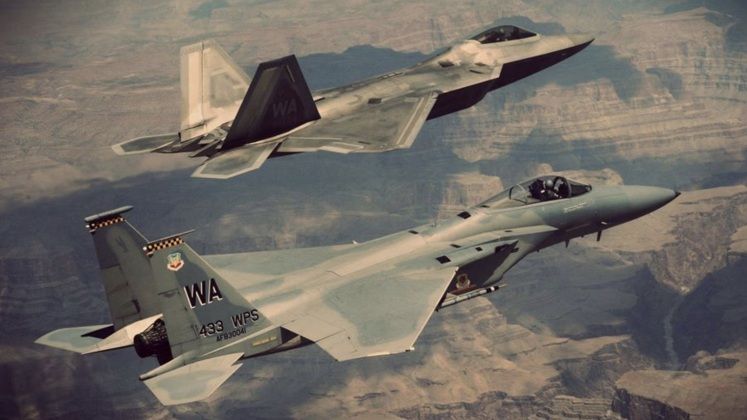
The F-22 would remain the only heavyweight fighter of its generation for little over 11 years, until the Chinese J-20 entered service in March 2017 which was followed by the Russian Su-57 in December 2020. In the F-22's first fifteen years in service, however, the war on terror and lack of near peer adversarial threats in the post Cold War era meant that the fighter had no opportunities to engage enemy platforms in air to air combat - let alone rival heavyweight air superiority platforms such as the Su-27 or J-11B against which it could demonstrate its potency. While the F-15, the F-22's fourth generation predecessor, saw extensive air to air combat in Israeli hands and later by the United States and Saudi Arabia in Operation Desert Storm against the Iraqi Air Force, the F-22 never had a chance to prove itself a worthy investment. Although the fighter was highly specialised for air to air combat, the lack of any combat situations which required such a platform mean the Raptor acted only as a deterrent to maintain a favourable balance of power in Europe and the Pacific against genuine near peer threats.
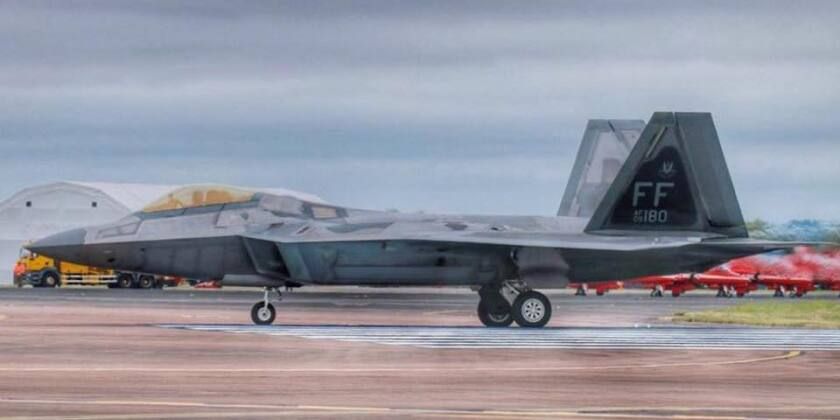
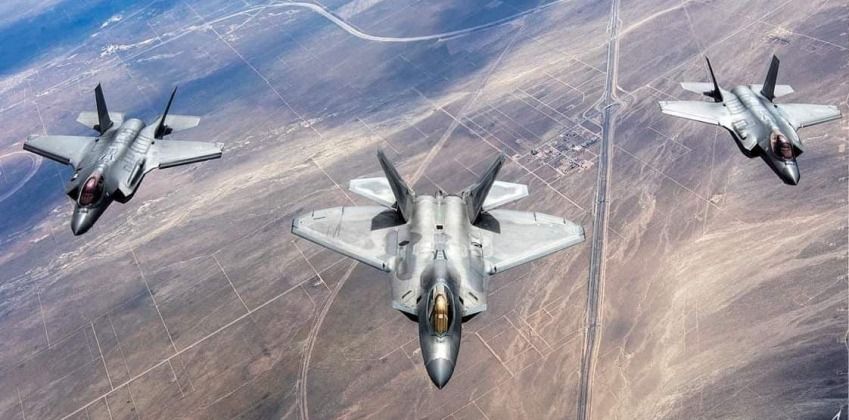
The F-22 was nevertheless adapted to carry low diameter guided bombs which could be carried from its internal weapons bays, although these did not have a standoff capability, could only be carried in small numbers, and were too small to penetrate any fortified targets. The fact that the Raptor had to fly over the target to deploy them made their usefulness limited in an inter-state conflict against a high end adversary, but did present options to give the Raptor its first taste of combat against insurgents with negligible fortifications or anti aircraft capabilities. The F-22 saw its first combat deployment with a limited contribution to the air campaign against the Islamic State insurgent group in Iraq in 2015, which was seen by many as being at least partially motivated by the need to prevent criticism of the aircraft seeing a full decade without any combat service since the Raptor was far from the ideal aircraft for such missions.
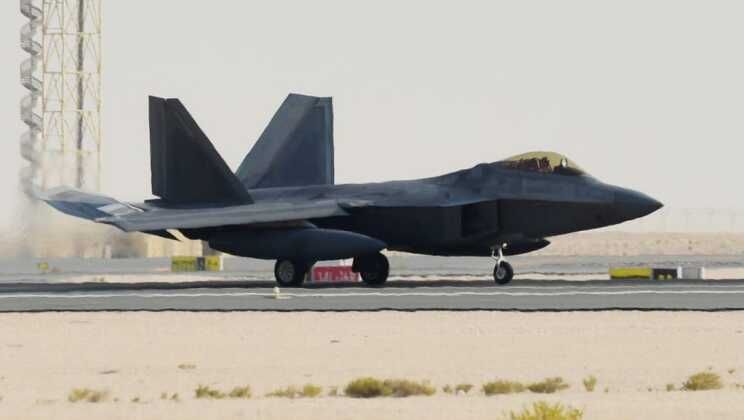
The F-22 was subsequently deployed to Afghanistan against Taliban insurgents, where the aircraft capitalised on their very long ranges to strike from Al Dhafra Airbase in the United Arab Emirates. The first missions reportedly saw the aircraft carry out sorties against drug depots used by the insurgent group, and according to the chief of NATO's Resolute Support mission U.S. Army General John Nicholson, the F-22 was invaluable "because of its ability to deliver precision munitions: it wasn't because of some of the other capabilities of the aircraft." After Raptors were used to deliver 250 pound small diameter munitions on a Taliban complex, the general stated: "As you look at this strike, you're going to see that inside this compound are multiple structures, and we destroy only two of them, while leaving the third standing, which we do to avoid collateral damage." Although the very limited range of air to ground munitions the Raptor could deploy was a serious hindrance to its effectiveness in a strike role, the aircrafts very powerful sensor suite ensured that those weapons which were delivered could reach their targets with high precision.
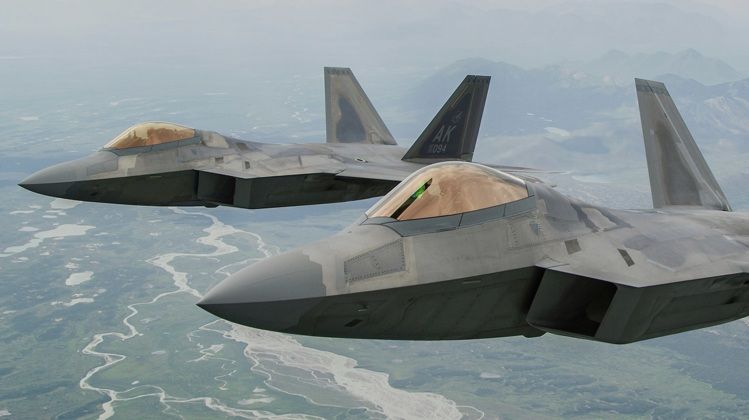
The F-22's AN/APG-77 radar was the first phased array radar integrated onto an American fighter, following on from the Zaslon radar which was used on the Soviet MiG-31 from 1981 and the J/APG-1 used by the Japanese F-2 from 2002. It was also the first AESA radar integrated onto a Western fighter, and provided far superior situational awareness relative to older generations of American fighters. Ultimately the Raptor is far from ideal for a strike role, particularly when compared to the F-35 and Su-57 and to older fourth generation American fighters such as the F-15E, and its unparalleled high maintenance needs and operational costs make it one of the least logistically friendly or cost effective aircraft for such missions. Pressing the aircraft into such a role, however, has allowed the aircraft to avoid being America's only combat jet not to have seen combat, and has provided the Air Force with some operational experience using the Raptor in combat conditions - albeit very different ones from those they would expect to face in an actual war.
