
How the U.S. Air Force Repurposed the F-22 Raptor Into Lethal Radar Evading Strike Fighter
Military Watch Magazine Editorial Staff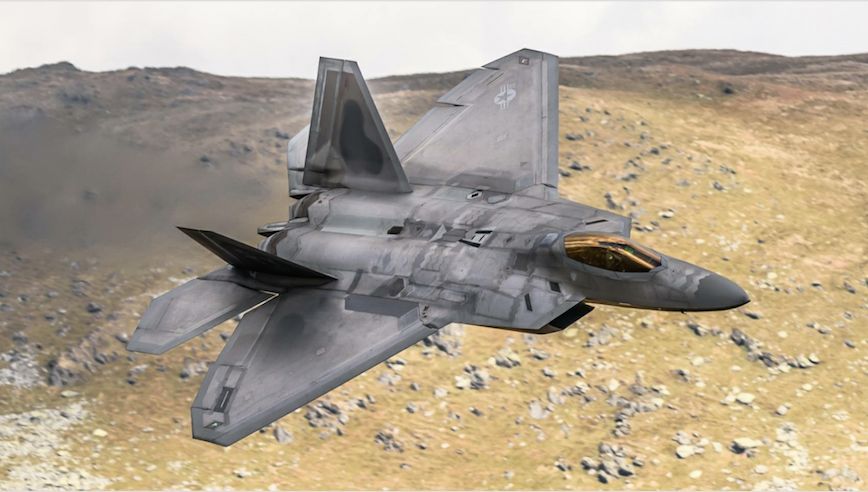
U.S. Air Force F-22 Raptor
The F-22 Raptor was a designed from the late 1970s as a next generation air superiority platform, and was highly specialised for air to air combat as a successor to the F-15C Eagle. With the induction of the Soviet Su-27 air superiority fighter and MiG-31 interceptor into frontline service in 1985 and 1981 respectively, and enhancement of the MiG-25 Foxbat to the MiG-25PD standard, the superiority of the much lighter F-15 was very seriously challenged. This situation would only worsen was the Soviets moved to develop stealthier and more capable next generation designs such as the MiG 1.44 and Su-47, and the Raptor was thus intended to go head to head with the elite of the Soviet Air Force and come out on top. While the Soviet collapse in 1991 would lead to delays in America's next generation fighter program, Russia would continue to work on less ambitious but still formidable high end air superiority fighters such as the Su-37 and Su-35. When the F-22 entered service in December 2005, it was intended to outmatch the capabilities of these next generation jets and ensure American superiority in the coming decades.
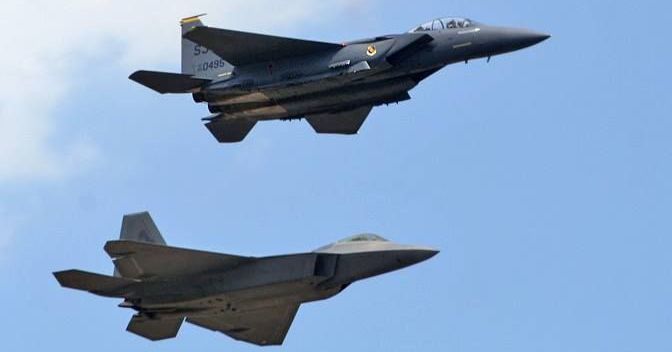
The end the Cold War and the absence of great power competition would ultimately lead to a scrapping of plans to develop a carrier based variant of the Raptor for the U.S. Navy, and also saw planned orders for F-22s for the Air Force cut by 75%. With incidences of air to air combat extremely few, the Air Force’s active Raptor fleet went almost ten years without seeing combat - deployed across the world from Japan and South Korea to the Persian Gulf to Alaska. The F-22 program faced growing criticism in the latter half of the 2000s and early 2010s, as America’s most sophisticated and costly fighter had made no contribution to ongoing wars in the Middle East, North Africa and Central Asia and pilots were not able to gain any experience on combat missions. The Air Force thus moved to repurpose the Raptor for a strike role, which would capitalise on its powerful sensors, stealth capabilities, high endurance and large weapons bays and allow the service to gain at least some combat experience with new fifth generation aircraft.
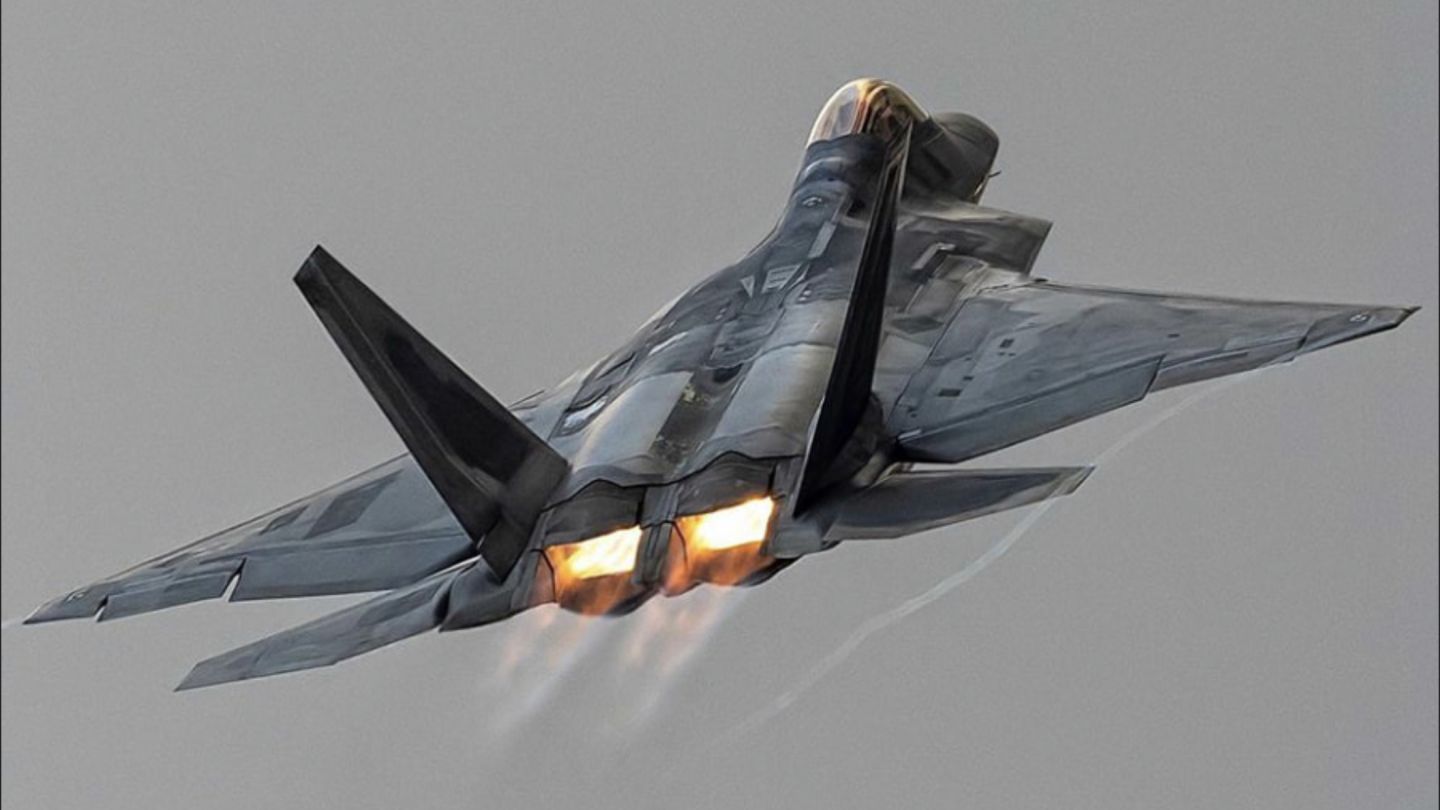
Configuring a high performance Air Superiority fighter for strike missions was far from unprecedented, and a similar program had been initiated to allow the U.S. Navy’s F-14 Tomcats to carry out precision strikes in Iraq where their powerful sensor suites allowed provided a degree of situational awareness no other American fighter at the time could match. The Raptor’s sensors provided comparable and in many cases superior situational awareness to dedicated airborne early warning aircraft - allowing them to stand in for the E-2 Hawkeye and E-3 Sentry platforms and gather crucial information on ground and air targets. Raptors began to deploy for strike missions in 2014, attacking Islamic State positions in Iraq and Syria. American operations in Syrian airspace were carried out illegally and without the permission of either the Syrian government or the United Nations Security Council, meaning aircraft faced the risk of being engaged by Syrian air defences or surface to air missile batteries. The presence of the F-22 could serve as a key deterrent to Syrian forces, allowing American aircraft to continue to operate in the country’s airspace.
Flying strike missions in low intensity conflicts such as Syria, and later Afghanistan, has provided the U.S. Air Force with some experience operating the Raptor in a combat environment, much as Russia has tried to gain experience with shorter deployments of its Su-57 next generation fighter to Syria. Such missions do not require the Raptor to test the limits of its performance or perform complex manoeuvres, as it would it air to air combat, meaning the strain on the airframe is considerably less. Tom McIntyre, an Air Combat Command program analyst, told the House Armed Services Committee to this effect in June 2017: “We came to find out we have not been flying the Raptor nearly as hard as those design missions [in the 1980s-1990s] nor as what we found out during the structural testing, so actually the airframe itself — without any service life extension program — is good out to approximately 2060.”
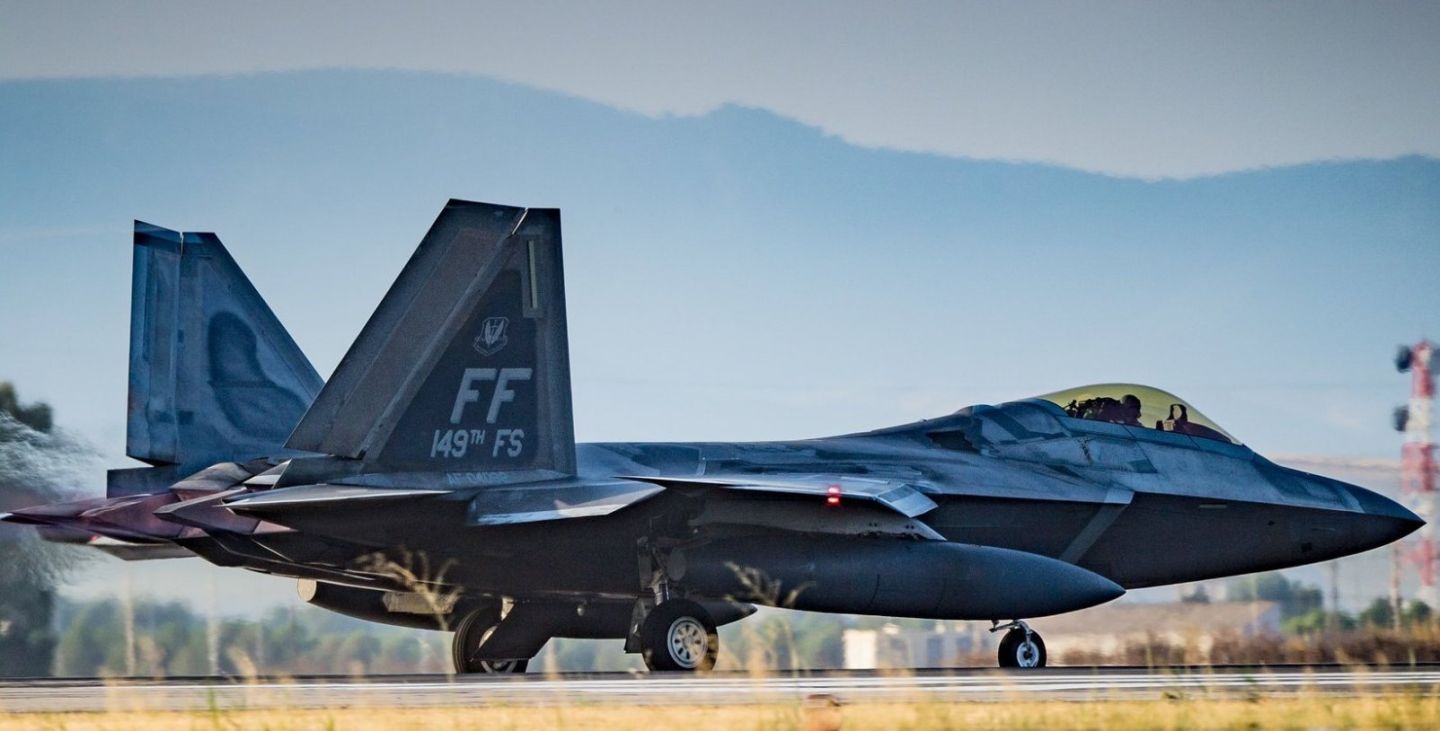
Ultimately the F-22 is not an optimal strike fighter. Its operational costs are very high and its weapons bays are too shallow to accommodate high payload bombs needed to penetrate enemy fortifications. With the condition of the Raptor fleet fast deteriorating, and a replacement F-X fighter expected to enter service in the early 2030s, alongside the F-15X which is in many ways a more modern and sophisticated design, the F-22 could see an early retirement around 2040 if not sooner without ever seeing air to air combat. Difficulties maintaining and upgrading the aircraft, and the fast growing capabilities of rival next generation fighters such as the Chinese J-20 which integrate many superior technologies, are likely to speed up this process. The F-22 will be remembered as the world’s first stealth aircraft designed for air to air combat, and a vital deterrent to American adversaries which set the standard for post-Cold War air superiority designs, but whether it will ever see air to air combat, in which its predecessors the F-15 and F-14 built their reputations, remains highly questionable.
