
Raptor Elite Send a Strong Message; One Seventh of America’s F-22 Fleet Conducts Large Exercise near Russian Border
Military Watch Magazine Editorial Staff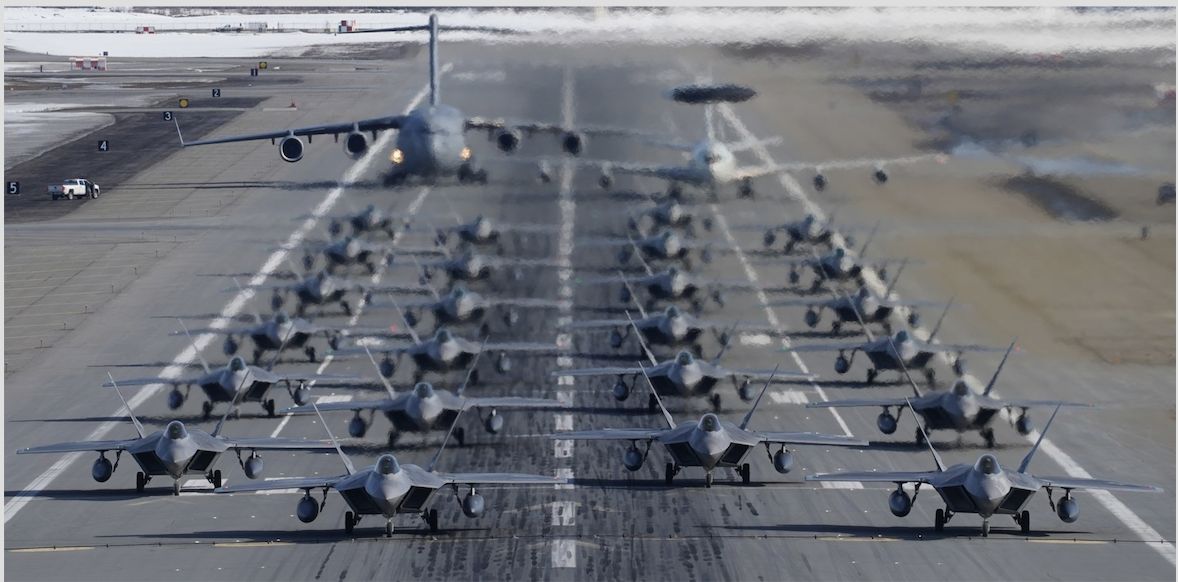
U.S. Air Force F-22 Raptors with E-3 and C-17
F-22 Raptors from the 3rd Wing of the U.S. Air Force’s 477th Fighter Group have conducted a large scale combat readiness exercise in Alaska at Joint Base Elmendorf-Richardson, alongside a E-3 Sentry Airborne Warning and Control Systems (AWACS) platform and a C-17 Globemaster III long range transport. 24 F-22s took part in the exercise - representing approximately one seventh of the total U.S. Raptor fleet. The drill, known as an ‘Elephant Walk,’ involved the fighters taxiing incomes formation with their support aircraft and taking off at minimal intervals. The deployment of such large numbers of F-22s, which are usually deployed in units of six or less due to their scarcity, represents a major show of force and one of the most potent air formations seen anywhere in the world. The presence of the E-3 further sends a signal of high combat readiness due to its ability to serve as a highly effective force multiplier to F-22 units in long range air to air engagements - with the ability to detect targets, coordinate attacks and even guide missiles from the Raptors to more effectively engage enemy targets.
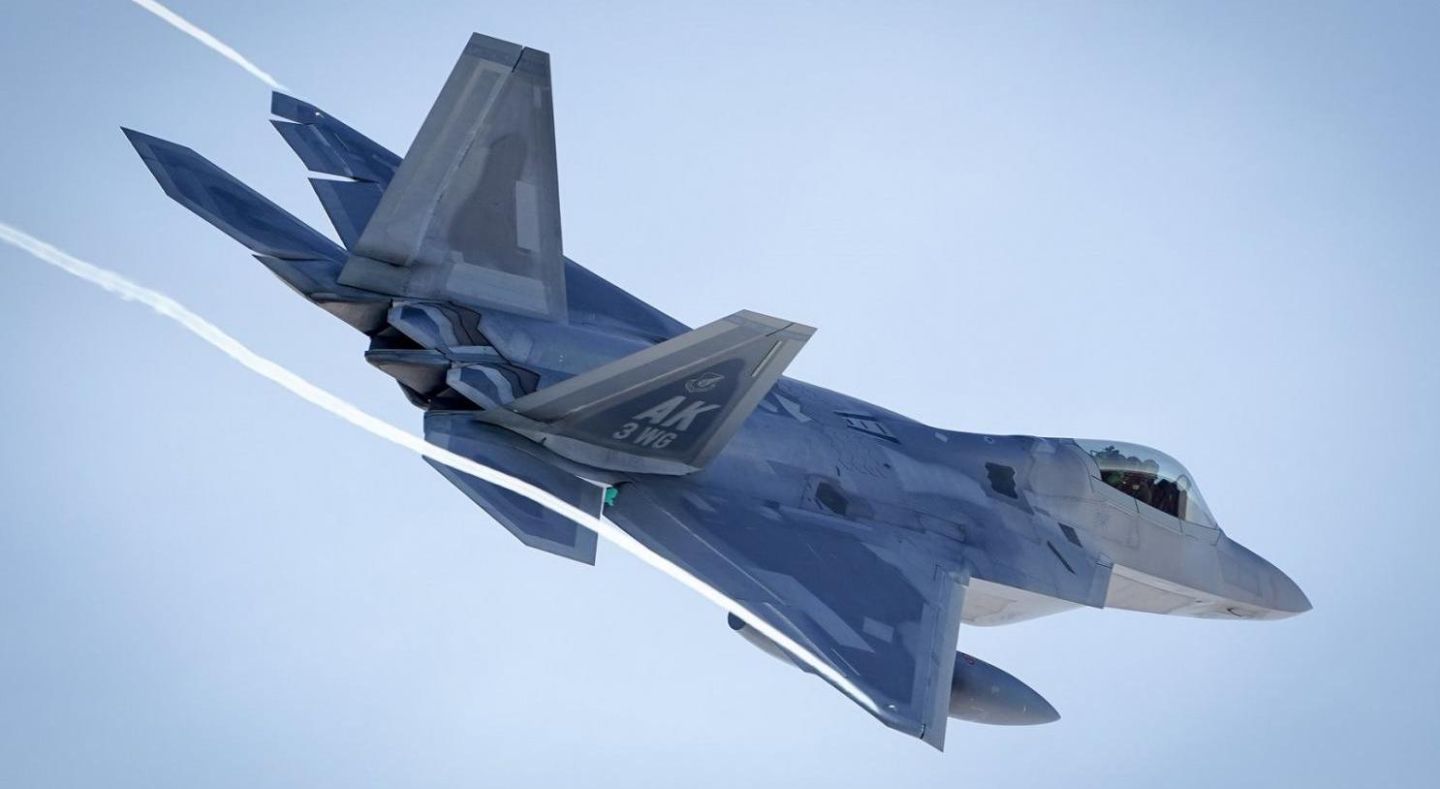
Exercises involving large numbers of Raptors in Alaska at a time of growing Russian-U.S. tensions are likely intended to send a strong signal to Moscow regarding American resolve, and the capabilities of the F-22 at present remain unmatched by anything in the Russian air fleet. While Russian forces have carried out regular patrols off the Alaskan coast, including regular flights with heavy bombers such as the Tu-95, the prospects of having to engage F-22s in such large numbers - either to protect their bombers or potentially to defend their own airspace should the Raptors move to the offensive - remains highly unattractive. The F-22 was designed with a long range to penetrate deep into enemy airspace, and with Alaska just 80km from Russia’s mainland the fighters are well positioned to carry out strikes deep into Russian territory with the full support of their AWACS assets. Raptors were all deployed with external fuel tanks for an extended range.
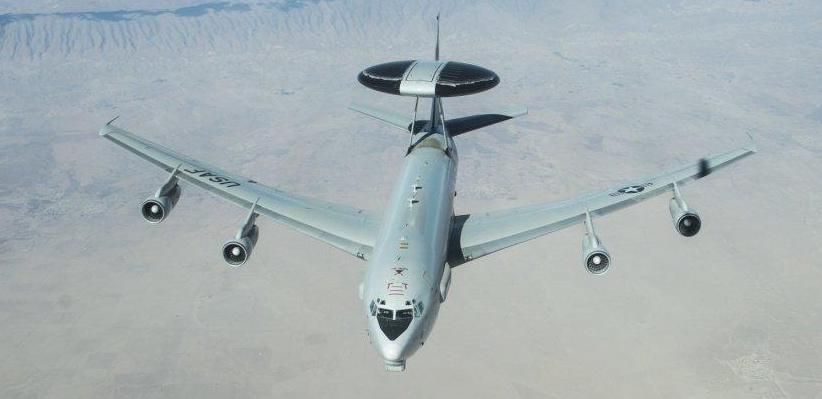
The Russian Air Force’s fighter fleet is currently comprised overwhelmingly of derivatives of the Su-27 Flanker, a fourth generation platform which the F-22 was designed specifically to overcome during the Cold War. While Russia has developed its own fifth generation aircraft, the Su-57, which its Air Force has repeatedly reiterated can overcome the Raptor, this platform has yet to enter frontline service - and is unlikely to be deployed in significant numbers to Russia’s Far East before the late 2020s. While Russia's armed forces to retain capability leads over the United States in a number of key fields, their AWACS systems also lag behind those of the U.S. considerably with no analogue to the E-3 in service. The Russian Air Force and Air Defence Forces for their part have attempted to heavily compensate for these shortcomings, both with the deployment of powerful ground based radars such as the 91N6E used by the S-400 system and by enhancing the designs of both the Flanker air superiority fighters and the Foxhound interceptors to develop platforms such as the Su-27SM3 and MiG-31BSM to bridge the technological gap with the Raptor.
