
Rust Bucket Fleet? How Ukraine's Ageing Su-27 Fleet Would Fare Against Russia's Elite New Air Superiority Fighters
Military Watch Magazine Editorial Staff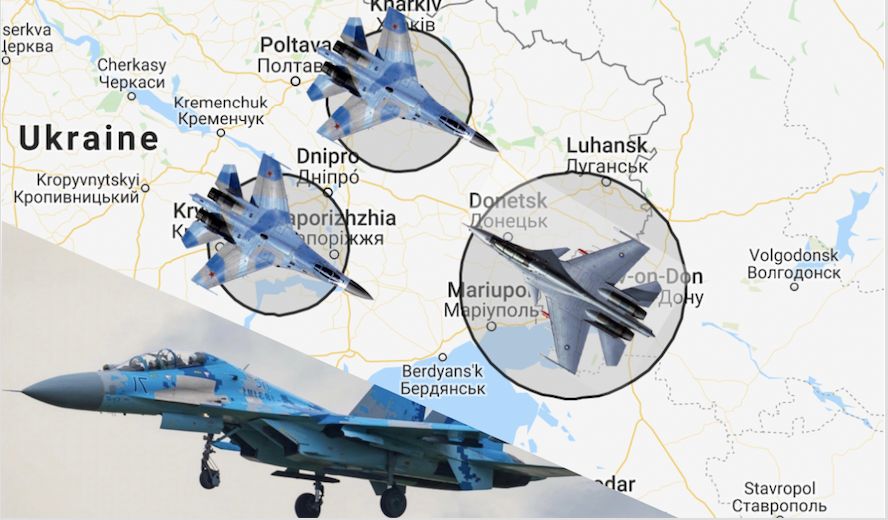
Engagement Range of Ukrainian Su-27 and Russian Su-30 Fighters
As Russia’s relations with its Eastern European neighbour Ukraine have deteriorated considerably since 2014, with a Western backed coup ousting the country’s formerly Russian aligned government in favour of a strongly pro Western one and Russia retaliating by seizing the Crimean Peninsula - which Moscow feared could fall under NATO’s influence should it remain under Kiev’s rule - the possibility of open conflict between the two former allies has become considerable. While both countries are Soviet successor states which inherited large quantities of modern arms from the USSR following its dissolution in 1991, Russia has been far more successful in modernising its assets - having invested heavily in doing so since its 2008 war with Georgia and amid renewed tensions with the Western Bloc. Ukraine’s armed forces by contrast have evolved relatively little since the Cold War's end, and this is strongly reflected in the capabilities of both its Air Force and its Air Defence Forces. With a potential Russian strike against Ukrainian targets likely to rely heavily on deployment of aerial assets, either as part of limited military action in response to a Ukrainian attack on Russian backed separatists or as part of a larger conflict, an analysis of Ukraine’s ability to defend its airspace and the assets currently at its disposal is invaluable.
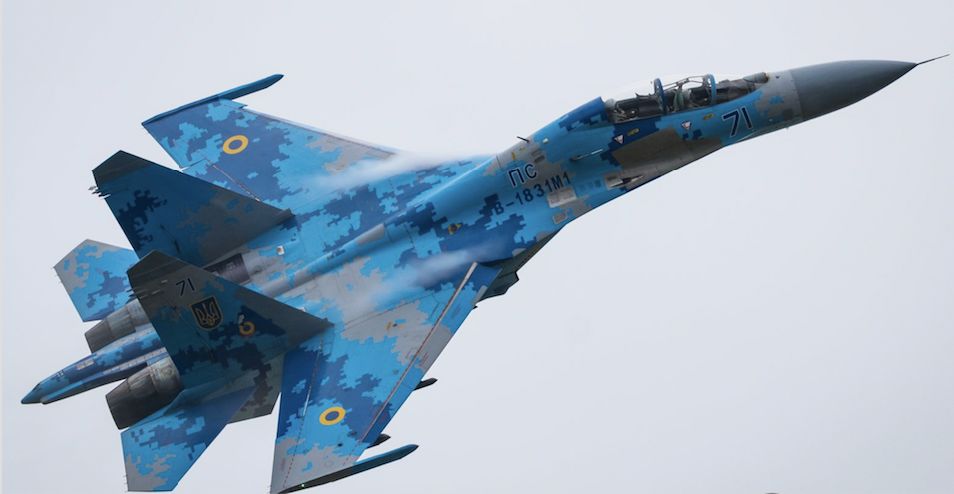
Ukrainian Air Force Su-27
Ukraine inherited a number of Soviet MiG-29 and Su-27 fighters following the Cold War’s end - with the former designed as a medium weight short range multirole aircraft while the latter was intended for high end air superiority missions. While the country’s inventory of older third generation fighters such as the MiG-23 were retired, these aircraft remained in service - though a number of Su-27 jets were reportedly exported to East Africa to serve in the Ethiopian-Eritrean War - in which both warring parties sought out the latest and most capable air superiority aircraft to gain an advantage over the other. A number of MiG-29 fighters were reportedly captured by Russian forces during the conquest of Crimea in 2014, though these were returned to Kiev in a gesture of goodwill. The Su-27 remains a potentially highly potent threat to hostile combat aircraft encroaching on Ukrainian airspace, and an analysis of its capabilities relative to those of modern Russian combat aircraft provides a valuable indication as to how effectively Ukraine can defend its territory and what level of resistance Russian can expect should it seek to gain air superiority over Ukraine.
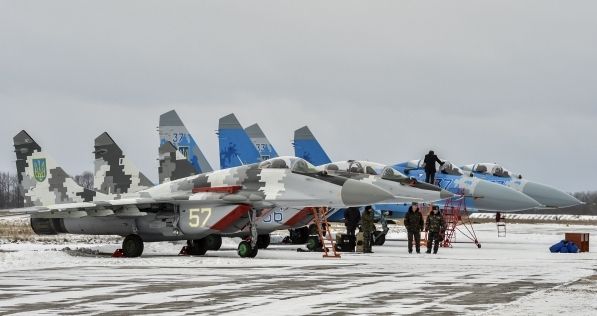
Ukrainian Air Force MIG-29 and Su-27 Fighters
While the Su-27 airframe is among the most capable in Europe and one of very few high end air superiority fighters deployed by a European Air Force, Ukraine’s modernisation and maintenance efforts have left much to be desired. While pilots have an average of just 40 flying hours per year, meaning a very low intensity of use for the advanced combat jets, Ukrainian Su-27s saw two crashes in 2018 alone in which pilots were killed. This brought the number of the elite fighters in service down to just 32. The Su-27 is potentially the most lethal threat to Russian combat aircraft should they seek to enter Ukrainian airspace - and even elite Russian Su-30 and Su-35 air superiority fighters can potentially be threatened by the older aircraft should they be properly modernised to a similar standard as the Su-27s in Russian service. Russia's own Su-27 jets have either been upgraded or recently manufactured at the Su-27SM2 or SM3 standard - making them '4+ generation' fighters with state of the art avionics and engines and an Irbis-E radar. A number of technologies from the Russian Su-35 have been integrated onto these airframes to enhance their air to air capabilities, and the fleet is currently being equipped with advanced long range air to air munitions such as the R-27ER. Ukraine’s Su-27 fighters one the other hand remain several decades behind those in Russian service with few investments being made to modernise them since the Soviet Union's dissolution. This is strongly reflected in their avionics and electronic warfare systems - as well as in their access to modern air to air munitions.
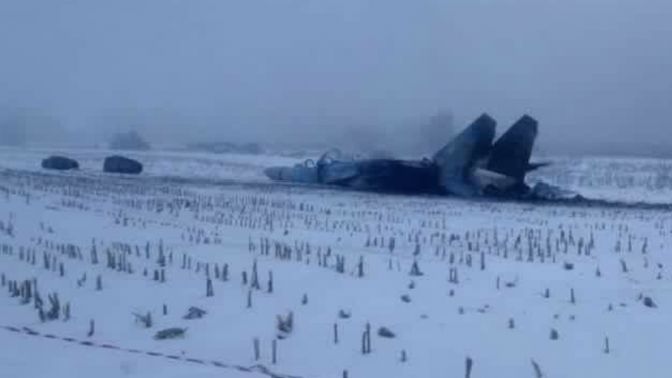
Crashed Ukrainian Su-27 Air Superiority Fighter
While Russian air superiority fighters are capable of engaging hostile targets at ranges of up to 130km with the R-27ER or 110km with the R-77 - which will soon extend to 193km with the induction of the K-77, the Ukrainian Air Force lacks any long range air to air munitions whatsoever. Indeed, even if these Russian missiles could somehow be acquired, it is uncertain whether Ukraine could modify its fighters to deploy them. As such, Russian fighters such as the Su-30 can engage the Ukrainian jets at ranges far beyond any potential retaliation. Given the relatively basic electronic warfare capabilities of the Ukrainian jets relative to the sophisticated countermeasures deployed by modern Russian missiles, the aircraft would be highly vulnerable. These factors, combined with the advanced capabilities of Russian fighters such as the Su-30 or Su-27SM3 - the latter deploying advanced thrust vectoring systems making them extremely manoeuvrable, will ensure an overwhelming advantage over the highly questionable Ukrainian fleet.
