
Bringing the MiG-25 Foxbat Into the Fourth Generation: How Russia Enhanced its Mach 3 Interceptors for War with the West
Military Watch Magazine Editorial Staff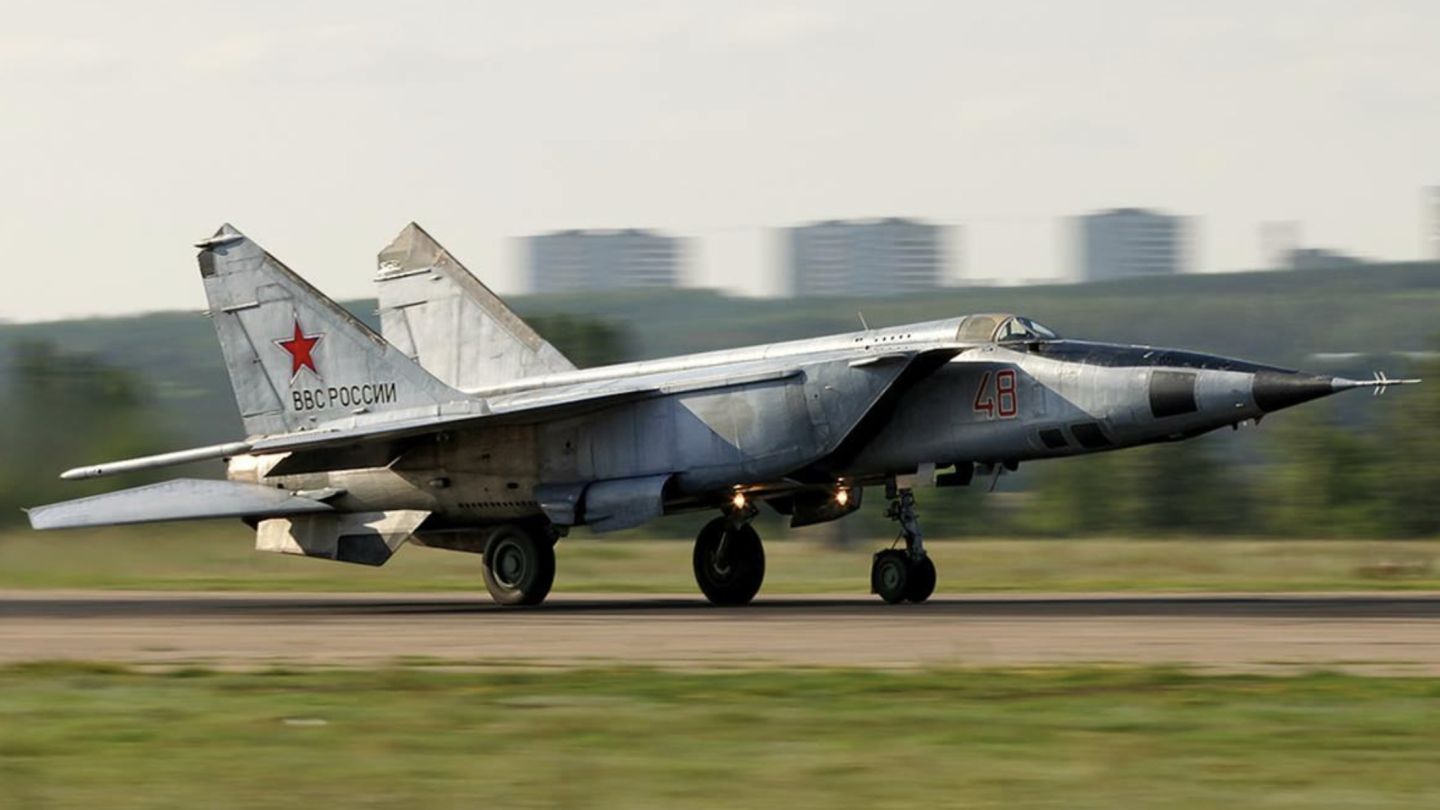
MiG-25 Foxbat
The MiG-25 Foxbat first entered service in 1976, and to this day is widely considered the most capable combat jet of the third generation to have flown. The aircraft was design as a heavyweight interceptor, which was capable of operating at extreme speeds of Mach 3.2 and altitudes approaching 25km - contributing to its considerable survivability against all manner of anti aircraft missiles at the time. The platform set records for speed and attitude, some of which stand to this day. The MiG-25 remains among the heaviest aircraft ever developed for air to air combat, second in service today only to its heavier twin seat derivative the MiiG-31 Foxhound, and this weight allowed the aircraft to carry a considerable weapons payload and a sizeable sensor suite. Aside from their flight performance, the interceptors were prized for their ability to deploy R-40 air to air missiles, which with an 80km range and massive 100kg payload were unrivalled for their time.
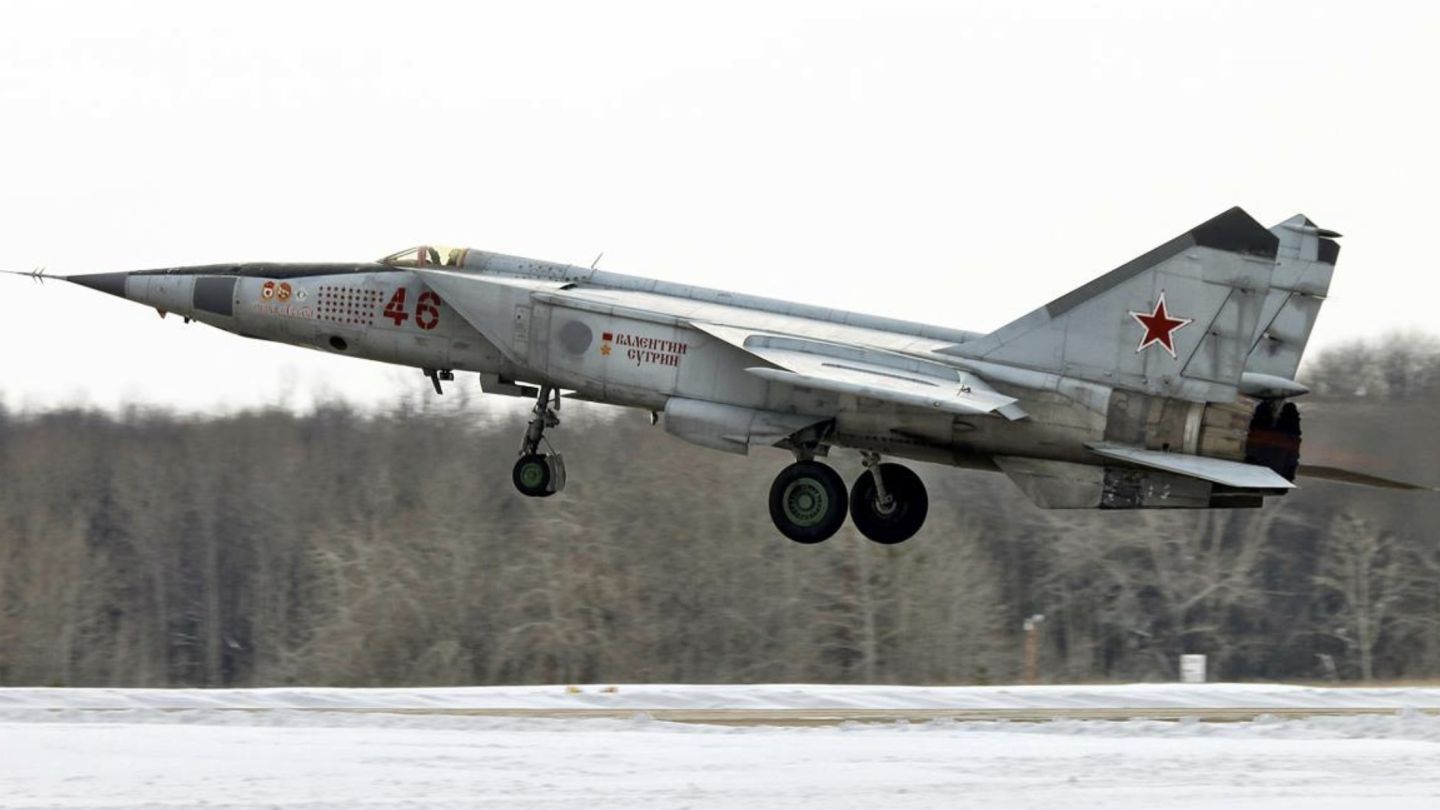
The Foxbat first proved its capabilities in a reconnaissance role, with four of the aircraft deployed to a Soviet military facility in northern Egypt in 1971 from where they carried out multiple overflights of the Israeli held Sinai Peninsula. Although Sinai was extremely well fortified, with defences rivalling the most heavily defended areas in Western Europe which faced the Warsaw Pact forces, the Foxbats proved capable of evading all Israeli defences. These included American F-4E Phantom air superiority fighters, the most capable Western combat jets in the world at the time, as well as MIM-23 Hawk air defence systems and AIM-7 Sparrow air to air missiles. The Foxbat would demonstrate extreme survivability multiple times during the Cold War, including during Indian overflights of Pakistan, Iraqi overflights of Iran and even during Operation Desert Storm where America’s elite F-15C Eagles often struggled to successfully target them.
While the MiG-25 was a highly formidable design, it was compromised in 1976 by the defection of pilot Viktor Belenko to Japan. The pilot flew his Foxbat from the USSR to Hakodate in neighbouring Japan, and took with him the interceptor’s pilot manual. The jet was the most capable in Soviet service at the time, and was extensively studied by American and Japanese technicians. This included acquiring the fighter’s identification friend or foe codes, studying its electronics and sampling the materials from its airframe and engines. Each turbine and compressor blade from the engine was sampled, the canopy was taken apart and metal characteristics were investigated by drilling holes in the aircraft. The Soviets would respond to the loss of this highly sensitive technology not by retiring the Foxbat, but rather by accelerating plans to modernise the design - so that its technologies would not be recognisable from those of the original which had fallen into Western hands.
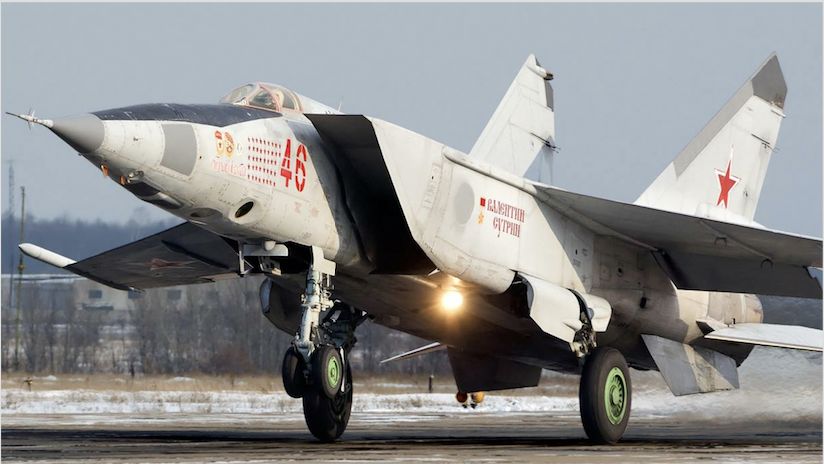
Enhancements to the MiG-25 design were extensive in the aftermath of the Belenko’s defection, and saw the aircraft quickly upgraded to a far more advanced fourth generation standard with the MiG-25PD variant. Changes to the friend or foe codes and the Foxbat’s armaments system were prioritised, and avionics were also extensively altered. Perhaps the mosts notable change to the design, however, was the integration of the new Sapphire-25 airborne interception pulse doppler radar, which benefitted from technologies being developed for the MiG-31 Foxhound interceptor - the Soviet Union’s first fourth generation jet designed for air to air combat. The new radar revolutionised the Foxbat’s situational awareness with a look-down shoot-down capability, which allowed it to engage targets flying far below it and thus make full use of its high altitude ceiling. This was considered particularly critical in light of new American bomber tactics which emphasised low altitude flight, and the development of the B-1B Lancer bomber, F-111 strike fighter and Tornado attack jet which were optimised for such low level incursions.
Where older Foxbats could not detect targets flying less than 500m above ground level due to the ground reflection effect, the Sapphire-25 integrated onto the MiG-25PD could detect targets flying at altitudes of just 50m. The aircraft’s new sensors also allowed it to detect targets at far longer ranges, and to engage targets at 30km altitudes - where it has previously been restricted to 27km altitudes. The new variant of the Foxbat also integrated a new infra red search and track system, which was a feature of all Soviet fourth generation designs, that allowed it to engage targets at shorter ranges without using its radar and leaving a radar signature. The interceptor also saw the capabilities of its R-40 missiles improved - which included both infra red and radar guided variants. Flight performance was also improved with integration of the new R-15BD-300 engines.
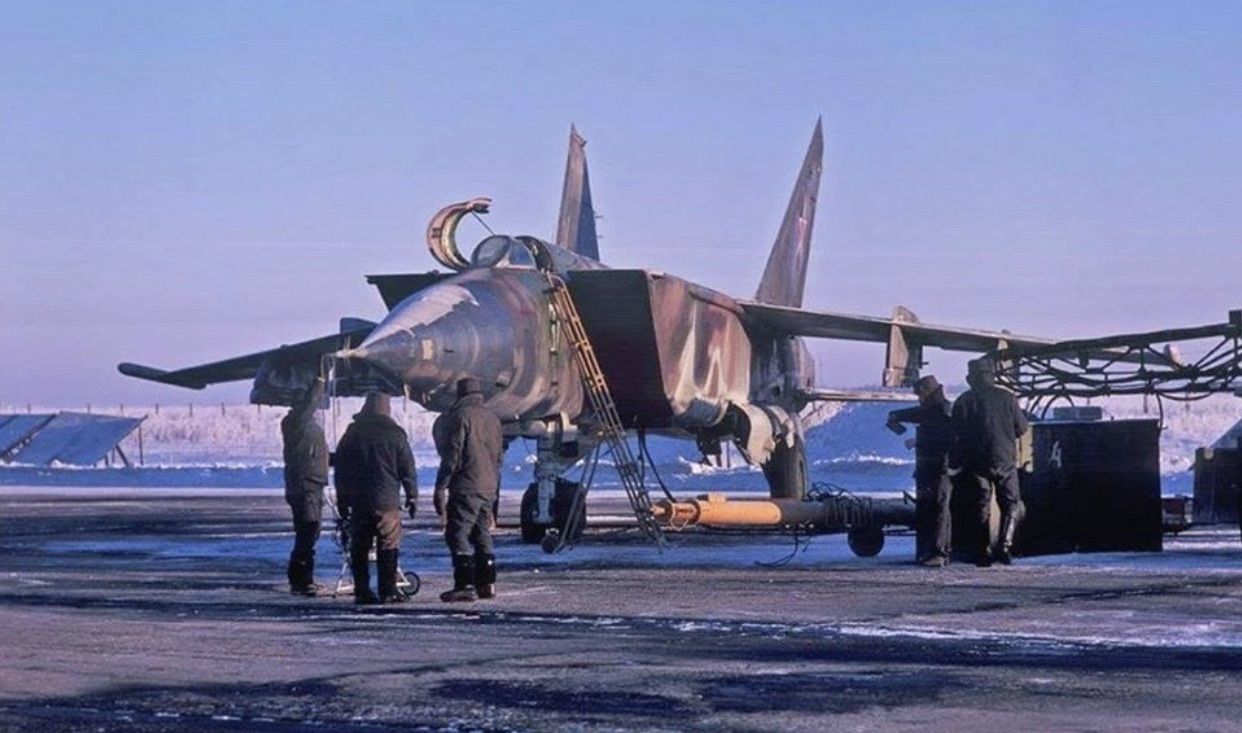
Around 150 MiG-25PD Foxbats were built, although the technologies developed would see further use with the development of the MiG-25PDS variant. The PDS was used to designate older Foxbats including those built before the Belenko defection which were upgraded to the MiG-25PD standard with new sensors, avionics, identification codes and missiles all installed. The ’S’ stood for ‘upgraded in service.’ Other variants of the MiG-25 would be developed as the design matured, such as the MiG-25RR designed to sample radiation over Chinese nuclear sites and the MiG-25BM designed for the suppression of enemy air defences. Around 40 of the latter were built, and were equipped with modern Kh-58 and Kh-31 standoff cruise missiles. These too boasted advanced fourth generation capabilities. Among the interceptor variants of the Foxbat however, it was the MIG-25PD which was considered the most capable.
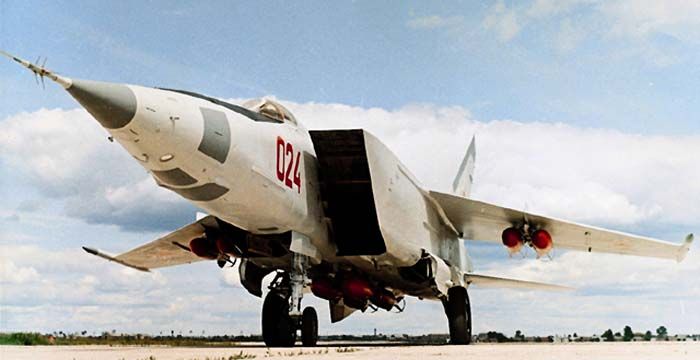
It is notable that heavily enhanced Soviet, Russian and Ukrainian variants of the Foxbat never saw combat, but their capabilities were far superior to those in Iraqi and Syrian service which did see combat in the 1980s against Iran and Israel respectively and later in 1991 during Operation Desert Storm. The lack of a look down shoot down radar in particular seriously limited the capabilities of these ‘Arab Foxbats,’ meaning the while the were still extremely difficult to target for Iranian F-14 and U.S. and Israel F-15 fighters their ability to lay down fire in return was limited. Soviet MiG-25PD and PDS interceptors, however, could well have been more than a match for Western fourth generation fighters - far outperforming lighter designs such as the Mirage 2000, F-16, Tornado and F-18 and potentially posing a serious challenge to the F-15s and F-14 which comprised the elite of Western fleets. Soviet Foxbat units benefitted not only from far superior technologies to their Arab counterparts, but also from superior training and command and control systems and far greater numbers. Due to the interceptors considerable cost, no foreign client other than Libya was able to field the aircraft in large or even medium sized squadrons.
Had the Soviet Union endured, it is likely that the Foxbat would have seen a much longer service life and continued to integrate next generation upgrades. A massive downsizing of the Russian Air Force saw the bulk of its fleet placed in reserve or phased out of service entirely, and the MiG-25PD’s high operational costs and more limited ability to incorporate upgrades compared to the newer and lighter Su-27 fighters and heavier MIG-31 interceptors led to their retirement. This also coincided with a far greater emphasis on ground based surface to air missiles to intercept targets, which with Russia’s economy contracting 45% in the five years from 1992 was prized for its lower cost and greater perceived cost effectiveness. The reconnaissance and strike variants of the Foxbat would remain in service longer, with the MiG-25BM retired in the early 2000s and reconnaissance variants of the design retired in 2013. The Algerian Air Force remains the leading operator of the Foxbat today, and has upgraded them to an advanced fourth generation standard with Ukrainian assistance. These, too, have never seen combat - but are thought to be comparable if not slightly superior to the MiG-25PDS making them a formidable addition to the country’s fleet.
