
America’s B-1 Bomber Marks 45 Years Since First Flight
Military Watch Magazine Editorial Staff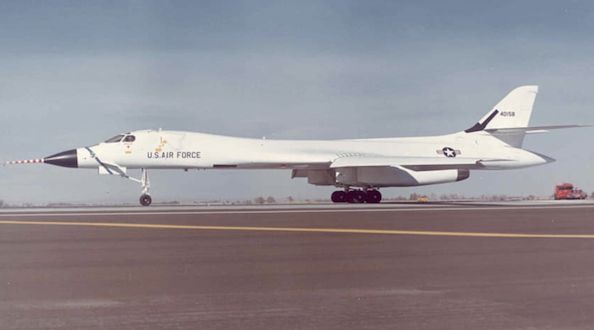
B-1A Lancer Prototype
December 23rd 2019 marks 45 years since the first flight of the Rockwell B-1 Lancer swept wing heavy bomber, which today forms the bulk of the American bomber fleet alongside the B-52H Stratofortress. The first of four prototype B-1A bombers flew from Air Force Plant 42 in Palmdale, California, where the later B-2 Spirit would also be assembled and tested. The original B-1 Lancer was intended to operate at extreme altitudes and at high speeds of over Mach 2.2, and was designed at a time when it was expected that swept wing aircraft would be the future of military aviation - alongside the F-111 Aardvark and F-14 Tomcat. The Lancer's focus on speed and altitude made it conceptually somewhat similar to the B-70 Valkyrie designed in the 1950s, but considerably smaller, lighter and cheaper. Much like the Valkyrie however, developments in Soviet air defences including the deployment of new long ranged air defence systems such as the S-75 and S-200 and high speed high altitude MiG-25 interceptors with heavy standoff missiles served to limit the usefulness of such bombers and thus bring an early end to the Lancer program. Thus the B-1A would never serve in the U.S. Air Force, although four prototypes would be built before the Jimmy Carter administration ordered the program's termination as part of wider cuts to the defence budget.
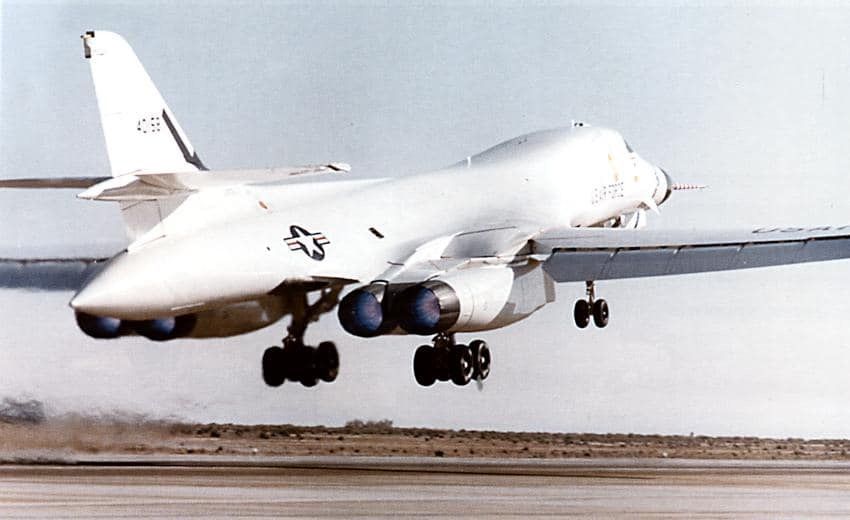
The Ronald Reagan administration would in the 1980s resurrect the B-1 bomber program as part of its effort to increase military pressure on the Soviet Union, with the design heavily altered to meet new specifications better suited to penetrating Soviet air defences. The B-1B Lancer would enter production in 1983 and would enter service in the U.S. Air Force from 1986. The aircraft had a new reduced radar cross section and was optimised to fly at low altitudes to hide from enemy radars, which alongside advanced electronic warfare systems was expected to shield the bomber from attack. 100 of the bombers would be produced, of which approximately 60 remain in frontline service in the U.S. Air Force today. The Lancer is considered to be less successful than other American bomber designs, lacking the advanced radar evading capabilities of the B-2 Spirit or the low maintenance, high sortie rate and reliability of the B-52H, and over 90% of the fleet is currently out of service due to maintenance issues. The bomber is likely to leave service in the early 2030s as the next generation B-21 Raider enters service, with over 200 of these bombers set to be manufactured. The Lancer has been modernised considerably since first entering service and has been equipped with a wide array of new standoff weapons systems, such as the AGM-158 JASSM, as the viability of airspace penetration missions has diminished sharply with advances in Russian, Chinese and Korean air defences. Proposals have been made to repurpose the Lancers into gunships or dedicated ship hunters after the B-21 enters service, although the old aircraft’s high and growing maintenance costs could undermine prospects for this.
