
XB-70 Valkyrie; The Six Engine Mach 3 Bomber Built to Destroy the Soviet Union
Military Watch Magazine Editorial Staff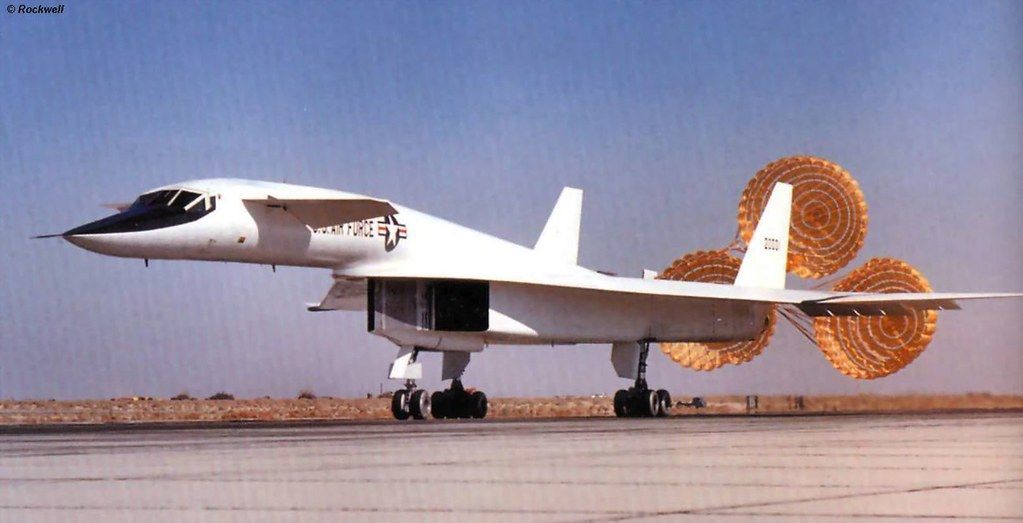
XB-70 Valkyrie Heavy Bomber
In the late 1950s the U.S. Air Force planned an advanced successor to the subsonic B-52 Stratofortress heavy bomber in the form of the supersonic six engined B-70 Valkyrie deep penetration bomber, which was intended to strengthen American nuclear delivery capabilities and provide a credible means of delivery nuclear strikes against targets in the Soviet Union. The bomber was over twice the weight of the Stratofortress, with a single aircraft costing as much as a large B-52 unit to manufacture. Nevertheless, the aircraft's induction was seen as an effective means of gaining a distinct edge in nuclear delivery capabilities over the USSR which had begun to deploy its own subsonic intercontinental range bombers such as the Tu-95 in large numbers. As renowned U.S. journalist I.F. Stone noted in 1952, based on the high vulnerability of subsonic U.S. heavy bombers against the relatively small Chinese and North Korean air arm during the Korean War: "the subsonic bomber proved obsolete over Korea and with it the foreign policy based upon the subsonic bomber. The atom bomb was still a 'deterrent to aggression' – from either side. It was no longer a threat with which either side could hope to dictate terms.” Not only was the Soviet air superiority fleet orders of magnitude more powerful than anything in Korea, and supported by an advanced integrated surface to air missile network which North Korea had lacked, but it also fielded fighter aircraft which were considerable faster and higher flying and, unlike the jets in the Korean War, carried air to air missiles - all of which made prospects for successful nuclear delivery by subsonic bomber appear negligible to non-existent. The U.S. Air Force thus planned a new kind of bomber, one which was set to be the fastest combat aircraft ever built and could delivery nuclear weapons at over three times the speed of sound and from altitudes of up to 21km.
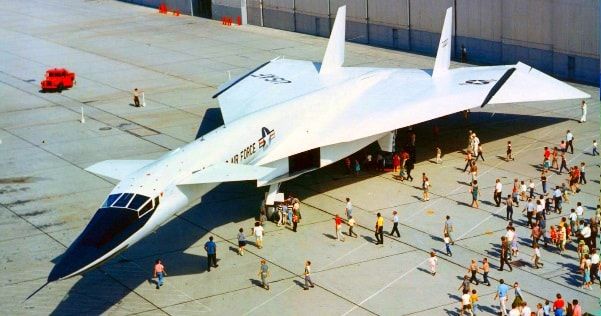
The speed and altitude of the B-70 would have left it all but invulnerable to Soviet S-75 missile batteries, and even the S-25 network reserved for the defence of Moscow, and would place it beyond the reach of the Su-15 interceptors and MiG-19 and MiG-21 fighters which were relied on to defend Soviet airspace. Event the massive Tu-28 interceptors which entered service from 1964 and were capable of reaching 20km altitudes would likely have struggled to intercept the B-70 due to the limitations of its anti aircraft missile technologies and its restriction to speeds of Mach 1.5 or lower. The limitations of radar technologies of the early Cold War also made aircraft travelling at over Mach 3 extremely difficult to track via radar. The Valkyrie bomber thus appeared to provide the solution to the problem of Soviet parity the U.S. military had faced since the Korean War - and would place it back in a position to ‘dictate terms’ to the USSR due to an overwhelming capability advantage which it was believed the Soviets could not hope to match.
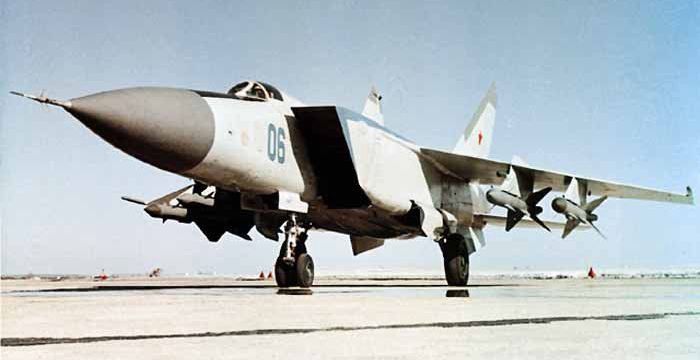
A number of factors led to the B-70 program’s termination - not least of which was its extreme cost of $750 million per aircraft - equivalent to over $5 billion today. The prototype design proved extremely difficult to develop to a reliable standard for combat use, and head stress from Mach 3 flight caused considerable damage when attempted. Advances in intercontinental ballistic technology - another means of nuclear delivery against which there was no defence at the time - further provided a far less costly and in many ways more reliable alternative to the Mach 3 heavy bomber. Rapid advances in Soviet surface to air missile technologies further threatened to leave the extremely costly bomber obsolete before it was combat ready - with the S-200 surface to air missile system under development at the time and designed primarily to destroy bomber sized targets at high speed at extreme ranges. Soviet development of a new generation of interceptors in the form of the MiG-25, which were themselves capable of exceeding Mach 3 and deploying massive R-40 air to air missiles with 100kg warheads, further undermined the Valkyrie’s viability. With surface to air missile systems capable of operating at ever longer ranges, altitudes and speeds, the U.S. Air Force was also forced to adjust its bombing tactics - relying more on low altitude penetration of enemy airspace where both the detection and the engagement ranges of air defence systems was more limited - the Valkyrie’s design concept as an extreme altitude and extreme speed system began to appear obsolete. The program was thus terminated at five prototypes, though the Soviet Air Force would induct its own Mach 3 bomber, albeit a much lighter tactical platform not intended for nuclear delivery, in the form of the MiG-25RB which could be manufactured highly cost effectively. The U.S. Air Force for its part is today reportedly again exploring the concept of an extremely fast high altitude strategic bomber as part of its SR-72 program - with the new unmanned aircraft expected to exceed speeds of Mach 10 and operate in near space. The fate of this program, as Russia inducts its first air defence systems capable of hypersonic interception, remains to be seen.
