
Top Six Air to Air Engagements of the Gulf War: How Iraq and the U.S. Went Head to Head With F-15s, Foxbats and More
Military Watch Magazine Editorial Staff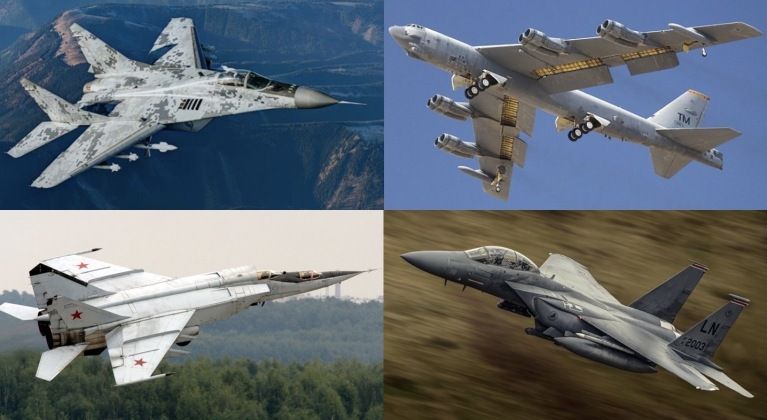
MiG-29, B-52, F-15, MiG-25 (clockwise from top left)
February 1991 marked the conclusion of Operation Desert Storm and the end of the Persian Gulf War, which saw some of the largest scale aerial engagements of the jet era occurring with far greater frequency and intensity than prior conflicts in Vietnam or in the Iran-Iraq War. The conflict saw Iraq deploy a fleet primarily comprised of lightweight third generation aircraft such as Mirage F1s and MiG-23s, while the U.S. primarily deployed fourth generation heavyweight F-15s for air superiority missions to shoot down Iraqi aircraft. The U.S. Air Force's F-15C Eagle was responsible for the vast majority of air to air kills during the war, and almost 95% of American kills were achieved with the support of airborne early warning aircraft such as the E-3 Sentries which provided a major situational awareness advantage to U.S. air units and valuable targeting data on Iraqi jets. Iraq notably lacked access to airborne early warning aircraft or any kind of fourth generation heavy aircraft, but did manage some successes using its elite of MiG-29 fourth generation medium weight fighters and its older MiG-25 heavy interceptors. A look at the six most notable air to air clashes of the war is given below:
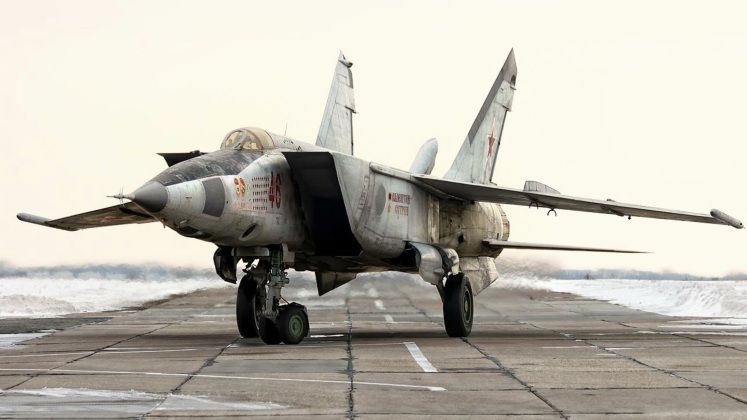
MiG-25PD Foxbat vs. F-18 Hornet
January 17th saw the first air to air engagements between Iraqi and U.S. forces, with two U.S. Navy F-18 Hornet medium weight fighters engaged by Iraqi MiG-25PD Foxbat interceptors from the Air Force’s 96th Squadron. The Hornets were fired on at long range by R-40 air to air missiles, which had massive 100kg warheads and had longer engagement ranges than their American counterparts. One of the Foxbats shot down an F-18 successfully, with the pilot Lieutenant Commander Scott Speicher killed instantly. The MiG-25 is widely considered the most capable aircraft in the Iraqi Air Force in terms of air to air combat capabilities, and was the third most capable Soviet jet in service at the time. The aircraft had primarily been used as strike bombers during the Iran-Iraq War, but were used for air to air missions during the Gulf War which was the primary function the airframe was originally designed for. The aircraft boasted a large and powerful sensor suite and could operate at extremely high altitudes and at speeds exceeding Mach 3 - making them the fastest combat jets ever to enter service anywhere in the world. Foxbats were the primary challengers to American air superiority during the conflict.
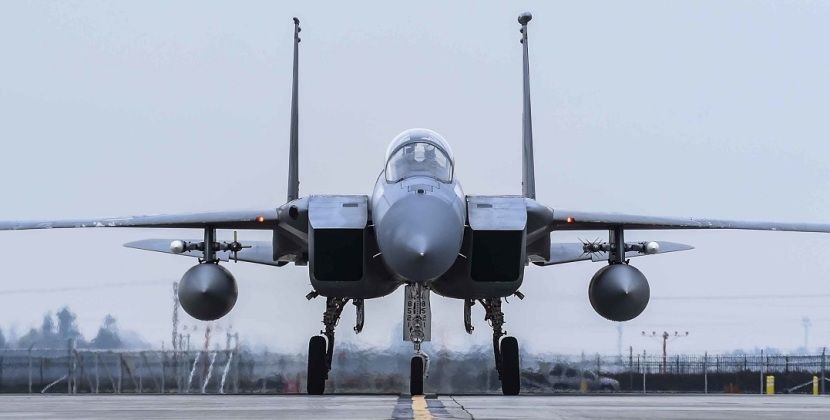
MiG-25PD Foxbat vs. F-15C Eagle
January 17th saw two Iraqi MiG-25s engage American F-15s at a time when the Eagles were flying an escort mission for a strike against Iraqi ground targets. The MiGs R-40 missiles failed to reach their targets, and the F-15s retaliated by firing ten missiles at the Foxbats. The MiGs were highly survivable against the AIM-7 missiles used by the U.S. Air Force due largely to their extremely high speeds, and ultimately evaded all ten missiles undamaged. The F-15 had notably been developed specifically with combat against Soviet MiG-25s in mind and was largely influenced by the Foxbat’s design. Both were heavyweight aircraft designed primarily for air to air combat, but the F-15 had the advantage of support from AWACS aircraft providing much greater awareness of its enemy's position. Furthermore, the MiG-25s were lower end export variants inferior not only to those in Soviet service, but also to those deployed by Warsaw Pact members, meaning the Iraqi jets’ ability to hold their own against the F-15s was something of an impressive achievement.
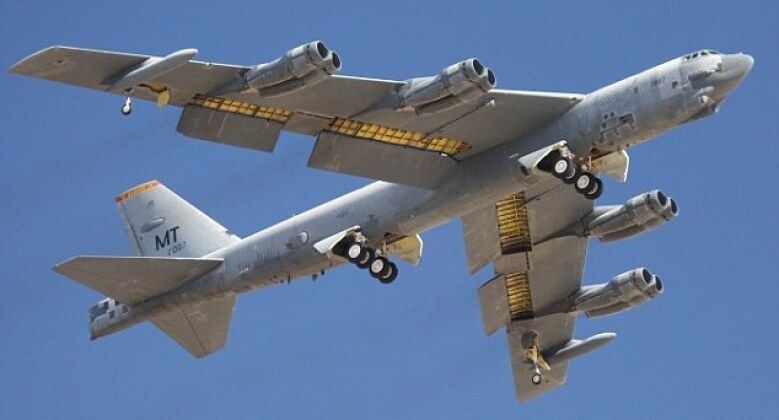
MiG-29A Fulcrum vs. F-111 Aardvark and B-52G Stratofortress
January 17th also saw an Iraqi MiG-29A engage an American F-111 strike fighter and B-52G heavy bomber. The MiG-29 was the newest Soviet fighter class to have been offered for export, and while its missiles and general flight performance were considerably inferior to those of the much larger MiG-25 the aircraft still compared favourably to most American fighters. The fighter used an R-60 short ranged missile to neutralise the F-111, and subsequently used a new R-27 long range missile to fire on and severely damage the B-52 heavy bomber. The R-27 was considered the most capable air to air missile deployed by fighter sized aircraft, and this was one of its very first engagements. The MiG-29A’s sensor suite was well suited to long range air to air engagements. The MiG was designed primarily to engage light and medium weight Western fourth generation fighters such as the F-16 and F-18, and while it could arguably do so on favourable terms the U.S. Air Force would avoid such engagements throughout the war and would instead seek and destroy the jets with its heavyweight F-15s.
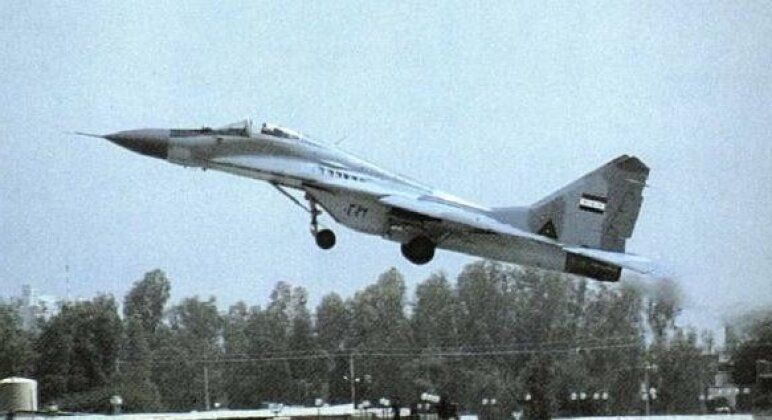
MiG-29A Fulcrum vs. F-15C Eagle
The first ever air to air engagement between F-15s and MiG-29s saw two of the former seek to chase the MiGs after being alerted to their presence by E-3 AWACS aircraft. The two Iraqi MiG-29s turned and engaged the Eagles, and the four aircraft flew directly towards one another. The MiGs benefitted from superior missiles and greater manoeuvrability, while the Eagles boasted more powerful sensor suites, higher missile payloads and support from AWACS which was perhaps their most significant advantage. The Eagles scored the first hit with an AIM-7 Sparrow missile striking a MiG-29 head on. The second MiG gained a lock on an F-15C, forcing the Eagle to dive to low altitude and release flares to break the lock and counter the MiG’s infra red search and track system (IRST). IRSTs were a feature common to all Soviet fourth generation fighters - one which the U.S. would begin to integrate onto its own fighters over 30 years later.
The radar lock was successfully broken and the surviving MiG-29 feigned fleeing northwards, before returning to face the F-15s head on as they rendezvoused with a KC-135 tanker. With the F-15s unable to determine whether the MiG-29 was a friend or a foe, the Iraqi fighter closed in and engaged the Eagle at close range. The aircraft on both sides engaged in complex manoeuvres with the MiG-29 counting on its unrivalled performance in visual range combat to try to gain an advantage. As the aircraft flew around each other increasingly close to the ground the MiG-29 manoeuvred too close and crashed - although not before the pilot successfully ejected. While American F-15s were using the latest variants of the AIM-9 short ranged air to air missiles, Iraqi MiG-29s were using ageing R-60 missiles for close range engagements rather than the newer R-73 used by Soviet and Warsaw Pact units. Studies of the R-73 in post-unification Germany later determined that the missile would provide Soviet pilots with very decisive advantage at close ranges due to its ability to fire at far more extreme angles - and had Iraq armed its MiGs in such a way they likely would have come out on top in visual range combat.
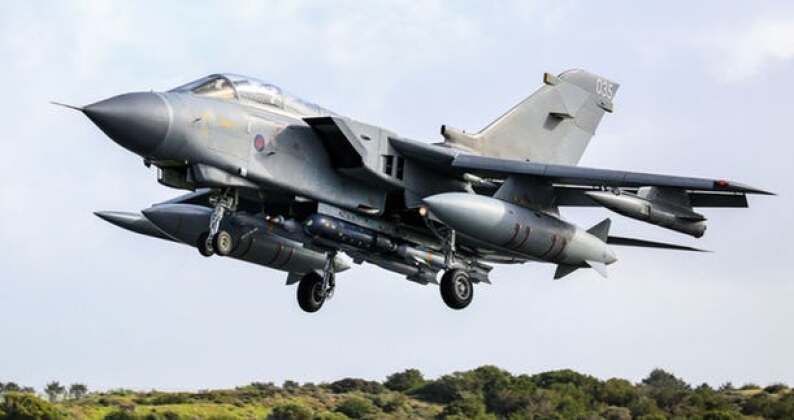
MiG-29A Fulcrum vs. Tornado
January 19th saw one of the only air to air engagements involving aircraft from a U.S.-led coalition member other than the U.S. Military itself against the Iraqi Air Force, with a British Royal Air Force Tornado variable swept wing fighter reportedly shot down by an Iraqi MiG-29 using an R-60MK missile. The Tornado was a fourth generation aircraft, and is widely considered one of the poorest fourth generation fighters in terms of air to air combat performance which compared unfavourably to its Soviet and American counterparts. The use of the R-60 indicates a close range engagement — where the Tornado was particularly weak due to its limited manoeuvrability and where the MiG-29 was particularly capable.
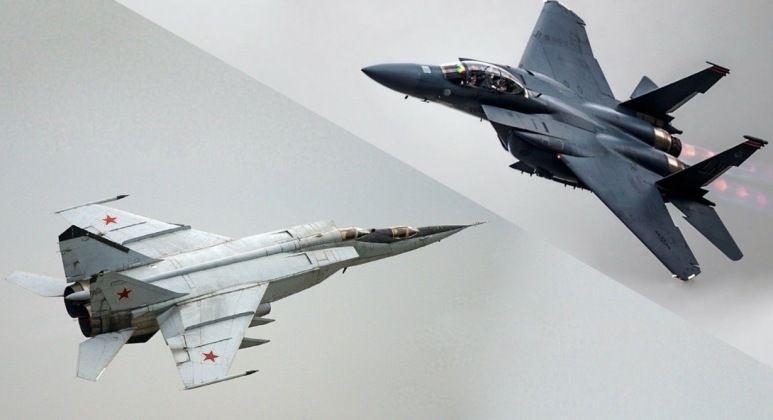
MiG-25PD Foxbat vs. F-15C Eagle
While the majority of air to air engagements during Operation Desert Storm took place in the initial three days, with Iraq soon after evacuating the bulk of its fighter fleet to Iran due to the destruction of its airfields, the country’s elite MiG-25 Foxbats were not evacuated and were able to gain a victory over American F-15s in an engagement on January 30th. The Foxbats were given priority access to remaining airfields in Iraq, and were deployed to break the ‘wall’ of F-15s the U.S. Air Force had created to restrict Iraqi air activities. Two Foxbats were deployed and ambushed two American F-15s, the locations of which were reportedly ascertained by Iraqi intelligence after intercepting American communications. The MiGs were deployed from separate airbases, which allowed them to engage the American Eagles from different sides. The initial salvo of R-40 missies from the Foxbats struck an F-15, which the U.S. claimed was able to return to base after sustaining damage. Official Iraqi sources claimed the kill was at first unconfirmed, but subsequently confirmed having shot down the Eagle after sources reportedly located the shot down F-15 on the ground.
