
Forget the Su-57: This Upcoming ‘Super Interceptor’ Will Be Russia’s Most Dangerous Combat Jet
Military Watch Magazine Editorial Staff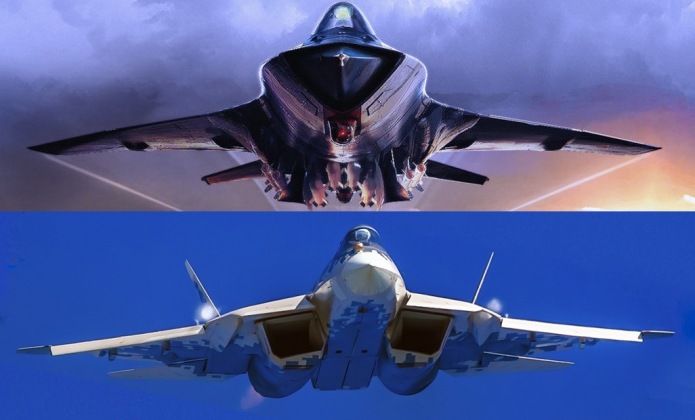
MiG-41 Concept Art and Su-57 Next Generation Fighter
Entering service from December 2020, Russia’s Su-57 Felon next generation fighter promises to be one of the first in the world to integrate sixth generation technologies as progress continues to be made on a number of key features in the lead up to the aircraft’s entry into large scale production. Some of the upcoming improvements to the design to bring it up to a sixth generation standard include integration of Saturn 30 engines - reportedly the most powerful on any fighter in the world - as well as laser weapons, artificial intelligence and the provision of ‘loyal wingman’ Okhotnik stealth drones. While the Felon is a potentially dangerous peer level challenger to NATO’s upcoming sixth generation fighters jets such as the American F-X and British Tempest, Russia has simultaneously been developing another sixth generation aircraft specialised in air to air combat which promises to be considerably higher end and more capable still - the MiG-41 heavy interceptor.
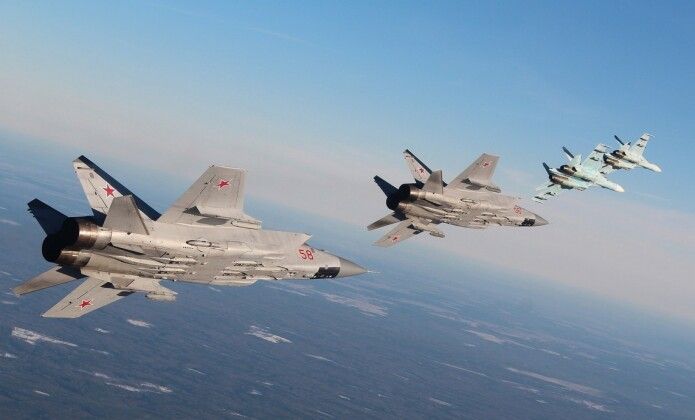
While the Su-57 and its expected future derivatives were developed as heavyweight fighters, and are expected to replace much of the Russian Air Force’s fleet of fourth generation Flanker aircraft such as the Su-27, Su-30, Su-33 and Su-35, the MiG-41 was designed to replace an altogether higher end and more capable fourth generation design - the MiG-31 Foxhound. Until the entry into service of the Su-57 in 2020, the Foxhound in its most enhanced form as the MIG-31BSM was considered the most capable aircraft in the Russian Air Force in terms of air to air combat capabilities. This was a title Foxhounds had held for almost 40 years since 1981 when they first entered service, with the interceptors being the first jets of their kind capable of cruising supersonically, the first to integrate phased array radars, and until today the fastest of their generation.
The MiG-31's performance in beyond visual range combat was only seriously challenged within the Russian Air Force by the Su-35 Flanker - an advanced predecessor to the Su-57 which only began to join the fleet form 2014. Although the Foxhound has undergone a number of considerable upgrades over its time in service, plans for a more radical improvement to the design under the MiG-31M program were cancelled in 1994 due to Russia’s post-Soviet economic decline. Improvements to the MiG-31 have nevertheless been considerable, including induction fo the Zaslon-M radar, R-37 air to air missiles, Kinzhal hypersonic ballistic missiles, anti satellite missiles and new electronic warfare systems and avionics. These give it a comfortable advantage over other Russian fourth generation designs - to a large extent in air to air combat but even moreso in space warfare an in anti shipping and strike roles.
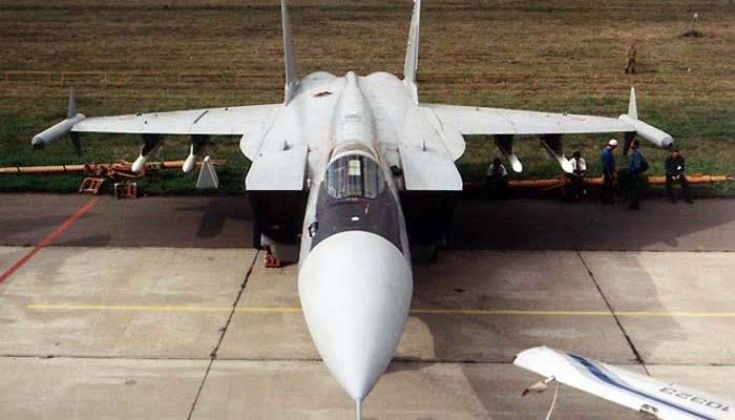
Much as the Foxhound was a heaver, more costly and overall higher end and more capable design than the Flanker, albeit assigned a different role, so to is the upcoming MiG-41 developed to replace the Foxhound expected to be a higher end and overall more dangerous asset than the Flanker’s successor the Su-57. Unlike the Su-57, which is being marketed for export and is thought have already secured at least one contract for foreign sales, the MiG-41 is not expected to sell widely abroad if indeed it is offered at all. Largely as a result, the program has been far more secretive with relatively few details regarding the sixth generation aircraft having been revealed. While the MiG-31 is the heaviest aircraft built for air to air combat in service either in Russia or elsewhere, and is also the fastest aircraft of its kind with the largest radar, the MiG-41 is expected to also claim these titles. The new aircraft will reportedly be hypersonic and capable of operating in near space, and will place a greater emphasis on space warfare. This represents part of a growing trend towards heavier investments in space capabilities by major military powers, and Russia’s deployment of a high endurance combat jet designed specifically to neutralise enemy satellites is a potential game changer for its ability to dominate the information space by blinding enemy surveillance and communications.
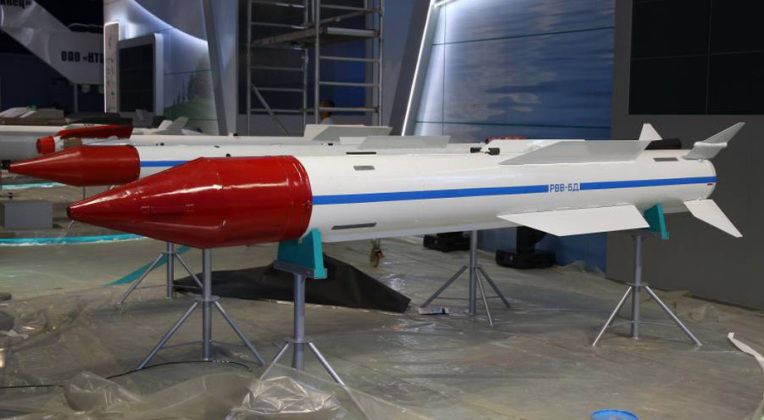
Much as the MiG-31 has since 2018 been deployed with hypersonic missiles for air to ground anti anti shipping roles - including if needed delivery of tactical nuclear warheads - so too is the MiG-41 expected to have a secondary role as a strike platform. With the aircraft deploying from much higher altitudes and firing at higher speeds, it could be highly formidable in such a role similarly to the U.S. Air Force’s planned hypersonic strike drone currently under development. The MiG-41 is expected to deploy a new generation of air to air weapons, and while the R-37 used by Foxhound interceptors currently has a 400km range and carries large 60kg warheads, the new interceptor’s missiles will likely be considerably faster and have ranges closer to 600km. Technologies developed for surface to air missiles with such ranges, which are used to equip the S-500 air defence system, could well be used as a basis for these new air to air missiles which will likely be too large for anything other than a heavy interceptor to carry. Although the R-37’s Mach 6 speed is likely insufficient to threaten hypersonic aircraft at longer ranges such as the upcoming American SR-72, should new air to air missiles for the MiG-41 be able to exceed Mach 14 speeds, much as Russia’s latest generation of surface to air missiles can, then they can likely pose a serious threat to hypersonic targets.
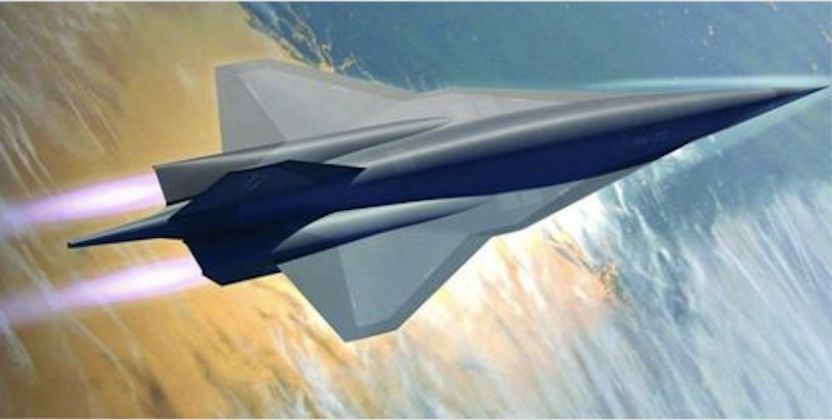
While the MiG-31 was highly capable against targets such as fighter aircraft, it was highly prized for its ability to intercept high value targets such as bomber and surveillance planes as well as its rare ability to shoot down cruise missiles. The MiG-41 is similarly expected to use a powerful networked radar and share information with ground based air defences to be able to target stealth bombers at long ranges of several hundred kilometres. Much like the MiG-31’s sensor suite was powerful enough to allow it to serve as an airborne early warning aircraft, so too is its successor expected to have a similar capability. With Russian officials warning that countermeasures to hypersonic cruise missiles under development abroad are already being developed domestically, and with the S-400 and S-500 systems already boasting such capabilities, it is unlikely that the MiG-41 will not also be capable of functioning in such a role and shooting down hypersonic cruise missiles.
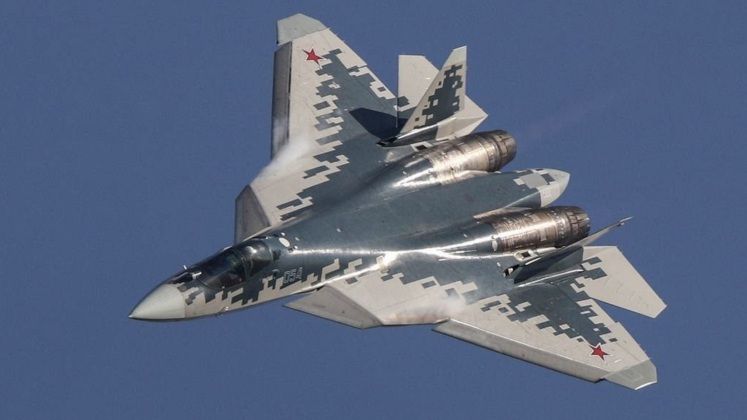
Although the Su-57 is expected to be produced in very large numbers and widely exported across several continents, with almost all Su-27 and Su-30 operators being potential clients, the MiG-41 will arguably pose the greatest threat to the Western Bloc due to its potential strategic roles and its ability to make a major contribution to Russian space warfare capabilities. It is likely that the MiG-41 will have a cost over twice as high as the Su-57 if not considerably higher, and will be fielded in smaller numbers possibly alongside upgraded variants of the MiG-31. The Foxhound’s Zaslon-M radar, although ahead of its time, dates back to the mid-1990s and if replaced by a more modern sensor suite perhaps based on that of the MiG-41 it has the potential to continue to serve the Russian Air Force as a cheaper but still very formidable interceptor as well.
