
How the AIM-120 AMRAAM Missile Revolutionised U.S. and Allied Aerial Warfare Capabilities
Military Watch Magazine Editorial Staff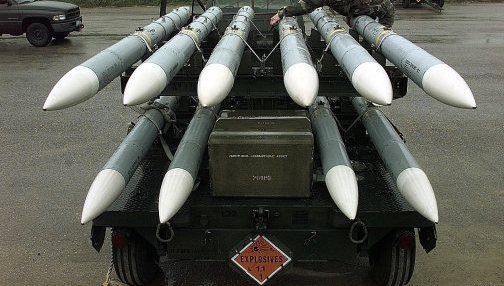
Raytheon AIM-120C Air to Air Missiles
The U.S. Air Force first inducted the AIM-120 air to air missile (Advanced Medium-Range Air-to-Air Missile - AMRAAM) in 1991, just months after Operation Desert Storm and the end of the First Gulf War. The missile was prioritised for deployment with the service’s F-15 air superiority fighters, which were then the most capable in its inventory, and was adopted by the U.S. Navy’s F-18 Hornet carrier based fighters from 1992. Although the AMRAAM was initially reserved for the elite of the American fleet, the missile would gradually come to be deployed by a wide range of American aircraft including cheaper lightweight aircraft such as the F-16 fighting Falcon, The AIM-120 quickly became the most prolific and widely used long range air to air munition in the world, and the design has continued to be modernised and manufactured for use by both the United States Military and its defence clients. The AIM-120 was until the mid 2010s unrivalled by among Western long range air to air missiles in its capabilities, with the sole exception of the AIM-54 Phoenix which was reserved for the U.S. Navy’s extremely large F-14 Tomcat fighters alone and was too heavy to be deployed by regular fighters.
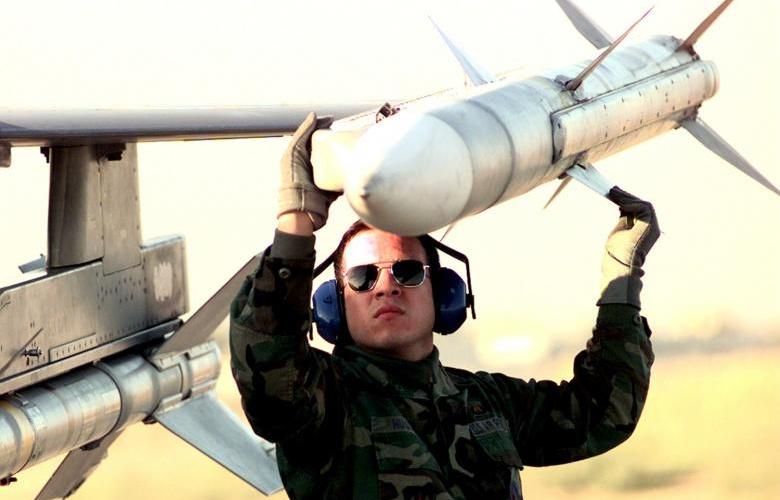
Although early variants of the AIM-120 were in some respects comparable in their capabilities to advanced variants of their predecessor, the AIM-7 Sparrow, more capable variants of the missile continued to be developed. The original AIM-120A, for example, had only a slightly longer range than the latest AIM-7 variants, and its main advantage was its superior electronic warfare countermeasures, more powerful sensors and vital 'fire and forget' capabilities which it provided aircraft due to its fully active radar homing. The AIM-7 had only semi active homing, meaning an aircraft needed to guide it towards its target for the duration of its flight which was a major constraint on combat efficiency, and meant that the missile would fail to reach its target if the guiding fighter broke radar lock.
The entry into service of the AIM-120C marked the most considerable advance over the original AMRAAM design, and the first of these missiles began to enter service in the year 1996. The new missile was initially developed for use by the U.S. Air Force's F-22 Raptor fifth generation air superiority fighters, which required clipped fins to facilitate carriage in the stealth jet's internal weapons bays. It was subsequently integrated onto older fourth generation aircraft, and shorter version with lower manoeuvrability was later developed for the smaller F-35 stealth fighter which had smaller internal weapons bays. Where older missile variants were restricted to engagement ranges of around 70km, the AIM-120C could strike targets around 105km away. This combined with far more sophisticated electronic warfare countermeasures and superior sensors meant it represented a considerable upgrade for the U.S. Air Force and for America's defence clients.
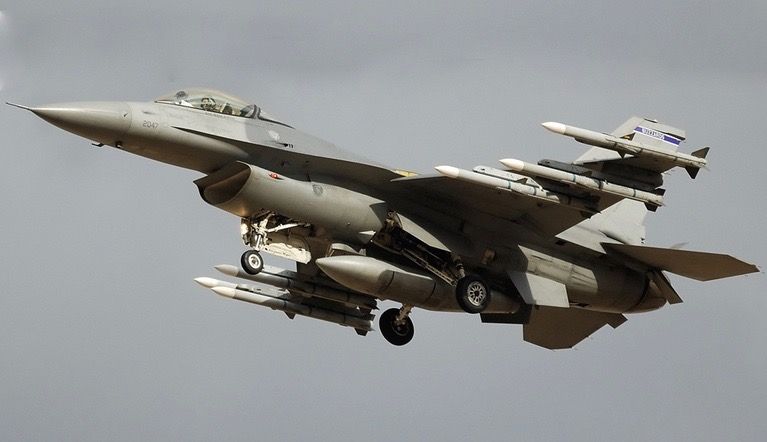
The first peer-level challengers to the AIM-120C began to enter service in large numbers the mid-2000s, and included the Chinese PL-12 and the Russian R-77 which both had range of over 100km and benefited from active rather than semi active radar homing. Exports of the R-77 to a number of countries ranging from India and Syria to Venezuela and Algeria further increased demand for the latest AMRAAM variants among America’s defence clients, with AIM-120C-5 and AIM-120C-7 in particular seeing significant export orders. In August 2004 Britain’s Ministry of Defence entered into a $144m contract with Raytheon Missile Systems for the latest AIM-120 C5 variant. Fourth months later Raytheon received a $200m contract from the U.S. Air Force for 434 missiles - one of many similar orders with the Navy and Marines also seeking advanced AMRAAM variants in large numbers for their own fleets.
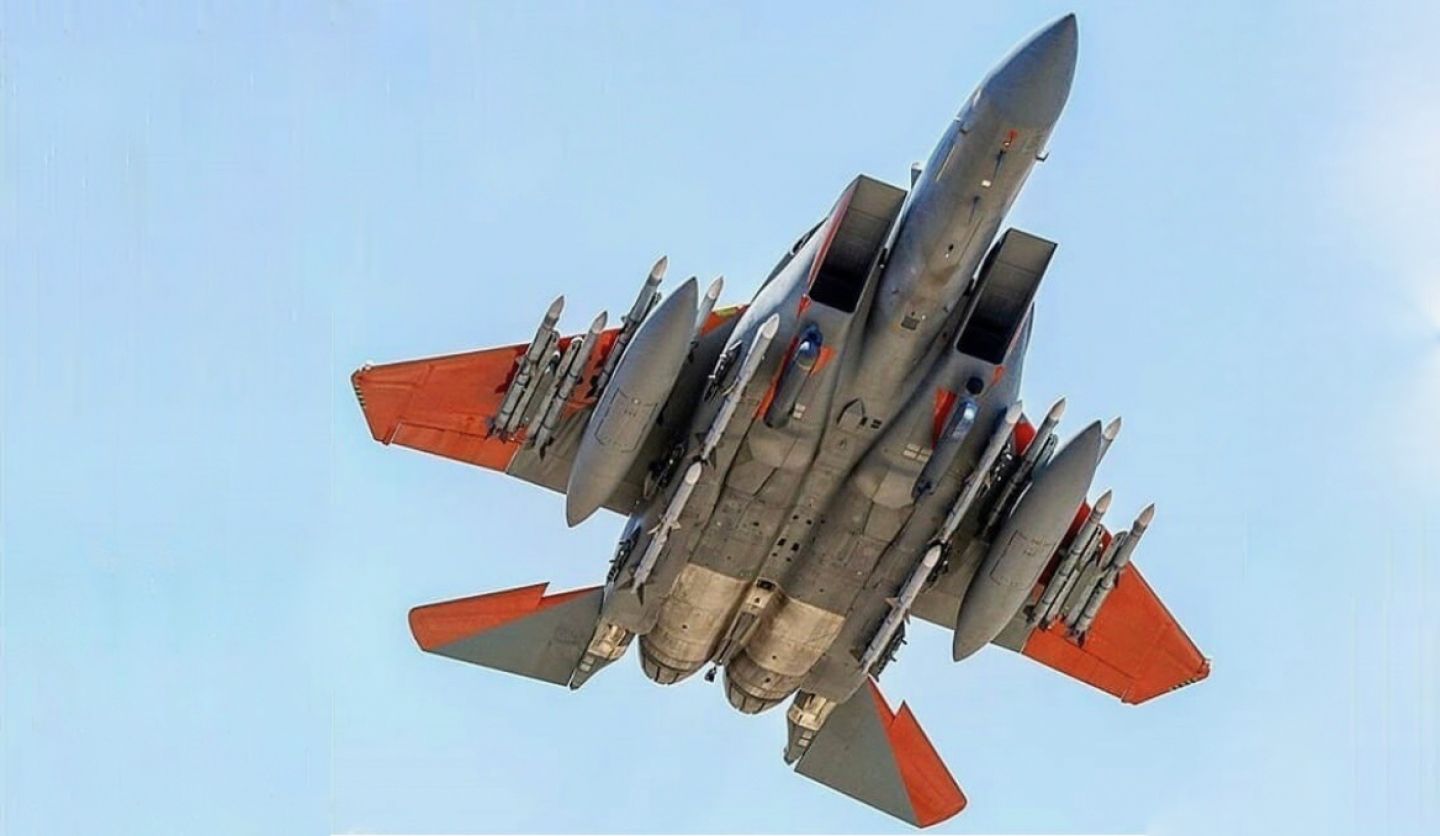
The Pakistani Air Force placed a large order in early 2006 for 500 AIM-120C-5 missiles as part of a $650 million F-16 ammunition contract, which was key to providing its fighters with an advanced beyond visual range capability to counter neighbouring India. India for its part, which fielded a growing fleet of formidable MiG-29UPG and Su-30MKI fighters armed with Russia’s most advanced air to air missiles, already held a considerable advantage in any potential air war. In September 2006 the U.S. Air Force entered into a $66m Foreign Military Sales (FMS) contract to deliver AIM-120C-5 missiles to Saudi Arabia and Singapore. Poland received the AIM-120C-5 for own F-16s that same year. Saudi Arabia went on to become a leading operator of the AIM-120C, with the country’s F-15SA strike fighters capable of being equipped for air superiority missions with up to 12 of the long range missiles each - twice the payload of the F-16 and three times that of the F-35.
In 2007 Raytheon signed further contracts for the export of the AIM-120C - with the new C7 variant becoming particularly popular. Taiwan’s Republic of China Air Force signed a $421 million contract for over 200 missiles to provide a much needed enhancement for the beyond visual range capabilities of its F-16A Fighting Falcons - which faced both the R-77 and the PL-12 deployed by a number of the Chinese mainland’s high end air superiority fighters across the Taiwan Strait. Taiwan received U.S. assistance for the parallel development of the Sky Sword II - which according to some reports was based on an early concept rejected for the AIM-120 design which was more costly but considerably faster. The following year saw the Finnish Air Force place an order for 300 missiles, although this delivery was delayed considerably due to malfunctions in the missiles’ rocket motors during cold weather tests. Other U.S. defence clients including Kuwait and Switzerland, which sought to enhance their the F-18s, and Morocco, Jordan and Chile which purchased the missiles for their F-16s, also went on to acquire the AIM-120C-7.
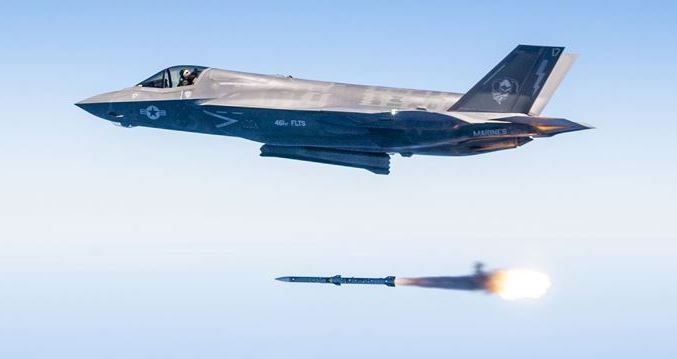
Today American fourth generation fighters which have not integrated the AIM-120C, or the newer AIM-120D which began to be marketed abroad in the late 2010s, are widely considered obsolete for high end air to air combat. Turkey, for one, continues to rely on the AIM-120B with a much shorter range, which has left its very large fleet of over 200 F-16s at a major disadvantage against rivals such as Russia, Egypt and Syria which all deploy modern variants of the R-77. Egypt, which also deploys a very large F-16 fleet, was eager to purchase the AIM-120 but has been denied access to even the most basic variants largely as a result of Israeli pressure on the United States. This has left the Egyptian fighters with negligible long range air to air capabilities - with the AIM-7 sparrow used by Egyptian fighters effectively useless against fighters with modern electronic warfare systems due to the age of its countermeasures. Egypt has as a result increasingly turned to alternative platforms such as the R-77 equipped Russian MiG-29M and Su-35 to provide a much more competitive air defence capability. Venezuela and Iraq are two other F-16 operators which have been denied access to the AIM-120 for political reasons, and their fighters in much the same way are considered obsolete for high-end aerial engagements.
The United States for its part has largely ceased development of the AIM-120C design in favour of the newer AIM-120D, which has an estimated range of 160km with some sources indicating that this could be as high as 180km. Other than its improved range, the fighter represents a relatively conservative improvement over the AIM-120C and is expected to be the last iteration of the AIM-120 design. With the AIM-120D increasingly outmatched by new designs from rival powers, most notably China's PL-15 which has a range of between 250km and 300km and uses a more sophisticated AESA radar rather than a PESA radar for guidance, the U.S. is also expected to prioritise funding for a successor - the AIM-260. The promising new missile will surpass the AMRAAM much as the AMRAAM overshadowed the Sparrow, and is expected to close the performance gap withe PL-15. It remains to be seen how long the AM-120 will remain in production, how soon the AIM-260 will enter service, and under what conditions the newer missile will be marketed for export.
