
New F-15EX Makes First Flight: ‘Super Eagle’ is NATO’s Heaviest New Fighter Fifteen Years
Military Watch Magazine Editorial Staff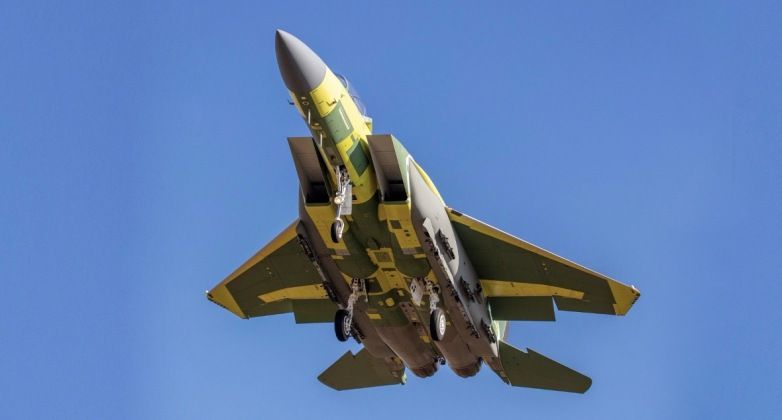
Boeing F-15EX Eagle First Flight
On February 2nd the first Boeing F-15EX Eagle heavyweight fighter made its maiden flight, marking the first time in around two decades that a newly built F-15 ordered for the U.S. Air Force has left production lines. The F-15EX represents the heaviest fighter class ordered by a Western air force to perform its first flight since September 1997, when the F-22 first flew, and is the heaviest and in many ways the most capable Western fighter jet currently in production. The fighter is based on the F-15A Eagle of the Cold War era which was designed during the Vietnam War and saw its first flight 49 years ago in 1972. The first F-15s entered service ini the U.S. Air Force in 1976, and they are currently the oldest fighters anywhere in the world which are still in production. The F-15EX marks a significant improvement over the original F-15 design, and although it has not gone through as comprehensive an upgrade as other enhanced Cold War era fighters such as the Russian Su-35 or Chinese J-16, its capabilities are still state of the art and in several respects ahead of those of the fifth generation F-22.
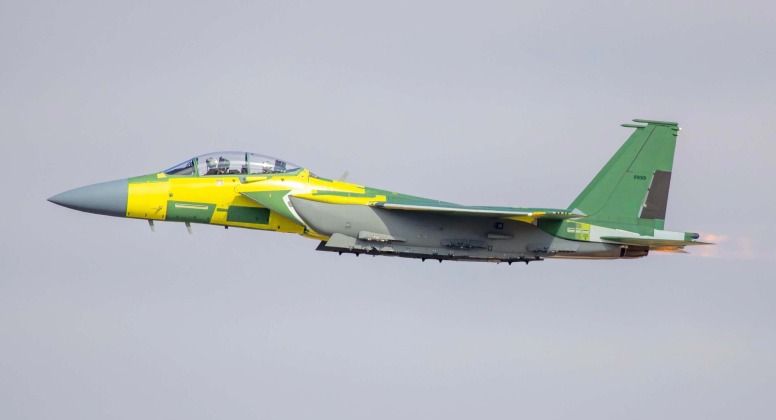
Development of improvements for the F-15 design has largely been funded by foreign clients for the aircraft, and since the turn of the century the fighter has seen a South Korean order for 60 fighters, a Singaporean order for 40 F-15SG fighters, a Saudi order for over 80 fighters and a Qatari order for 36. These have been successively more capable and incorporated more fifth generation technologies onto the Eagle’s fourth generation airframe, with Qatari F-15QA variants having been the most advanced until the F-15EX flew. Only around 400 F-15s are in service in the U.S. Military, and the number of airframes produced is approximately 25% the number of lighter and cheaper F-16s produced despite the Eagle’s far superior overall performance. This is largely due to the fact that the F-16 has under one quarter of the Eagle’s operational cost, making it considerably cheaper to field and arguably a more cost effective aircraft which the U.S. and its allies have generally favoured. The F-15EX notably has lower operational costs than older F-15 variants and is built with much more modern manufacturing techniques which allow it to more easily incorporate upgrades ranging from new armaments to new software. The fighters boast a range of new avionics, sensors and electronic warfare systems, but notably lack more powerful engines or reductions to their radar cross sections relative to older F-15s.
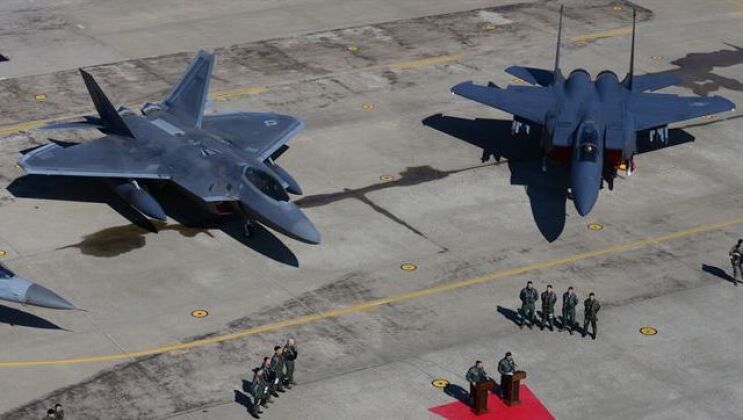
F-15EX fighters are intended to replace the F-15C/D air superiority aircraft built during the Cold War, many of which are approximately 40 years old and none of which are under 35 years old. The F-15C/D is specialised in air to air combat, and is fielded in larger numbers than any other Western heavyweight fighter. Although these aircraft were initially expected to be replaced by the F-22 Raptor, which entered service from December 2005, cuts to the planned Raptor fleet from 750 airframes to just 187 meant that the F-15C/D was forced to remain in service considerably longer than was intended. The F-22’s extremely high operational cost, which although initially intended to be lower than that of the F-15 turned out to be approximately twice as high, was a key reason why the newer fighter very quickly saw production terminated while its predecessor has remained in production for 49 years and counting. The U.S. has approved funding for eight F-15EX fighters under a $1.2 billion contract, although total orders for the first set of fighters are expected to reach almost $23 billion. This could be followed by further orders for further improved variants of the F-15EX to replace the newer F-15E fighters commissioned between 1989 and 2001. The F-15EX is expected to continue to service into the 2050s, by which time F-15s will have been flying for over 80 years,
