
The Best Fighter Jet Ever? What Makes America’s F-15EX So Excellent
Military Watch Magazine Editorial Staff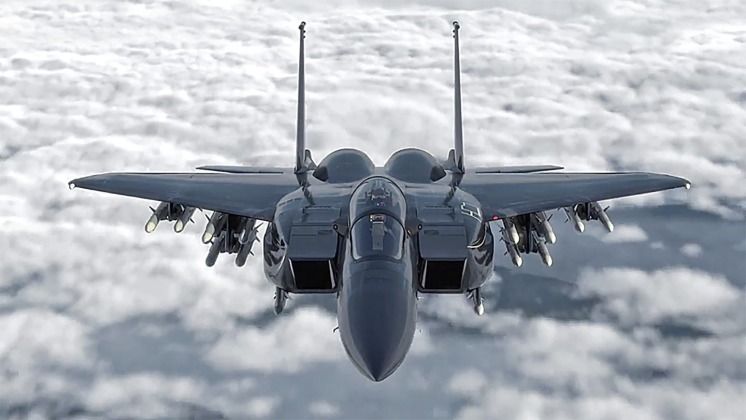
Boeing F-15EX Heavyweight Fighter
The announcement that the U.S. Air Force planned to purchase over 100 F-15EX ‘4+ generation’ heavyweight fighters came almost 20 years after the service had last acquired an F-15, with the aircraft's producer Boeing having revolutionised the design over two decades using funds gained from exports to foreign clients. During the Cold War the F-15C was considered the most capable fighter in air to air combat serving in any Western air force - a position it would retain by a considerable margin until its next generation successor the F-22A Raptor entered service in December 2005. As a result of its sensitive technologies, the F-15C had only been approved for export to three clients - Saudi Arabia, Japan and Israel - with lower level defence clients denied access to the advanced aircraft and offered cheaper and lighter jets such as the F-16. Sfter the F-22 was developed, however, the F-15 would be considered less sensitive and would be exported much more widely, with Boeing successfully improving the design of the final airframes purchased by the U.S. Air Force, the F-15E, for successive export clients including South Korea, Singapore, Saudi Arabia and Qatar. The F-15QA developed for the Qatari Air Force is considered the most capable Western fourth generation fighter ever to have flown, and benefits from the high endurance and high performance airframe of the original F-15 design and new sensors, avionics, electronic warfare systems and weaponry which have been developed for programs such as the F-35A.
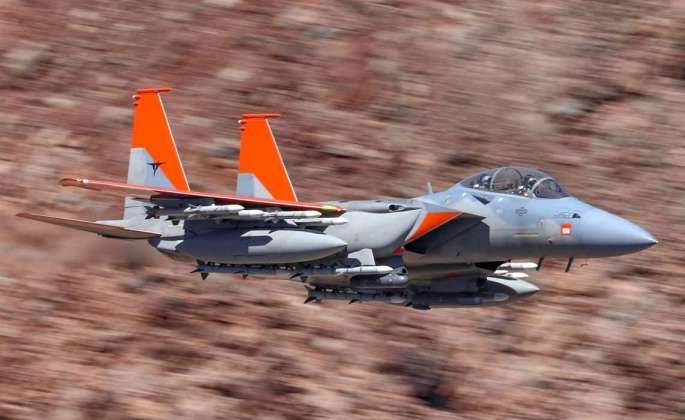
The F-15EX is itself closely based on the F-15QA design, but boasts several further improvements over its predecessor including the new AMBER weapons racks which allow the jets to carry up to 22 air to air missiles - more than any other fighter in the world. The jets also benefit from a new infra red search and track system and an improved structure which increase their service life. The U.S. Air Force notably does not need to cover the research and development costs for the vast majority of technologies integrated onto the aircraft, however, because these have been covered by export orders from East Asia and the Persian Gulf - in total reportedly amounting to approximately $5 billion worth of R&D spending. Upon delivery, the F-15EX may well be the most capable fighter in the American inventory. The jet has a much lower operational cost than either the original F-15E, or the F-35, let alone the F-22 Raptor, which means the fighters can fly longer hours every year and maintain high availability rates without harming the Air Force’s budget. Furthermore, the fighters’ lower operational cost than older F-15s which they were ordered to replace means that purchasing the aircraft will in the long run save the Air Force money - with the savings on operational costs more than covering the costs of acquiring the new fighters over their life time. Thus the F-15EX purchase is not only completely free - but actually reduces Air Force expenditures at a time of increasingly strained finances.
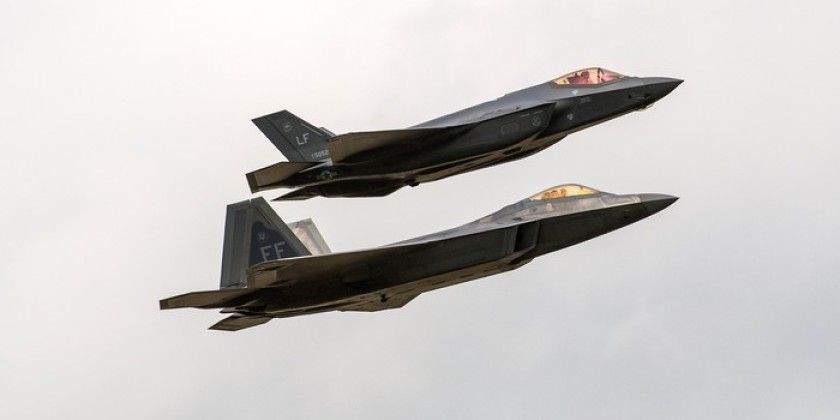
Comparing the F-15EX to other American fighter classes, the new Eagle benefits from being based on an extensively combat tested and reliable airframe - something particularly valuable in light of both the F-22 and the F-35’s serious reliability and performance issues. The fighter benefits from much newer sensors, computer architecture, avionics and electronic warfare systems than the F-22 which was developed in the 1990s, including features such as helmet mounted sights which make it much more dangerous than the Raptor in visual range combat. Although the F-35A can compete on a technologically peer level, having been designed long after the F-22 and enjoying a longer production run which has allowed the design to be updated, the fighter was not designed with a high performance heavyweight airframe for high end air to air engagements, and as a result deploys considerably less firepower and has a much shorter range and lower endurance than the F-15EX. Where the new Eagle can carry 22 air to air missiles, the F-35 is restricted to just four in standard configuration - meaning the F-15EX’s firepower for air to air combat is equivalent to that five and a half F-35s. In terms of flight performance, the F-15s advantage is overwhelming with the fighter benefiting from a much higher thrust/weight ratio, climb rate, flight ceiling and the highest speed of any combat jet in the world other than the Russian MiG-31 and MiG-25 platforms.
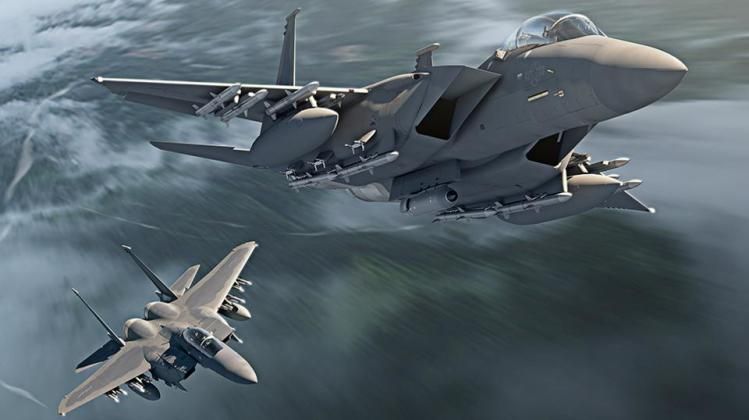
The F-15EX may well be considered the best fighter in the world, or at least in the U.S. Air Force, when considering factors such as sophistication, ease of maintenance, reliability and flight performance all together. The fighter in future will also be capable of deploying AGM-158 hypersonic missiles for a strike role, which are far superior to any standoff missile equipping the F-35 or F-22 and, with the exception of missiles carried by bombers, is rivalled in performance only by the Kh-47M2 missiles carried by Russia’s MiG-31K jets which are currently also being modified for its Su-57. The F-15EX’s only real shortcoming is its lack of stealth capabilities, and while the vast majority of fighters in production around the world today are not considered stealthy, the F-35 and F-22 which it is competing against are both built around radar cross section reducing airframes with advanced stealth capabilities. Given the F-15’s other advantages however, from endurance to firepower and ease of use, the lack of stealth can be seen as a small price to pay for an otherwise superb fighter - particularly as advances in sensor technologies make the future survivability of airframes such as that of the F-35 increasingly questionable. As Israel’s former Defence Minster Moshe Arens was one among many to point out regarding the F-35: “anti-stealth technology is being developed and may yet neutralise what is being advertised as the aircraft's major advantage before delivery or within its operational lifetime.” The U.S. Air Force itself is set to emphasise electronic warfare far more than stealth on its sixth generation fighter due to future limitations of stealth technology. Taking all these factors into account, the F-15EX can arguably be considered the most capable Western fighter jet yet to be developed.
