
Boeing Unveils Revolutionary New F-15EX Fighter: U.S. Air Force’s $23 Billion Deal Could Equip 12 Full Squadrons
Military Watch Magazine Editorial Staff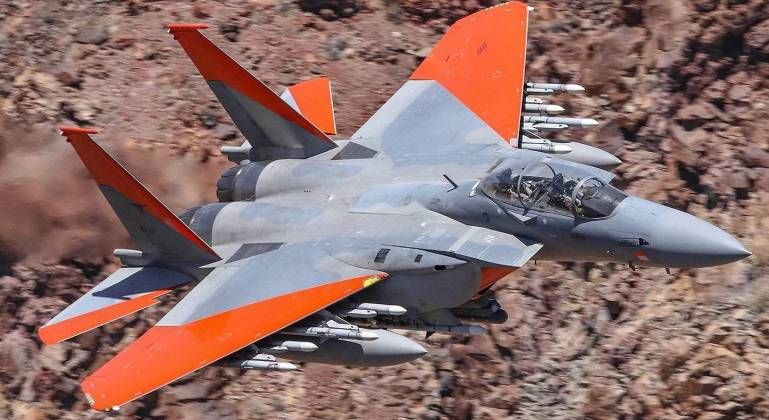
F-15SA Heavyweight Fighter
The U.S. Air Force has officially placed an order for its first F-15EX next generation heavyweight fighter - the first F-15 it has purchased in almost two decades. While the first delivery order has been valued at $1.2 billion, the entire F-15EX program is expected to reach $23 billion whichwould be enough for around 150 aircraft to equip 12 full squadrons. Boeing has lobbied the Air Force to consider a new contract for F-15 fighters for several years, with gradual improvements to the design over the past 20 years having been funded by export clients South Korea, Israel, Singapore, Saudi Arabia and Qatar, giving the F-15 of today capabilities far ahead of those which are currently in the American fleet. The U.S. notably loosened export controls on the F-15 in the mid 2000s - with the fighters previously exported only to Saudi Arabia, Japan and Israel and offered to Iran during the Cold War era - as the aircraft was surpassed by a new heavyweight fighter the F-22 Raptor. The sale of F-15SA fighters to Saudi Arabia in the 2010s, following on from a sale of much older F-15C jets in the 1980s, notably remains the largest single arms export in United States history.
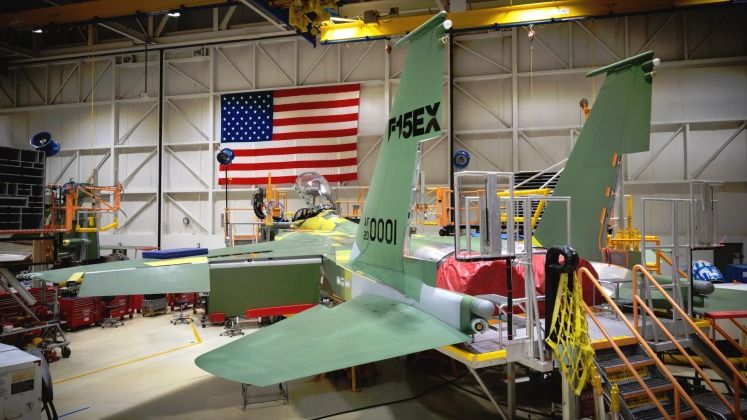
The future of the F-15 program was notably uncertain before the U.S. Air Force contract for the F-15EX was confirmed, with Qatar placing the last order for 36 fighters in 2017 and expected to possibly be planning a followup order for a further 36, and with Israel also considering acquiring new fighters - but no further contracts expected beyond this. The F-15EX notably builds on technologies already developed for advanced new F-15 variants marketed to Saudi Arabia and Qatar, from avionics and cockpit displays to AESA radars and the addition of infra red search and track systems to name but a few examples. Acquisitions are notably expected to save the U.S. Air Force money in the long term, as the new aircraft are much easier to maintain and have a significantly lower operational cost than the older F-15C and F-15E variants of which around 200 of each are currently in service. The savings on operational costs, with the original F-15s among the most costly fighters in the world to maintain, will in the long term more than cover the costs of acquiring new aircraft.
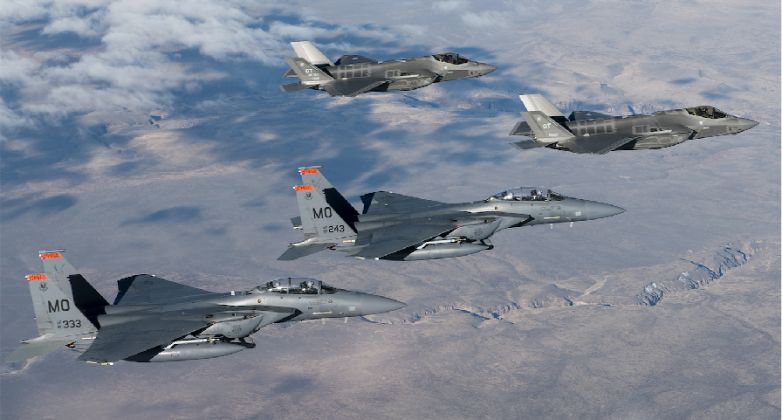
The F-15EX notably has considerable advantages over its rival from Lockheed Martin the F-35A, which is a lighter but much stealthier single engine jet designed to replace the F-16 Fighting Falcon. As Air Combat Command commander General Mike Holmes said in a statement: “The F-15EX is ready to fight as soon as it comes off the line” - a stark contrast to the F-35 which is still very far from fully combat ready and may not reach a similar level of readiness until close to the end of the decade. While the F-15EX has comparable situational awareness and electronic warfare capabilities to the F-35, its flight performance is far superior from manoeuvrability and endurance to operational altitude and climb rate. It is also considerably faster - the fastest in the U.S. fleet where the F-35 is the slowest. The F-35A is prized for its superior stealth capabilities, and is thought to have more room to incorporate upgrades in future. The lighter jet is limited to a payload of just four air to air missiles however - compared to a massive arsenal of 22 missiles carried by the F-15EX which makes the latter an ideal support platform to engage targets from longer ranges. The two fighters are notably highly interoperable and complementary and can share targeting data through advanced data links. Like the F-35, the F-15EX is expected to be a leading candidate to integrate the new AIM-260 air to air missile once it enters service - a long ranged platform currently under development which will reportedly revolutionise the U.S. Air Force’s ability to threaten enemy aircraft at range.
