
The Finest Flankers: Five Most Advanced Derivatives of the Su-27 High Performance Heavyweight Air Superiority Fighter
Military Watch Magazine Editorial Staff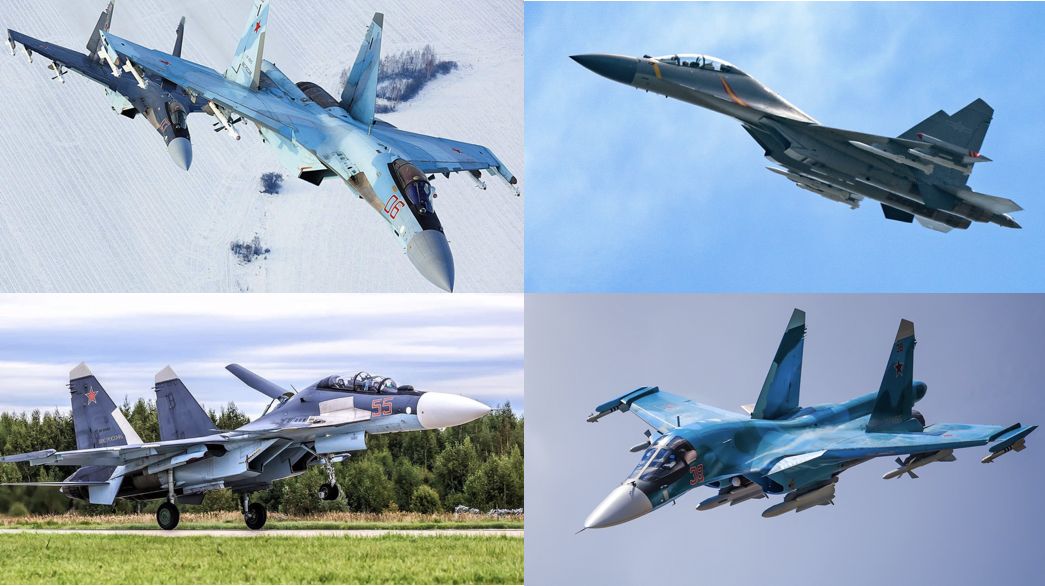
(clockwise from top left) Su-35, J-16, Su-34, Su-30SM
The Su-27 Flanker entered service in the Soviet Air Force from 1985 as a heavyweight twin engine air superiority platform designed to excel in air to air combat and go head to head with the elites of the Western Bloc - namely the U.S. Navy’s F-14 Tomcat and Air Force’s F-15 Eagle. Able to accommodate a large N001 radar weighting over 300kg which was state of the art for its time, the aircraft was capable not only in beyond visual range combat but also as a dogfighter - with an excellent flight performance, high climb rate and altitude and unrivalled low speed manoeuvrability. While its American analogue the F-15 could manoeuvre marginally better at high speeds and was faster, the Flanker compensated with a heavier armament, longer range, superior thrust/weight ratio and a better climb rate facilitated by its more powerful AL-31F turbofan engines.
The Flanker design has been modernised considerably since and remains in production in over half a dozen advanced variants, with over 500 in service in the Chinese People’s Liberation Army alone - which is today its primary operator - and several hundred more in service in the Russian Armed Forces. The Flanker has proven a highly versatile design, and has been modified for a wide range of roles from a dedicated strike fighter to a carrier based air superiority fighter - with all variants benefitting from the original’s excellent flight performance including its long range, high speed and altitude and excellent manoeuvrability. With the Flanker set to remain in production in its most advanced derivatives throughout the 2020s, and possibly beyond 2030, an assessment of the capabilities of the five most sophisticated and capable variants can provide valuable context for understanding the evolution of the design.
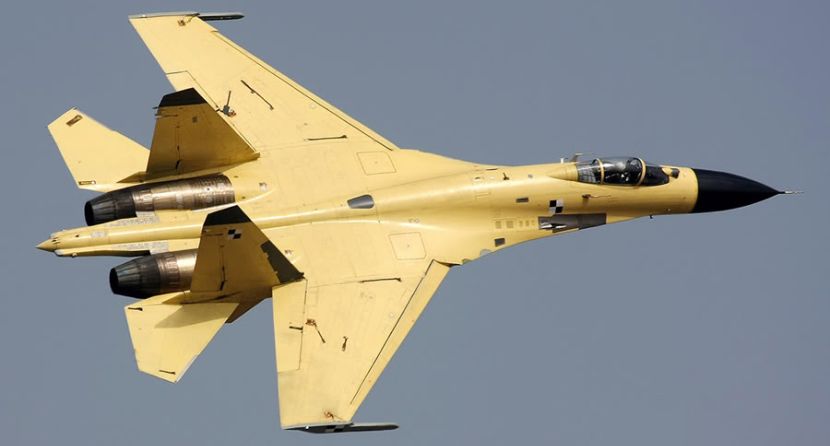
J-11D
A successor to the Shenyang J-11B, which entered service in the mid 1990s as a Chinese analogue to the Su-27M with more advanced avionics, composite materials and electronic warfare systems than the original Flanker, the J-11D’s design improve considerably on the older J-11 variant reflecting the considerable progress Chinese military aviation has made over the past two decades. Possibly the most ambitious fourth generation fighter design ever, the J-11D program is currently at an advanced prototype stage. The program aims to provide China with an analogue to the Russian Su-35 Flanker which improves on the formidable design of the Russian jet. The new fighter will integrate many technologies developed for China’s J-20 fifth generation fighter, making use of some of the latest composite materials for a lighter and more robust airframe, deploying powerful AESA radars for superior situational awareness and a lower radar signature. The jet retains access to a range of more powerful air to air munitions such as the PL-15 and PL-XX.
Chinese engine technology has also progressed considerably, and the country is the only one other than Russia to have integrated three dimensional thrust vectoring engines onto an aircraft. The country’s upcoming WS-15 engine, intended for integration onto later variants of the Chengdu J-20, and the less ambitious WS-10C program recently integrated onto the J-20, have also granted valuable experience which will ensure that the J-11D’s engines facilitate a degree of manoeuvrability exceeding other Flanker variants. The fighter also makes use of a radar cross section reducing profile and advanced stealth coatings, which is particularly useful for beyond visual range engagements. The fighter is intended to be able to go head to head with all existing combat jets up to and including American F-35 and F-22 stealth fighters. A carrier based variant of the J-11D is also expected to enter service as the J-15B or a similar designation, and will integrate many of the same technologies much as the original J-15 did as a derivative of the J-11B.
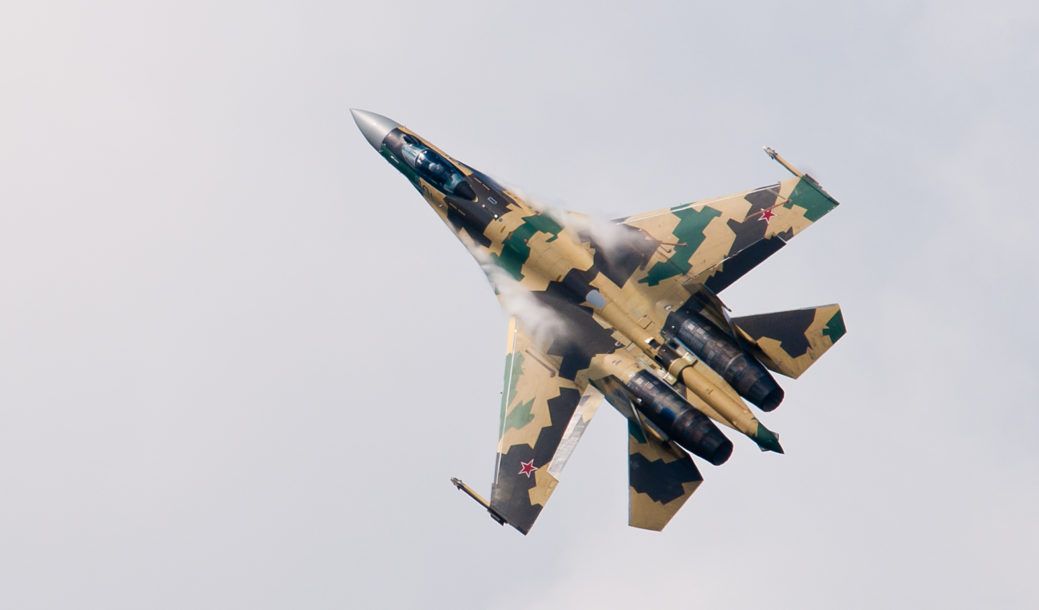
Su-35
Entering service in 2014, the Su-35 was the first new Russia single seat dedicated air superiority platform to enter mass production since the original Su-27 in 1985 - and improves considerably over the original. The fighter’s most notable improvements are its more powerful AL-41 engines - which were the world’s first with three dimensional thrust vectoring capabilities, its lighter and lower maintenance high composite airframe, its new electronic warfare systems and avionics, and its Irbis-E passive electronically scanned array radar. The fighter benefits from limited applications of stealth technology, with a reduced radar cross section under a third that of the original Flanker, and is compatible with new longer ranged missiles most notably including the R-37M hypersonic platform with a 400km range. The fighter was the first in Russian service confirmed to have been equipped with the R-77, the country’s first major class of active radar guided air to air missile, and is capable of deploying 14 missiles. Designed to go head to head with the F-22 Raptor and come out on top, the Su-35 represents a major improvement on the original Flanker design which Russia has shown a great deal of confidence in, and its production run is likely to continue into and possibly beyond the mid-2020s.
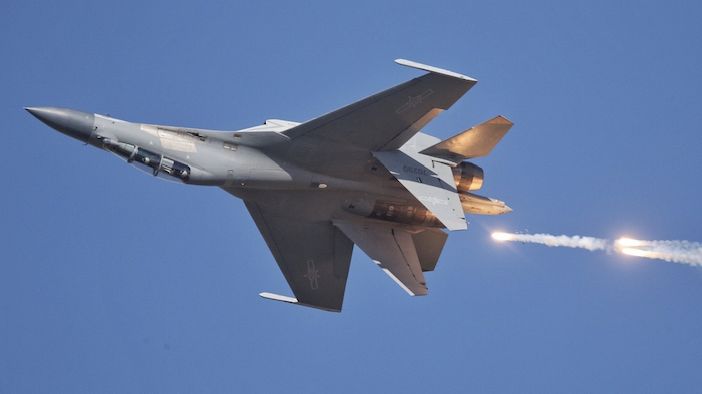
J-16
Entering service a year before the Su-35 in 2013, the J-16 represents a major improvement over prior Chinese Flanker designs and is a twin seat platform which stands out for its well roundedness and lack of specialisation in either air to air combat or and air to ground role. A twin seat aircraft, the fighter is capable of delivering a range of advanced air to ground munitions at both close and standoff ranges, but also integrates advanced capabilities for beyond visual range air to air combat. The aircraft is currently the only serving Flanker derivative to make use of an AESA radar, which combined with increasingly sophisticated stealth coatings and a new generation of high performance air to air missiles makes it particularly lethal to enemy aircraft. The J-16 has reportedly had a very large unnamed long ranged air to air missile designed for it, specifically to target enemy support aircraft such as tankers and AWACS at very extreme ranges, which the two other fighters in China’s new generation the J-20 and J-10C would both struggle to carry. Paired with the fighter’s powerful sensors, limited stealth capabilities and high flight performance, it allows it to function as an effective ‘tanker hunter’ - which is particularly valuable given the importance of heavy support aircraft to Western war plans in the Asia-Pacific region.
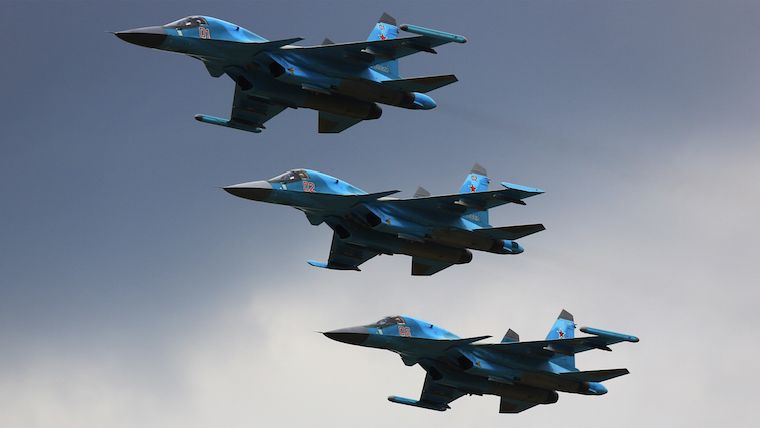
Su-34
Entering service alongside the Su-35 in early 2014, the Su-34 Hellduck represents the most radical deviation from the original Flanker design among its derivatives. The Su-34 is high end strike fighter with only a secondary defensive air to air capability where the original Flanker was designed almost exclusively for air superiority. The aircraft can deploy a range of advanced air to ground, anti radiation and anti ship munitions including long ranged cruise missiles such as the radar evading Kh-101 - which have an estimated range of up to 5,500km making it the longest standoff range for any fighter in the world. Some other formidable munitions the Hellduck can deliver include the Kh-65Se and Kh-SD with 600km standoff ranges, the Mach 3 Kh-41, the Mach 3.5 sea skimming Kh-31A and the 300km range Kh-35U and P-800. The aircraft integrates three state of the art electronic countermeasures systems, the Khibiny, SAP-14 and SAP-518, which have been combat tested in Syria and seriously enhance survivability. The Su-34 notably lacks the manoeuvrability and high operational altitude of other Flanker designs, and despite its access to high end air to air missiles such as the R-77 it is highly specialised in air to ground and anti shipping roles. The Hellduck’s AL-31F M2 engines are the most powerful to have been integrated onto any Flanker derivative, and were also used by initial batches of China’s J-20 stealth fighters. The Su-34 is highly cost effective and its capabilities are unique among Flanker variants, and its production rate has thus exceeded that of the Su-35 despite producing for Russian service exclusively and not for export clients - signalling the importance the Russian Air Force attributes to this new fighter.
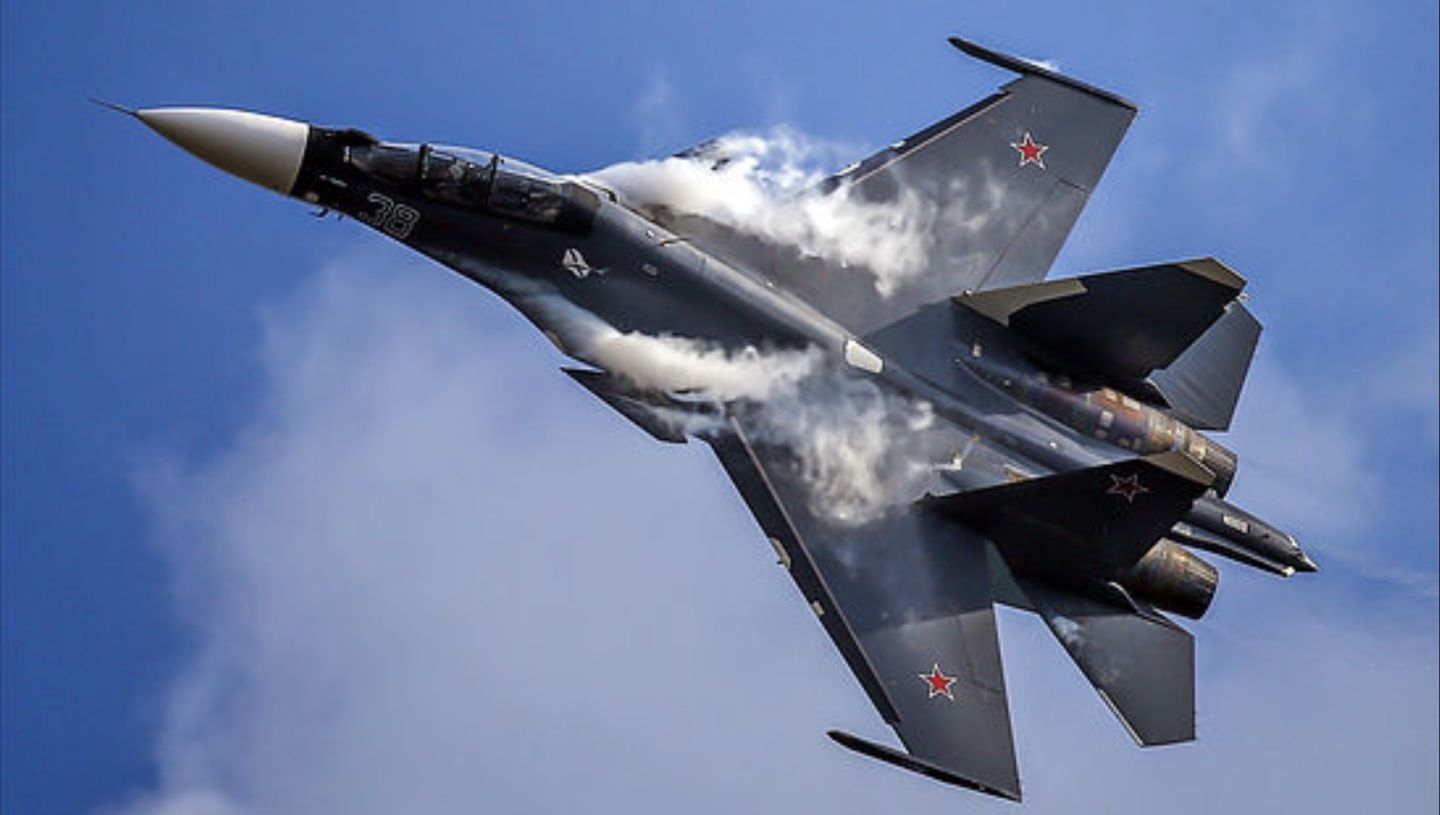
Su-30SM
The most advanced variant of the Su-30, a more well rounded twin seat derivative of the Su-27 designed to also feature a more potent air to air capability, the Su-30SM is considerably more capable than the original design which entered service 1996. The fighters integrate the N011M Bars radar providing a 400km detection range against fighter sized targets - the second most powerful integrated onto a Russian fighter other than the Irbis-E - and are reportedly capable of delivering standoff attacks even against stealth targets. State of the art avionics including a heads up display, and advanced electronic warfare systems, are also integrated, making these ‘4+ generation’ jets extremely lethal in beyond visual range combat when coupled with its ten or more long ranged air to air missiles and its modern electronic warfare systems. The aircraft are possibly the most cost effective in production in Russia today, and are being produced in large numbers both for export and for the Russian Military. A program to upgrade the design into a ‘4++ generation’ fighter more on par with the Su-35 is also being considered, although cost issues may prevent this, which will include integration of the Su-35’s AL-41FS turbofan engines for superior manoeuvrability and its Irbis-E radar for greater situational awareness. Even in its current for however, the Su-30SM remains at the elite end of fighter jets in service around the world today despite being one of the least costly heavyweight fighters in production.
