
Which Countries Have the Most Dangerous Dedicated Interceptors? From Algerian Foxbats to Kazakh Foxhounds
Military Watch Magazine Editorial Staff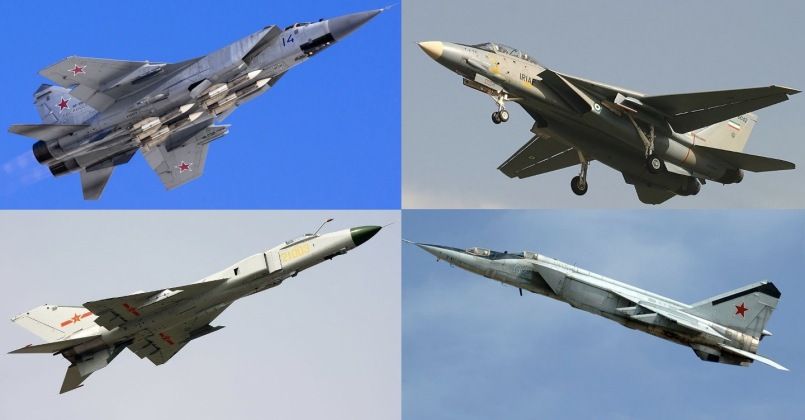
MiG-31, F-14, MiG-25 and J-8 II Interceptors (clockwise from top left)
Dedicated interceptor aircraft were produced by a number of countries for a variety of roles during the Cold War, with most designed to engage enemy heavy aircraft such as bombers and reconnaissance jets and having a secondary role against enemy fighter sized aircraft. Such aircraft have generally been much heavier and faster than fighter sized jets, carried larger sensor suites, and been able to operate special classes of very long ranged air to air missiles which are too heavy for fighter sized aircraft to deploy. The U.S.’ two mot notable dedicated interceptor programs in the late Cold War years were the F-12 and F-14, the former which was an extremely large and fast aircraft deigned to protect the American mainland and the latter which was designed to guard the Navy’s carrier strike groups from Soviet bombers. While the more expensive F-12 was cancelled, the F-14 became one of the most prolific aircraft of the Cold War and proved highly capable in combat. The Soviet Union also developed highly capable interceptor aircraft which pioneered new capabilities and technologies unseen elsewhere in the world, with its two most prolific interceptor designs the MiG-25 and MiG-31 both in service today.
Due to their generally higher cost relative to fighter sized aircraft, and their often lower versatility due to a focus on air to air combat, interceptors are not widely fielded today with only a small number of countries deploying them. The fact that the prime interceptors of the U.S. and USSR were never exported, except for a single F-14 sale in the mid-1970s, further restricted their use. A look at the countries which today field the world’s most capable interceptors, ranked in order of air to air capabilities, is given below:
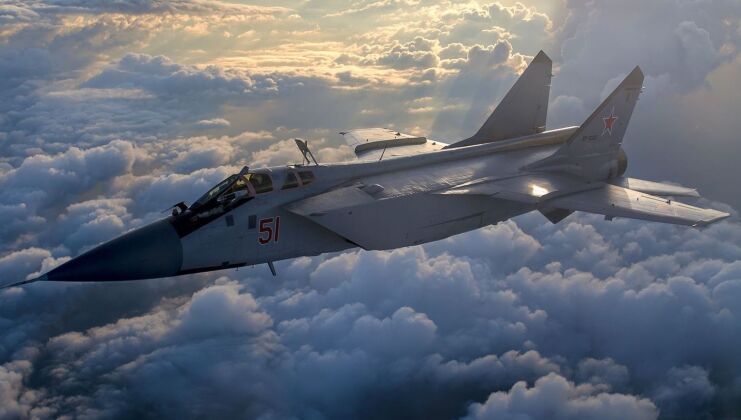
Russia - MiG-31BM and MiG-31BMS Foxhound
The Russian Air Force fields more interceptors than all other countries combined, and the MiG-31BM and BMS Foxbound heavyweight jets it deploys are by far the most capable in service today. The Foxhound is the fastest fourth generation combat jet ever designed, and has the benefit of never having been accessed by Russia’s potential adversaries meaning many of its capabilities remain unknown. Russian state sources indicate that the aircraft can fly higher than any other of its generation and can reach Mach 3 speeds, while the Foxhound can also cruise for extended periods at supersonic speeds. The aircraft is prized for its very large sensor suite, including the world’s first phased array radar developed for air to air combat the Zaslon which was upgraded to the much more capable Zaslon-M after the Cold War. The Foxhound is considered by many analysts to be the most capable non stealth combat jet in terms of air to air performance, and has been adapted for anti satellite warfare and as a strike platform to launch hypersonic ballistic missiles. The aircraft deploy R-37 active radar guided air to air missiles with massive 61kg warheads and very long 400km engagement ranges - allowing them to very comfortably outrange most threats.
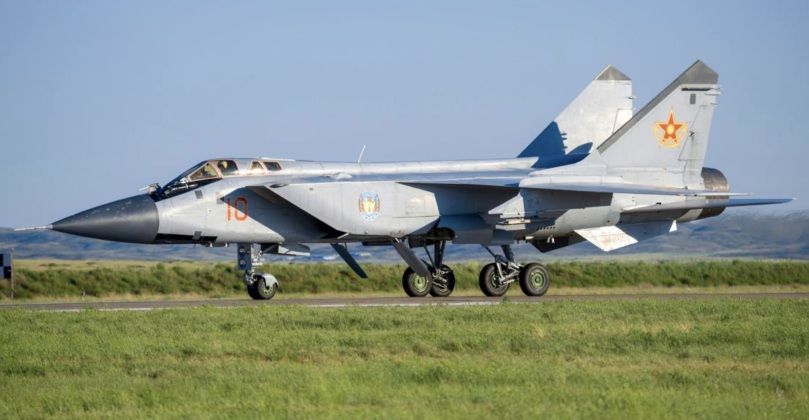
Kazakhstan - MiG-31BM Foxhound
Although the Foxhound was never exported, Kazakhstan was the only Soviet successor state other than Russia to inherit the aircraft which form the elite of its combat fleet today. The Kazakh Air Force deploys 32 of the heavy interceptors in two squadrons which form the mainstay of its fleet’s air to air combat capability, and at least some have been upgraded to the MiG-31BM standard. The aircraft have been equipped with R-77 active radar guided missiles to supplement the longer ranged but heavier and older R-33, with these missiles having engagement ranges of 110km and 300km respectively. The aircraft are somewhat underpowered compared to their Russian counterparts due to their apparent lack of the R-37 missile, and there have been no indications that Kazakhstan intends to purchase the missiles. The MiG-31’s extremely long range and powerful sensor suite, its ability to intercept cruise missiles as well as aircraft, and its very high 25km flight ceiling, make it an ideal aircraft for patrolling Kazakhstan’s vast territory.
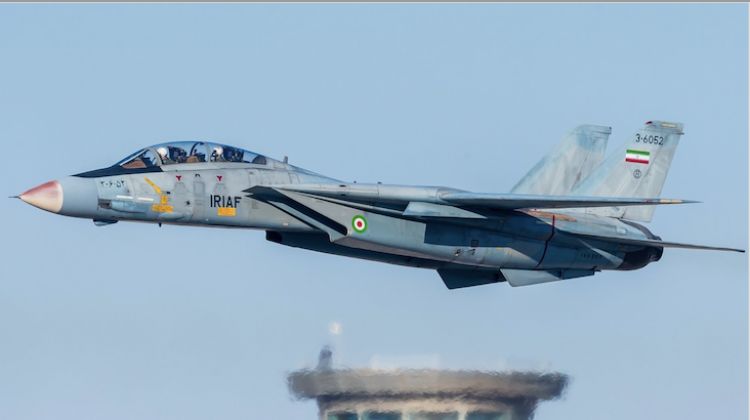
Iran - F-14AM Tomcat
The only fourth generation interceptor ever exported, Iran acquired the most capable and heaviest Western fourth generation combat jet ever built for air to air combat the F-14 Tomcat in the 1970s. The Tomcat notably straddles the line between a fighter and an interceptor, as while it was designed for the latter role and benefits from a sensor suite, armaments and a high endurance airframe ideal for it, its high manoeuvrability also allows it to operate as an effective fighter. Its speed and altitude, however, are far inferior to those of Soviet interceptors and its lack of a phased array radar was a notable shortcoming. The F-14A exported to Iran was the least capable variant of the Tomcat ever developed, and used much weaker engines than those of the F-14D which formed the U.S. Navy’s elite from 1991. The aircraft underwent over 300 modifications in Iran between 1980 and 2000, and has been extensively refurbished and modernised with a new radar integrated alongside new armaments. The fighter’s AIM-54 missile was replaced by an enhanced indigenous derivative - the Fakour-90 - which has an engagement range estimated at between 250 and 300km. The Tomcats are the most capable combat jets in the Iranian Air Force, and successful modernisation of the design has left them a force to be reckoned with.
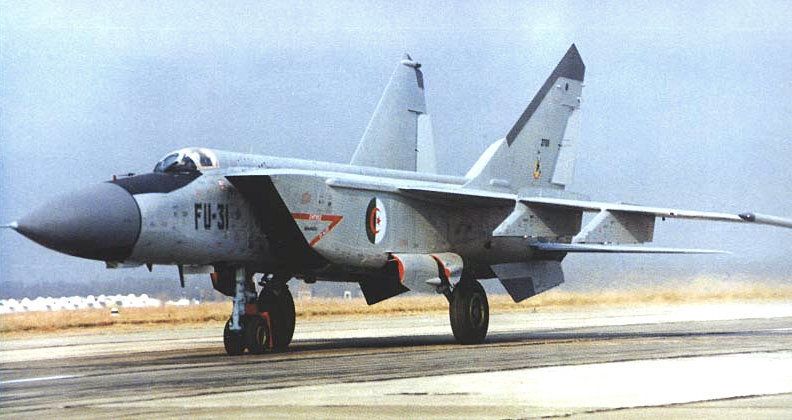
Algeria - MiG-25 Foxbat
One of the oldest operators of the MiG-25 Foxbat, Algeria has deployed the advanced interceptors since 1978 and placed subsequent followup orders for more capable batches. The country is currently the only one which still actively deploys the aircraft, and invested in upgrading its Foxbats to a fourth generation standard shortly after the Cold War’s end. This saw the interceptors' capabilities enhanced considerably with improved variants of the R-40 air to air missile, an infra red search and track system and a more powerful radar with a longer range and a look-down shoot-down capability. The Foxbat is the fastest combat jet ever to enter service anywhere in the world, and the improvements made to the Algerian fleet make them the most capable Foxbats ever fielded. The aircraft previously played a central role in deterring Israeli F-15s from striking the country in the 1980s, with the MiG-25 design having proven capable of engaging F-15s and often prevailing in such engagements. The fighters’ R-40 missiles carry the heaviest warheads of any air to air missiles in the world at 100kg, and have an engagement range of over 80km. The age of the fighters and their high operational costs have fulled speculation that Algeria intends to replace them with Su-57 next generation stealth fighters.
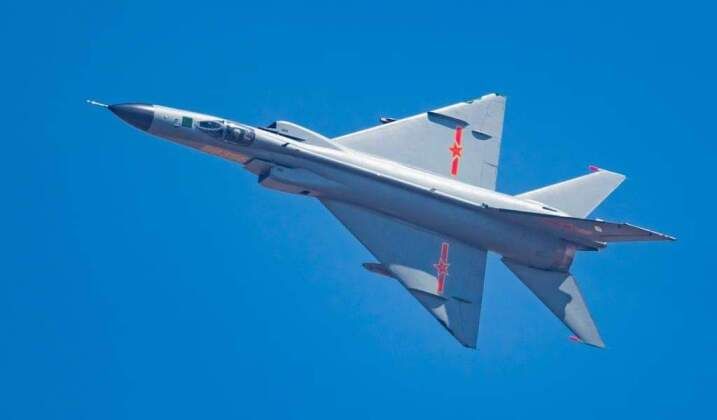
China - J-8 II Finback
The J-8 II Finback is derived from China’s Cold War era J-8 combat platform — which was developed as a conservative interceptor program which essentially enlarged the Soviet MiG-21 fighter design and provided a twin rather than a single engine configuration. The J-8 II was an improvement to the design initiated before the Cold War’s end - and before China had gained access to much more capable Soviet and Russian aircraft and their technologies. The Finback was very small by the standards of interceptors - only around 36% the weight of the MiG-31 Foxhound. As a result it was not able to carry specialised large air to air munitions as the Foxbat, Foxhound and Tomcat did, but it was upgraded to carry PL-12 active radar guided missiles with a 100km range. One notable advantage the aircraft does have, however, is its much lower maintenance requirements and operational costs relative to other interceptors. China has notably not invested in developing dedicated interceptors since the 1990s, despite widespread reports that decade that it was considering manufacturing 200 or more Russian Foxhound interceptors under license. Many analysts have speculated that this could change in future particularly as the threat from American stealth bombers grows and as the value of heavy interceptors as space warfare assets also increases.
