
What is North Korea’s Mysterious New ‘Tactical Weapon’? Iskander Missile Derivative, Guided Koksan Rounds Among Possibilities
Military Watch Magazine Editorial Staff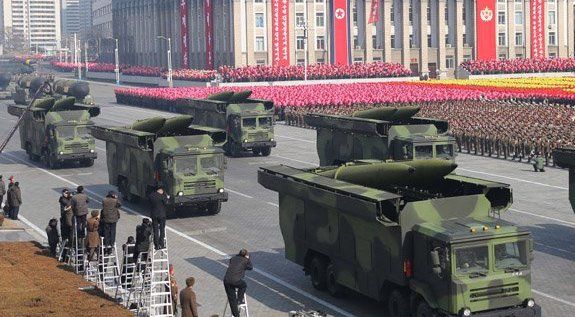
North Korean Iskander-Resembling Ballistic Missiles on Parade (name unknown)
On April 17th North Korean state media outlet KCNA announced the testing of an unnamed new tactical weapon, which reportedly had a “peculiar mode of guiding flight” and deployed “a powerful warhead.” The weapons test was reportedly personally supervised by Leader Kim Jong Un, and came just a week after the retirement of the country’s longstanding head of state President Kim Yong Nam. The weapons test was interpreted by analysts as a means for Pyongyang to demonstrate its dissatisfaction with the pace of negotiations with the United States, which have stalled almost entirely following President Donald Trump’s refusal at the February summit at Hanoi, where he met with Marshal Kim, to loosen economic sanctions on the East Asian state in exchange for access to Korean nuclear facilities for inspection.
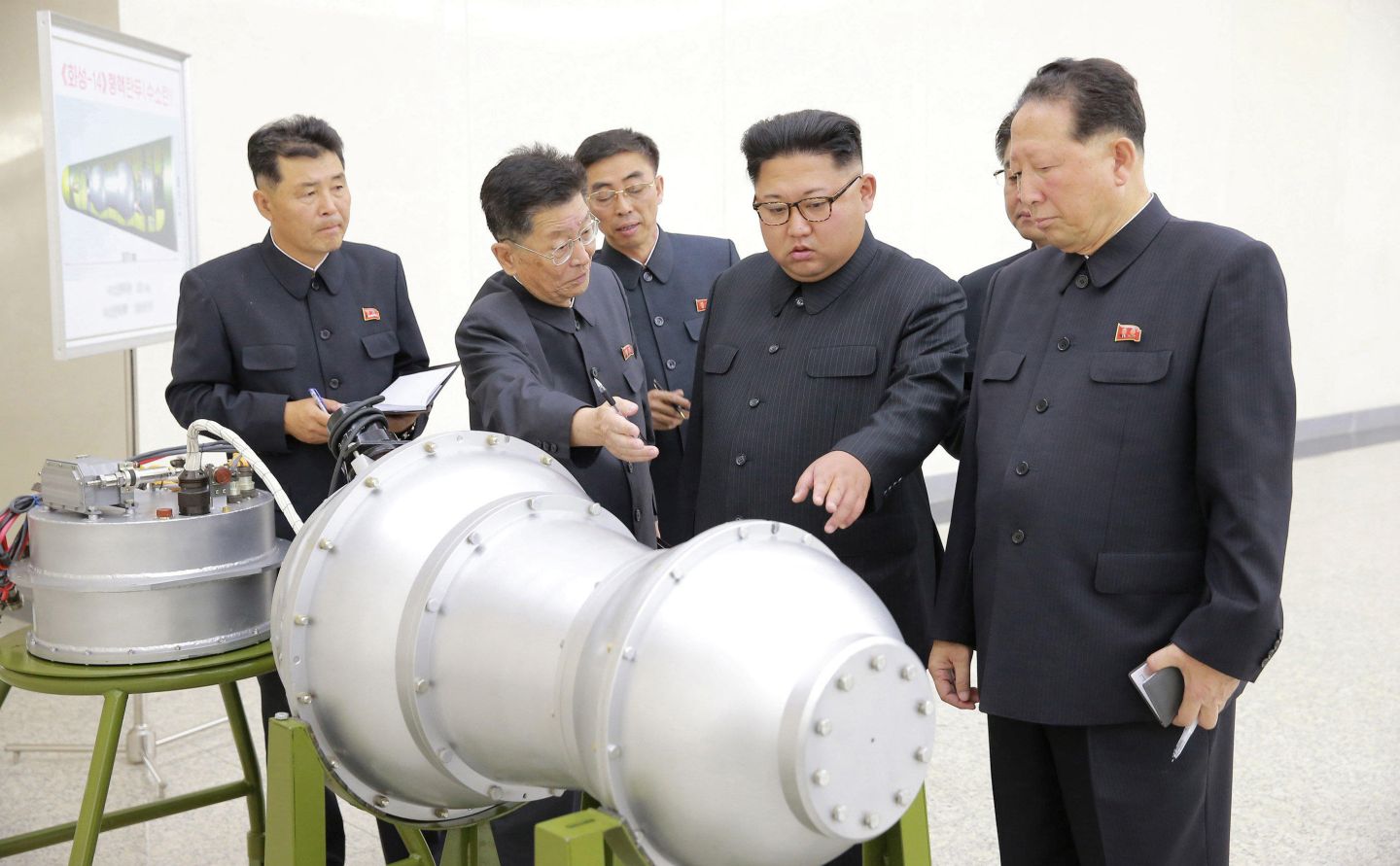
Announcement of the weapons test emphasised that the system was tactical rather than strategic - in keeping with Pyongyang’s moratorium on the testing of nuclear arms and their long range delivery vehicles in early 2018 following the successful testing of two intercontinental ballistic missile designs and a miniaturised thermonuclear warhead (hydrogen bomb) the year before. As North Korea’s existential deterrence doctrine allows for the deployment of nuclear weapons only for strategic purposes, and not on short range tactical systems as the United States, Russia and Pakistan do among others, the country’s armed forces will not seek to integrate nuclear warheads onto tactical systems.
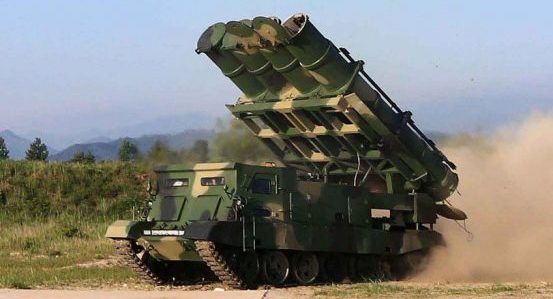
With the United States continuing to modernise its own conventional assets in northeast Asia, including growing numbers of F-35 stealth fighters and plans for new B-21 bombers which are expected to take a leading role in plans for potential attacks on North Korea’s air defence network in the event of war, Korean forces have seen fit to modernise their own tactical assets in response. KCNA’s report on the nature of the test gives some indication as to the type of weapons system which may have been tested - with references to guidance systems and a warhead indicating a tactical ballistic missile, cruise missile or a form of guided artillery. Some analysts have also speculated that the announcement could have referred to a form of air defence system - possibly a new munition type for the country’s indigenous KN—06 surface to air missile systems which were placed in mass production in mid 2017. 2017 also saw the testing of an advanced new anti ship cruise missile, the Kumsong-3, which demonstrated a highly level of precision and manoeuvrability, a long range and high mobility allowing them to pose a serious threat to enemy warships. The test could potentially have been of a similar cruise missile system or an enhanced variant of the Kumsong-3.
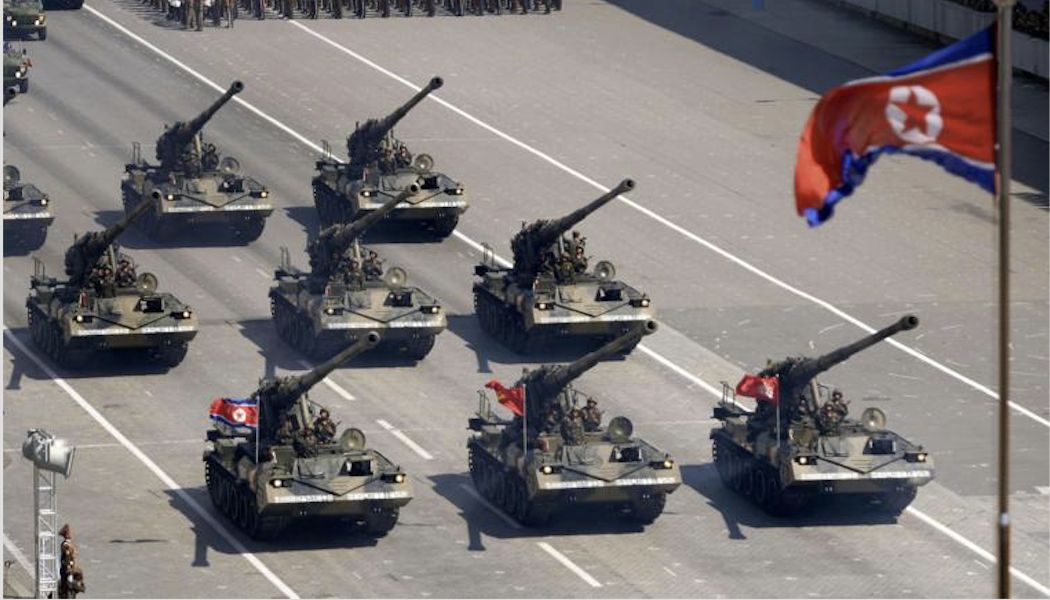
Based on the types of tactical weapons systems North Korea’s armed forces have previously prioritised the development of, namely those which provide it with an asymmetric means of countering American military might, the area number of other possibilities for the type of weapon tested. While North Korea has deployed the world’s longest ranged artillery since the 1970s in the form of the Koksan 170mm self propelled guns, the military has reportedly invested heavily in developing more sophisticated variants of the weapons system since then - with a distinct new variant confirmed to have entered service in 1989 and further modernised variants speculated to have been deployed since them. Moreover, with the advent of guided artillery rounds with extended ranges as a serious force multiplier for such heavy guns - deployed by platforms such as the South Korean K9 Thunder and Russian 2S35 Koalitsiya-SV - it remains highly possible that North Korea could have tested similar artillery rounds for its Koksan guns. Such artillery rounds would allow these artillery pieces to better neutralise U.S. and South Korean armour and artillery in the opening stages of a war, where the Koksan retains a distinct range advantage, while also allowing it to more effectively target U.S. military bases and key military infrastructure south of the 38th parallel.
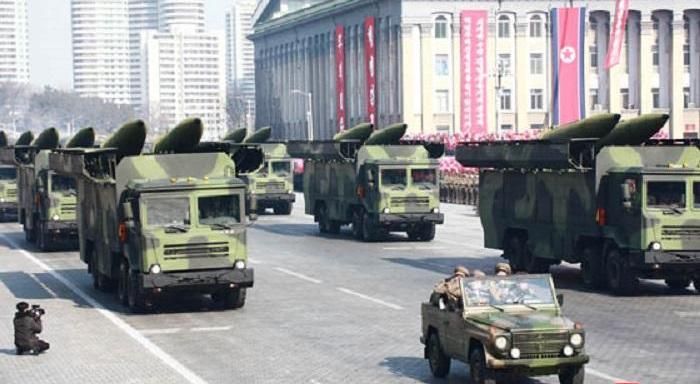
Perhaps the most significant possibility is that the weapons system tested was the new ballistic missile platform first unveiled in February 2018, the name of which is as of yet unknown. While North Korea previously developed indigenous variants of two generations of Soviet tactical ballistic missiles, the Scud-B and Scud-C as the Hwasong-5 and Hwasong-6 and the solid fuelled OTR-21 Tochka as the KN-02 Toksa, after gaining access to these Soviet platforms through Egypt and Syria respectively, the new missile closely resembles the advanced Russian platform designed to replace the Tochka - the 9K720 Iskander-M. This platform entered service in 2006 and has since been exported to Armenia and Algeria - the latter which retains close defence ties to Pyongyang. It is possible that North Korea was able to gain access to the Iskander design through a number of means, either through Algeria or through a direct technology transfer from Russia - based on recent U.S. claims that Moscow was aiding North Korean missile development. Whatever the case, if the new missile’s capabilities are at all comparable to the Iskander they will seriously enhance the country’s tactical strike capabilities - with their high precision, mobility, and access to a wide variety of warheads including bunker buster and earth penetrators leaving even well defended high value U.S. targets in South Korea vulnerable. As North Korea’s missile programs are not restricted by the INF treaty, which the Iskander was until Russia's withdraws in 2019, it is possible that an Iskander derivative in Korean hands could have a longer range than the original platform which was restricted to ranges under 500km. A longer range would allow the missile system to also threaten key American military targets in Japan.
Ultimately while the type of tactical weapons system tested by North Korea’s armed forces can only be speculated, it is likely that testing of such systems will continue even if a lasting detente with the United States comes about. Should the U.S. fail to meet Pyongyang’s deadline of January 2020 to return to negotiations in good faith however, it is likely that these tests will be accompanied by further tests of strategic assets with longer ranges designed for nuclear delivery.
