
World's Biggest Guns; North Korea’s Massive Koksan Howitzers and the Evolution of the Country’s Strike Capabilities
Military Watch Magazine Editorial Staff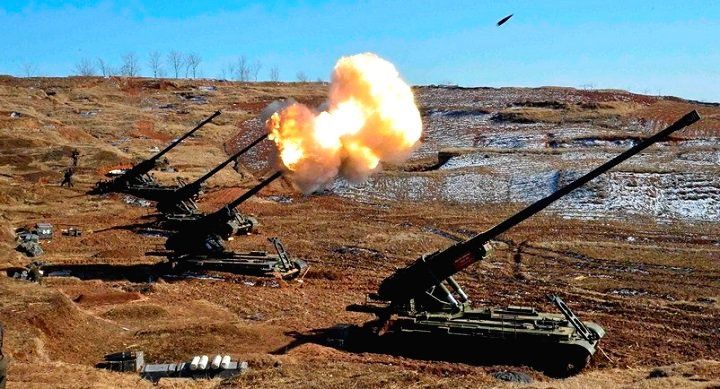
North Korea Koksan Artillery Pieces
KCNA
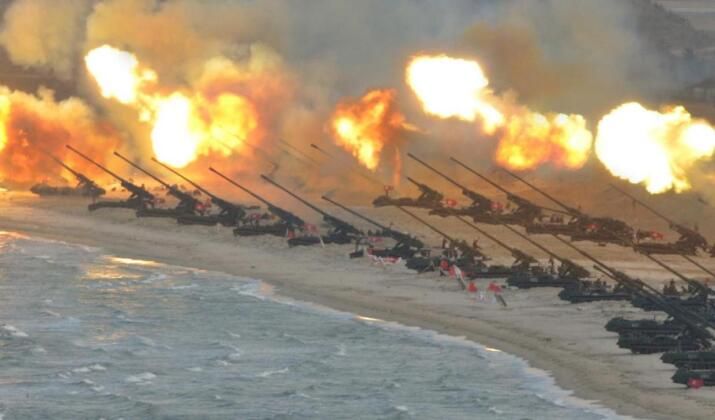
The Korean demilitarised zone has long been a position where some of the world's largest artillery forces have faced one another in preparation for a potential war, with the North and South Korean armed forces fielding the second and fourth largest towed artillery forces in the world. North Korea also deploys the largest rocket artillery force in the world, with its souther neighbour tailing behind at 17th. The close proximity of strategic and tactical targets in the two countries, from Seoul on the southern side to Kaesong in the north, makes artillery a highly viable capability, one which both countries have invested heavily in alongside short range tactical ballistic missiles such as the North Korean Hwasong-11 and South Korean Hyunmoo-2C.
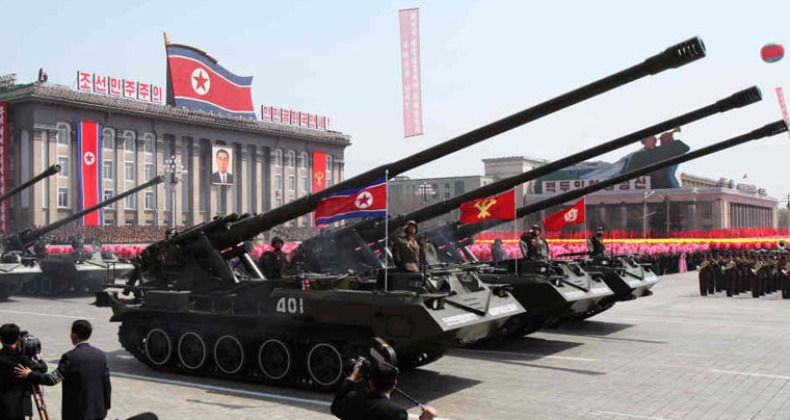
South Korea’s armed forces as of 1999 have fielded what is widely considered the world’s most capable NATO compatible self propelled artillery system in the world, the K9 Thunder, which far surpasses Western made platforms such as the U.S. Paladin across the board in its capabilities. While the K9 retains an overall capability advantage, the largest howitzer fielded by North Korea had long held a record for the longest ranged. Known in the West as the Koksan, the North’s self propelled artillery is estimated to have entered service in 1978, and is the only known 170mm system in service anywhere the world. The weapon’s 65 kilometre firing range allows it to comfortably target Seoul from across the demilitarised zone without using costly rocket assisted projectiles, making a valuable contributor to deterrence long before nuclear weapons were developed. Facing off against a vast arsenal of American tactical nuclear weapons deployed to South Korea, first stationed there in 1958 following the United States’ unilateral withdrawal from article 13 (d) of the armistice which ended the Korean War, the Koksan was at the time of its induction North Korea’s most effective means of striking back against its nuclear armed adversaries. While what the weapon provided was far from even basic parity, it was a first step towards indigenously developing longer ranged strike capabilities to place enemy assets under fire further beyond the country's borders.
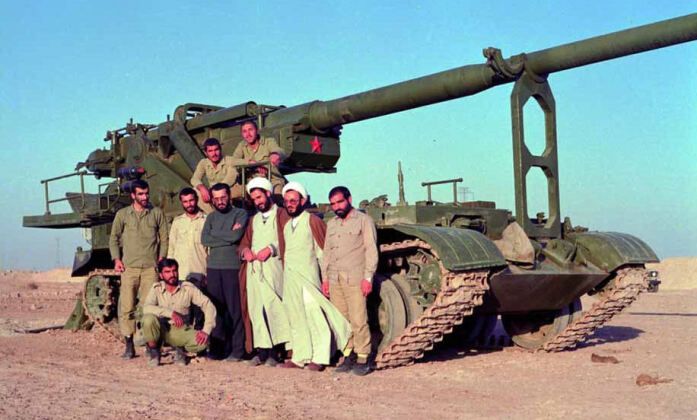
The Koksan was based on the chassis of the Soviet Type 54/55 tank - a reliable and widely used design which formed the backbone of North Korea's armoured units until the 1980s. The chassis' simplicity makes the Koksan relatively easy to service and maintain. Unlike most other mobile howitzers, including the South Korean K9, the Koksan uses an open mount which gives it a distinctive appearance. Since first entering service, the design has been modernised and enhanced multiple times to improve its efficiency, its ammunition carriage and its range. Older variants of the Koksan were sold to Iran in significant numbers during the Iran-Iraq War, as part of massive arms transfers made by North Korea to its Middle Eastern strategic partner which included equipment ranging from small arms to ballistic missiles and submarines. In Iranian hands Koksans were prized for their ability to target Iraqi ground forces beyond retaliatory range, and were also used for harassing Kuwaiti oil fields. The systems were reportedly highly prized by the Iranian Army, with some pieces being captured and displayed by the Iraqi Armed Forces. The United States would subsequently capture one former Iranian Koksan gun from Iraq in 2003, with evaluations of the Korean system's combat performance made on the basis of the study of this old model from the early 1980s. Details on the multiple newer variants of the Koksan developed since the 1970s remain few and far between outside North Korea.
The Koksan remains one of North Korea’s most prolific early defence exports, and marked the beginnings of its industrial base’s emergence as one capable of developing highly distinct new clean sheet weapons programs with valuable capabilities. Although North Korean strike capabilities have improved tremendously since the Koksan entered service, the system still plays an important role due to its ability to lay down fire over great distances and at very low costs compared to rocket artillery or ballistic missile assets. The system is expected to remain in service for decades into the future, although how long it will remain in production, and whether a clean sheet new 170mm gun type could be developed to succeed it in future, remains uncertain. A notable shortcoming of early variants of the system which are thought to have been partly addressed, is its relatively low firing rate compared to the most modern 21st century howitzers like the South Korean K9 or Chinese PLZ-05, with a next generation Koksan variant or successor with an up to date autoloader potentially providing a serious boost to future capabilities.
