
U.S. HIMARS Rocket and Ballistic Missile Systems Demonstrate Firepower at Forward Positions Near China
Military Watch Magazine Editorial Staff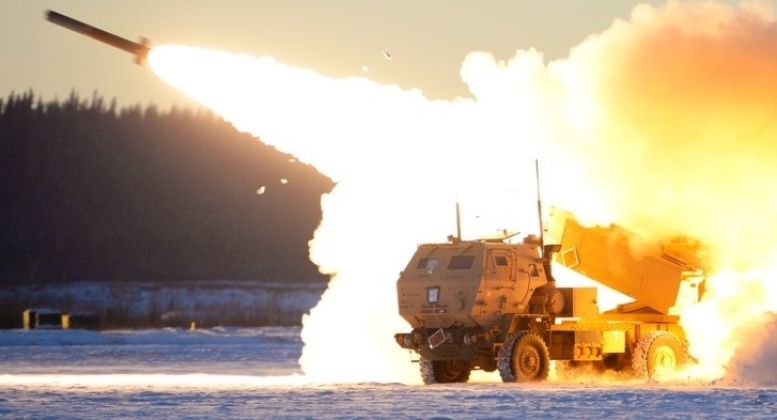
HIMARS Rocket Launch
The U.S. Army has deployed and fired HIMARS rocket artillery systems in the Philippines during Exercise Salaknib 2026, which represents a significant landmark in the expansion of forward-positioned long-range strike capabilities near Chinese territory. The U.S. Armed Forces have relied increasingly heavily on mobile missile launchers in the region to counter China’s increasingly overwhelming conventional advantages asymmetrically, with HIMARS having demonstrated the ability to have a high impact and destroy high value targets in the Ukrainian theatre, while itself having a very low cost. U.S. analysts have widely highlighted that the exercise confirms the ability of U.S. Army HIMARS units to operate from dispersed locations and support joint operations across island chains, which is critical to preparations for combat with Chinese forces in the region.
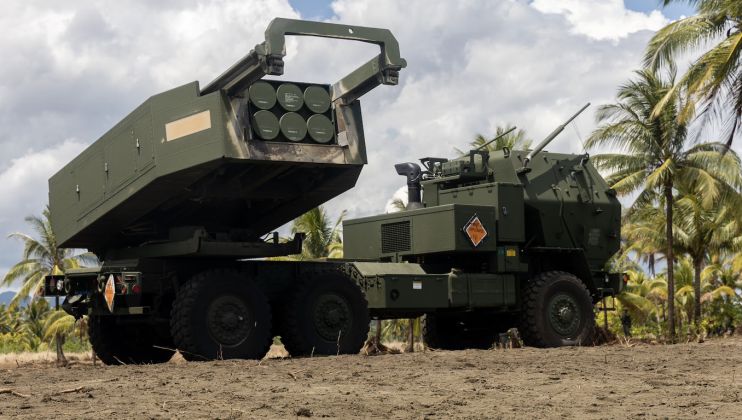
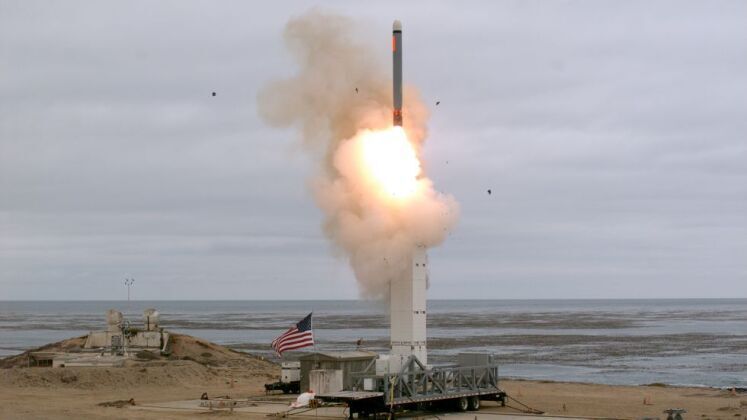
The prioritisation of the Philippines for deployment of long range missile systems is far from unprecedented, largely due to the country’s geographic location which makes it optimal to serve as a staging ground for attacks on China. In April 2024, the U.S. Army made its first ever deployment of the Typhon Mid-Range Capability (MRC) system to the territory, which can not only target enemy warships with 370 kilometre range SM-6 missiles, but also fire the Tomahawk land attack cruise missile which retains a 1,600 kilometre range. When launchers are deployed to the northern Philippines, this range is sufficient to cover most of China’s East Coast, striking targets as far as Nanjing, Shanghai and Wuhan. Other cruise missile types being developed for U.S. Navy destroyers and attack submarines are expected to later be integrated onto the MRC system, making it highly complementary to HIMARS. The extreme depletion of the Tomahawk arsenal during hostilities with Iran from late February to early April, however, is expected to undermine the ability to build up a strike capability for Pacific war contingencies.
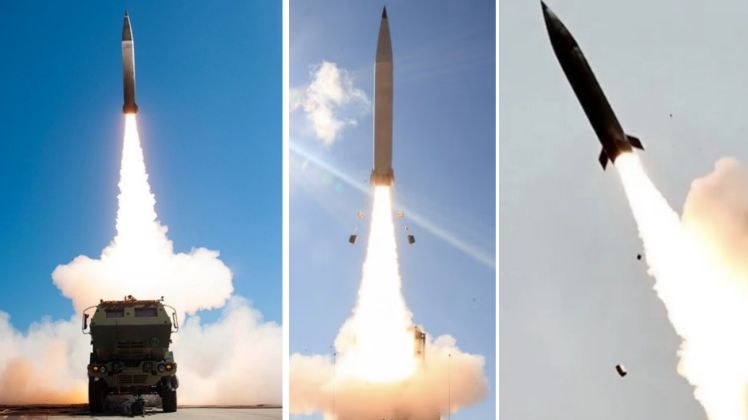
The U.S. Army 25th Infantry Division has played a leading role in the buildup of HIMARS in the Pacific, and under Major General James Bartholomees, it is executing a “see, sense, and strike at distance” approach linking sensors to shooters across vast areas. Official imagery from Salaknib 2026 showed a precision-guided rocket launch, while the Philippine Army referred to the rapid firing of reduced-range practice rockets during the exercise in Laur. It is notable that alongside the deployment of 150 kilometre range rockets, HIMARS can also integrate 300 kilometre range ATACMS ballistic missiles, and newer PrSM ballistic missiles with ranges of over 500 kilometres. While the PrSM is revolutionary for the combat potential of HIMARS launchers, and saw its first ever combat use to strike targets deep inside Iran from late February, the U.S. Army exhausted its entire stockpile of the new munitions in February-March 2026.
HIMARS’ significance in the United States’ military posture against China extends beyond deployments by the U.S. Army itself, with the systems being prioritised for delivery to the Republic of China Army, based on Taiwan Island, which remains in a state of civil war with the People’s Republic of China based on the mainland. These sales gained greater significance from January 2026 following the U.S. Armed Forces’ obtaining of new authority from Taipei to coordinate the Republic of China Army’s arsenals through the establishment of a Joint Firepower Coordination Centre. U.S. personnel have been permanently stationed at the facility in Taipei to oversee planning and potential use of local missile forces, including target selection. In February multiple reports indicated that the Republic of China Armed Forces would deploy HIMARS to the islands of Penghu and Dongyin, the latter which is located less than 10 kilometres from the mainland coast of China.
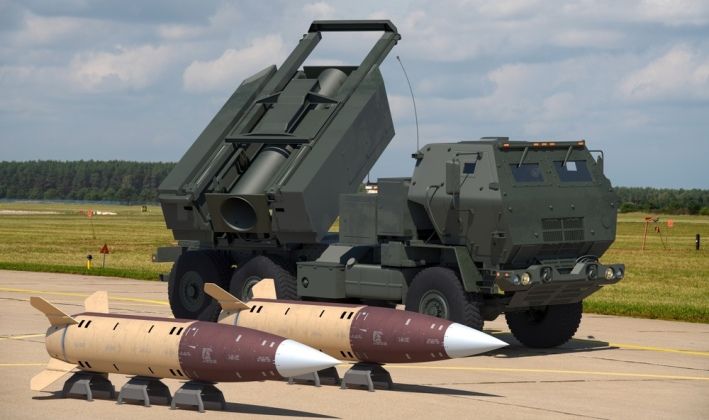
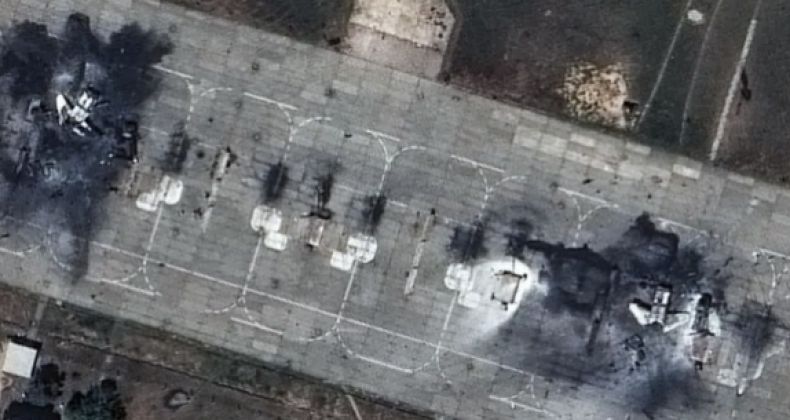
ATACMS ballistic missiles integrated onto HIMARS have been used to destroy multiple high value targets in the Ukrainian theatre, with examples having included the destruction of launchers and radars from S-400 air defence systems, the destruction of other radar systems, the neutralisation of Russian Iskander-M ballistic missile launchers, and the destruction of high value combat aircraft on their runways. The concentration of large numbers of American ballistic missiles in the Philippines and Taiwan appears intended to hold high value targets across large parts of the Chinese mainland at risk, although the much denser deployment of air defences by the Chinese People’s Liberation Army and the much greater capabilities of local air defence systems may limit the extent of this threat.
U.S. Armed Forces training in the Pacific has focused on wide area operations, redeploying HIMARS launchers by air, quickly establishing communications and receiving simulated fire missions, which allowed crews to manoeuvre HIMARS launchers into firing positions. The HIMARS is particularly well suited to rapid redeployments by air, with each launcher weighing only around 16.25 tons. Launchers integrate either six rockets, one ATACMS, or two PrSM ballistic missiles, with the PrSM expected to be prioritised for deployment to the Pacific once stockpiles are restored.
