
Republic of China Forces Establish ‘Joint Firepower Coordination Centre’ as U.S. Supplies More Ballistic Missiles
Military Watch Magazine Editorial Staff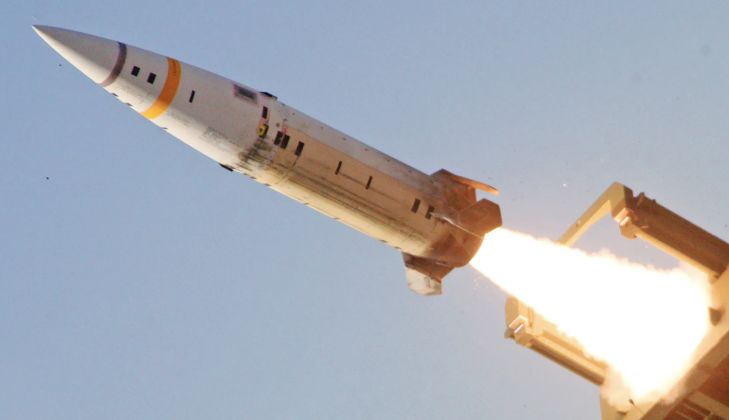
ATACMS Ballistic Missile Launch
The Republic of China (ROC) Ministry of National Defence has established a Joint Firepower Coordination Centre within the Republic of China Armed Forces, which according to local media reports represents a response to the gradual increase in available firepower due to large scale arms procurements from the United States. Based at the Boai Camp in Taipei, the Centre aims to coordinate asymmetric firepower deployments across the various branches of the Republic of China Armed Forces, with foreign personnel, including U.S. Armed Forces personnel, reported to be employed at the coordination centre. Joint staffing operations between the ROC and the U.S. has reportedly been conducted multiple times in preparation for this.
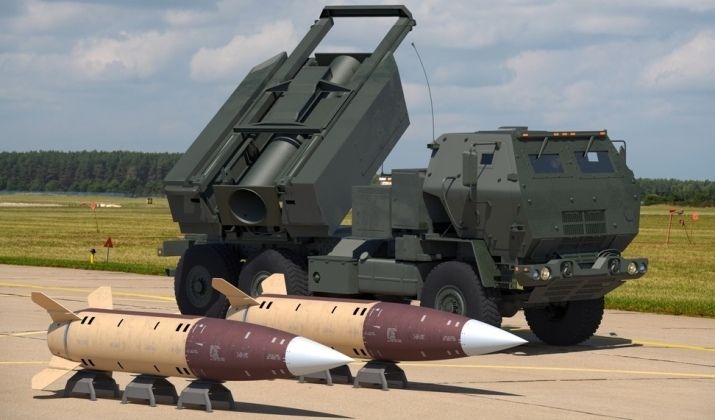
The Republic of China based in Taipei claims to be the sole legitimate government of the Chinese nation, placing it a state of civil war with the People’s Republic of China government based in Beijing. As part of its broader efforts to wage a Cold War against the Chinese mainland, the United States has significantly increased arms supplies to the Republic of China Armed Forces to maximise their ability to hold high value targets across the Chinese mainland at risk, including critical infrastructure, industrial centres, and military bases. In December 2025 the U.S. Department of War approved a $11.1 billion arms sale that included the transfer of 420 ballistic missiles from the MGM-140 Army Tactical Missile System (ATACMS), which will be among the primary assets controlled by the Joint Firepower Coordination Centre.
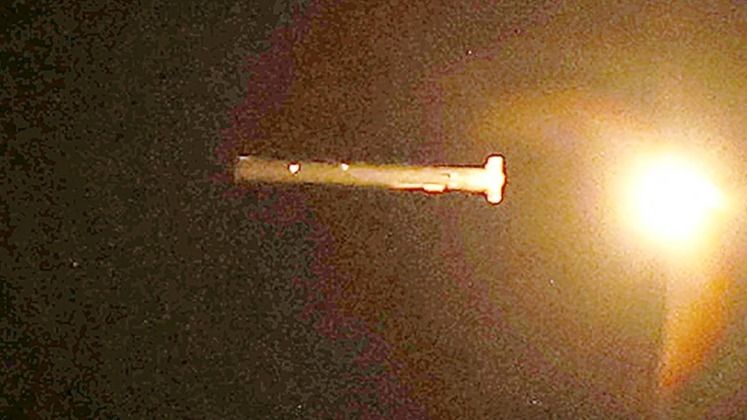
Alongside ATACMS, the Republic of China’s own defence sector has developed the Hsiung Feng IIE and Hsiung Falcon long range cruise missiles, as well as the Yun Feng high-altitude high-speed cruise missile. The secretive Hsiung Feng IIE was designed to strike targets deeper inside the Chinese mainland, and is thought to have begun development in the early 2000s before entering large scale serial production a decade later. Earlier variants are estimated to have 300 kilometre ranges, while later variants extend this to 1000 kilometres. The U.S.-supplied Harpoon cruise missile, although near obsolete and much more limited in its range, is also expected to be usable for precision strikes against coastal targets on the Chinese mainland. Despite a gradual expansion of the number of missiles in service, the viability of the arsenal controlled by the new Joint Firepower Coordination Centre has been called into question due to the Chinese mainland’s world leading electronic warfare and air defence capabilities, as well as the relatively small size of the front which the Chinese People’s Liberation Army will need to defend from attacks.
