
U.S. Army Rapidly Expanding HIMARS Rocket and Ballistic Missile Arsenal in the Pacific Aimed at China
Military Watch Magazine Editorial Staff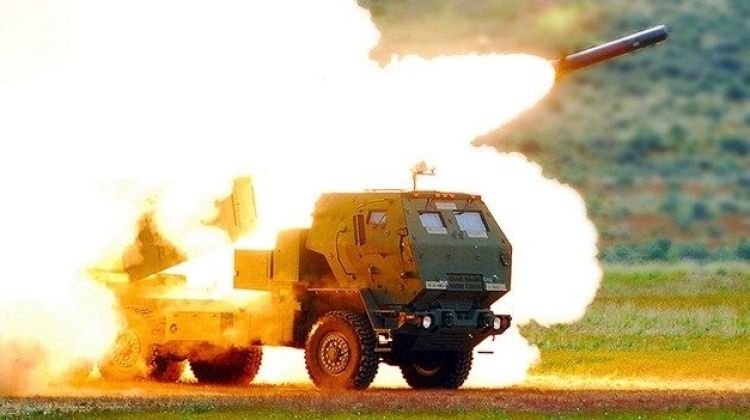
Rocket Launch From U.S. Army HIMARS System
The U.S. Army has continued to rapidly expand its deployments of HIMARS rocket artillery systems in the Western Pacific region, reflecting broader trends towards the prioritisation of highly in demand equipment for delivery to units in the region. The 25th Infantry Division has played a leading role in this military buildup, and under Major General James Bartholomees, the it is executing a “see, sense, and strike at distance” approach linking sensors to shooters across vast areas. This is intended to provide U.S. forces with an edge against peer level threats, namely the Chinese People’s Liberation Army, operating asymmetrically against more capable forces from across dispersed island chains, while holding targets at risk from extended ranges. Forward operations in the Philippines remain at the core of these efforts.
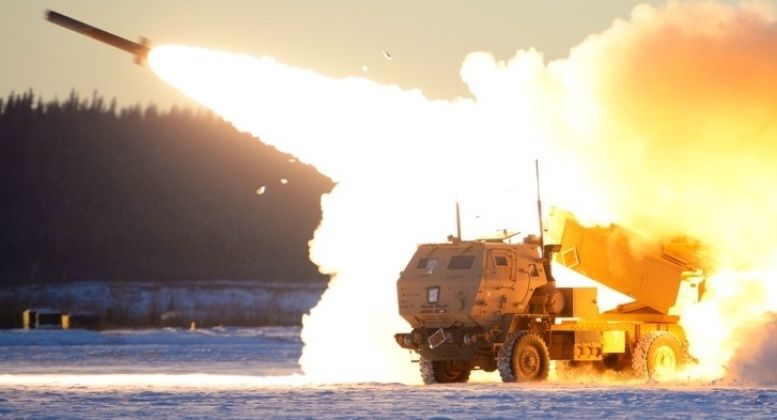
The U.S. Army’s 25th Infantry Division was confirmed near the beginning of the year to have converted a towed artillery battalion into a long-range fires battalion equipped with 16 HIMARS launchers, with a rapid transition achieved within just 180 days. HIMARS is considered an optimal asset both by the U.S. Armed Forces, and by multiple strategic partners, to asymmetrically counter larger and equally or more advanced forces, with its capabilities having been demonstrated repeatedly in the Ukrainian theatre, allowing Ukrainian Army units operating with extensive support to destroy high value military and civilian targets. The light weight of launchers allows them to be rapidly redeployed by sea and air, while the high mobility of launchers makes them challenging to target as they can quickly reposition before and after firing.
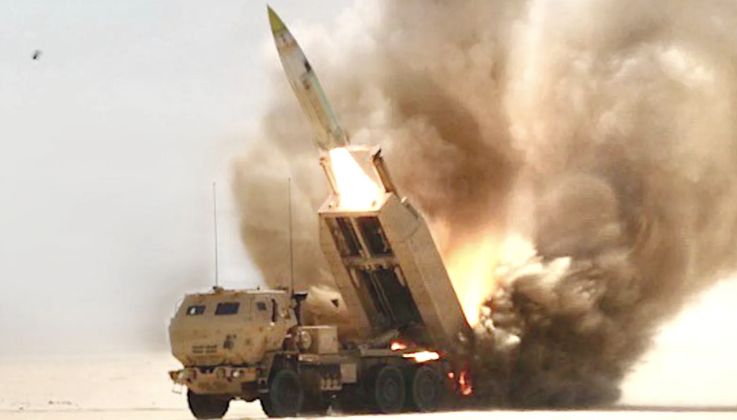
The capabilities of HIMARS have recently ben improved significantly with the introduction of the Precision Strike Missile (PrSM) into service, which improves on the 300 kilometre range of the ATACMS ballistic missile with an engagement range of over 500 kilometres. The missile was first combat tested after the U.S. initiated a full scale military assault against Iran on February 28. The PrSM is designed as the successor to the ATACMS, and has several major advantages across range, lethality, flexibility, and survivability, with its more compact size allowing two missiles to be carried on each launcher, effectively doubling its long range firepower. This is critical in the Pacific where not only are logistics challenging due to the vast distances separating territories from the U.S., but the ability to engage targets at long ranges is also vital.
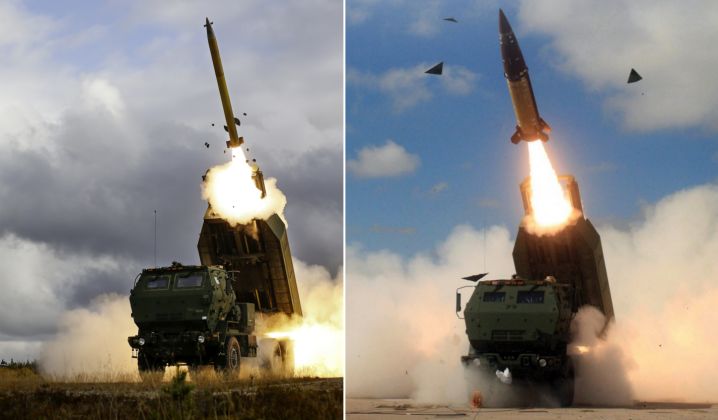
After transitioning to HIMARS, the 25th Infantry Division has expanded its role beyond traditional fire support to include integrating sensors, shooters, and emerging technologies, linking radar, electronic warfare, and intelligence systems to the artillery units to allow for rapid target acquisition and engagement. The division has also reorganised personnel to create new formations, including a Launched Effects battery that integrates loitering munitions and single use attack drones, providing additional strike options at shorter ranges to complement the capabilities of HIMARS. This transition has been assessed by analysts to likely have been very heavily influenced by experience operating in the Ukrainian theatre, where U.S. contractor units have been extensively involved on the ground.
