
U.S. Aggressor Jets Adopt Su-57 Paint Scheme to Mimic New Russian Fighter; F-16C and F-18D Emerge in ‘Ghost’ Colours
Military Watch Magazine Editorial Staff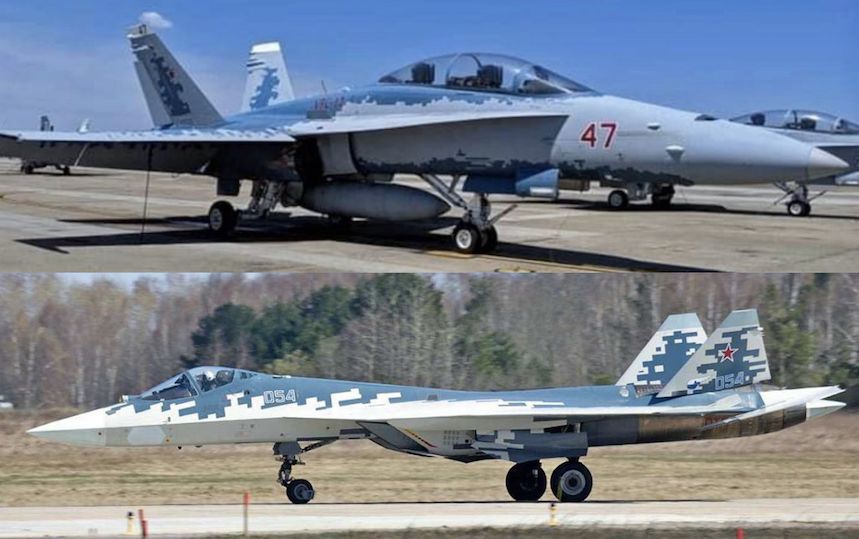
U.S. Navy F-18D Aggressor in Su-57 Colours (top) and Russian Su-57
On May 19th the U.S. Air Force's 64th Aggressor Squadron based at Nellis Air Force Base in Nevada unveiled its first fighter jet, an F-16C Fighting Falcon, in the ‘ghost’ colour scheme of the Russian Su-57 stealth fighter. Images of this single engine jet emerged just a day after the U.S. Navy unveiled an F-18D Hornet in the same paint scheme, part of a Navy adversary training unit known as Fighter Squadron Composite Twelve (VFC-12) based at Naval Air Station Oceana in Virginia. Both aircraft are expected to be used for aggressor training to prepare American fighter squadrons for combat against the next generation Russian fighters - which flew on their first combat operation in February 2018. The Russian Air Force is set to deploy multiple squadrons of these fighters by the mid 2020s, and has also marketed them to third parties including China, India and Turkey - with Vietnam and Algeria also considered leading potential clients for the new aircraft. The Su-57 is a twin engine air superiority fighter in a similar weight range to the American F-22 Raptor, and was designed to integrate a number of sixth generation technologies including laser defence systems, hypersonic missiles and artificial intelligence. The fighters are the first of their generation to be successfully developed outside China and the United States, and the fourth to enter service after the F-22, J-20 and lighter single engine F-35. The fighter places a lower emphasis on stealth than its Chinese and American counterparts, but heavily compensates with supermanoeuvrability, a larger armament and access to many unique munition types such as hypersonic Kh-47M2 ballistic missiles and 400km range hypersonic R-37M air to air missiles.
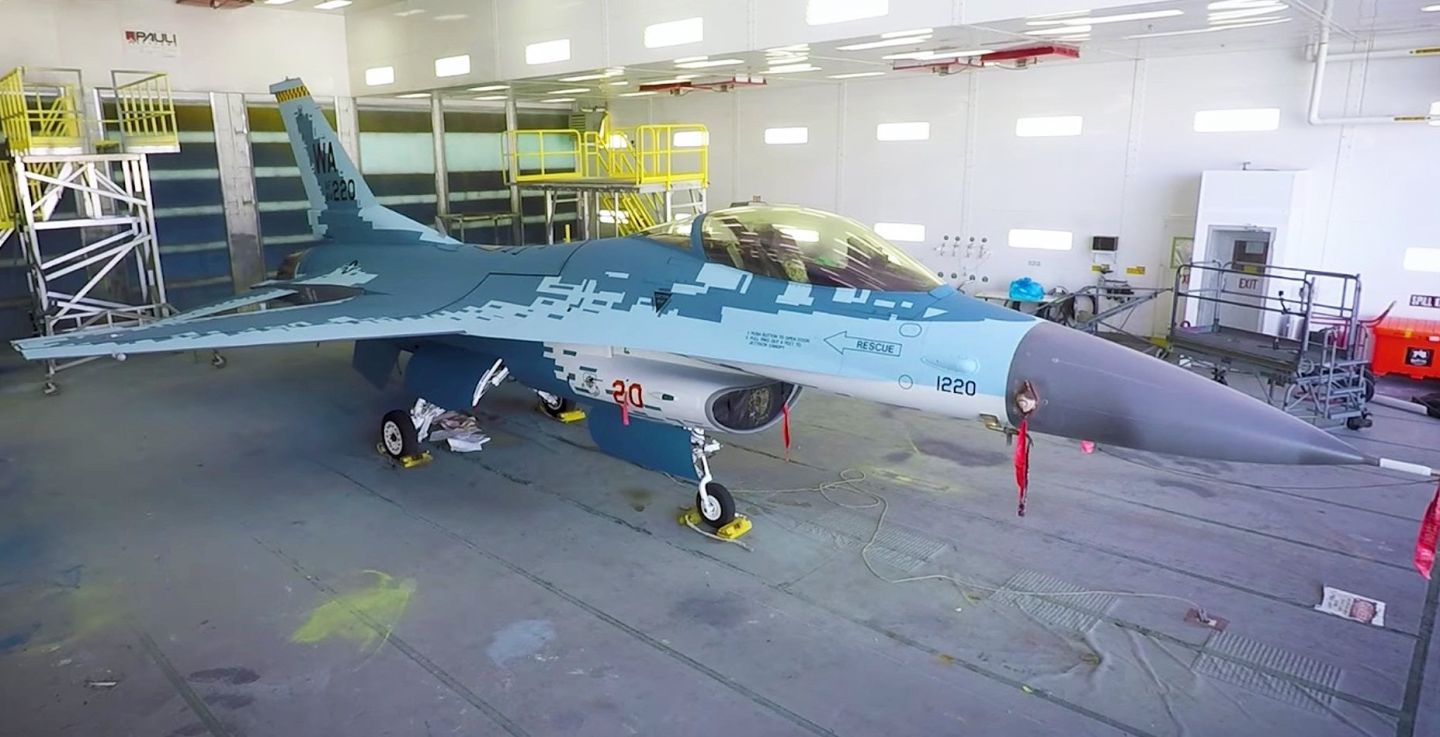
The U.S. Air Force and Navy have a long history of running aggressor squadrons to mimic the capabilities of Russian and previously Soviet aircraft, with the former deploying F-5E Tiger II light fighters to mimic the capability of the Soviet MiG-21 during the Vietnam War and later the F-16A Fighting Falcons from 1988. These were later replaced by the F-16C, which are currently in service. The Navy’s VFC-12 similarly deployed the A-4 Skyhawk during the Cold War and later the F-18A Hornet from 1994. These were replaced in the 2000s with the more advanced F-18C and its twin seat sub variant F-18D. Aggressor training is key to simulating real combat conditions and the capabilities of enemy aircraft, which provides the U.S. Air Force and Navy's fighter squadrons with a considerable edge over adversaries which lack such training. How well suited the F-16A and the Navy’s F-18D are to simulating the capabilities of the Su-57 remains open to question, with the aircraft lacking even basic stealth capabilities or comparable manoeuvrability, climb rates or operational altitudes. The new paint scheme was unveiled shortly after it emerged that American F-35A stealth fighter would be assigned to the 65th Aggressor Squadron at Nellis Air Force Base to mimic the capabilities of enemy stealth jets - namely the Chinese J-20, the upcoming twin engine J-31 and the upcoming single engine Project AZM stealth jet, as well as the Russian Su-57. Ideally the U.S. Military would seek to acquire the Su-57 itself for training purposes, much as it did the its fourth generation predecessor the Su-27 in the 1990s, but with the jet having yet to be exported this will not be possible for the foreseeable future.
