
Top Five Fighters to Modernise Ethiopia’s Air Force: From the F-16V and J-10C to a Next Generation Su-57 Jet
Military Watch Magazine Editorial Staff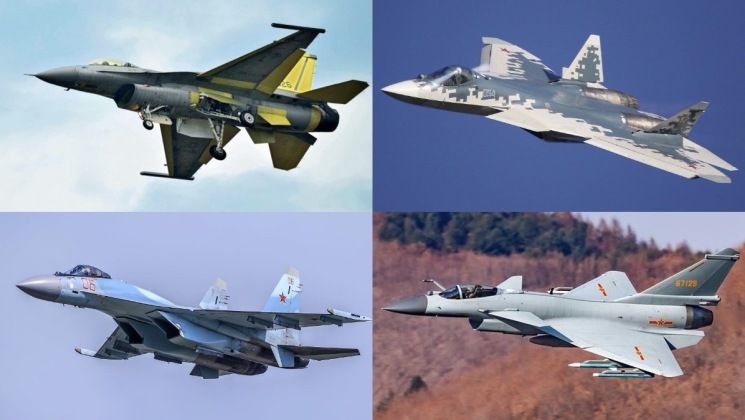
Contenders for a New Ethiopian Fighter F-16V, Su-57, J-10C, Su-35 (clockwise from top left)
Ethiopia today deploys on of the most capable armed forces on the African continent, with its Air Force today ranked fourth in Africa after Algeria, Egypt and Angola. The country’s fast growing economy, and the age of much of its military hardware which mostly dates back to the Cold War era, has led to the expectation that significant investments in equipment modernisation will be forthcoming over the next decade. Ethiopia previously fielded the most capable class of fighter jet on the African continent, the Soviet Su-27 Flanker heavyweight air superiority platform which was acquired in the late 1990s to fly air superiority missions against the lighter MiG-29A jets of neighbouring Eritrea. The Su-27 today forms the mainstay of the Ethiopian fleet, alongside a unit of lighter and older MiG-23 fighters which are deployed primarily for a ground attack role. While the MiG-23 is in more urgent need of replacement, the Su-27 variants deployed by Ethiopia are also fast ageing and have not been updated to a modern standard to such as the Su-27SM2, leaving them at risk of becoming obsolete by 2030 due to the age of their missiles, sensors, avionics and electronic warfare systems.
Ethiopia’s Su-27s are today outperformed by a number of African fighters including the Su-30 jets deployed by Algeria, Angola and Uganda, the MiG-29M jets deployed by Egypt, and the Su-35 which the Egyptian Air Force will begin to receive by the end of 2020. With Egypt posing a potential threat to Ethiopian security, and having seriously enhanced the capabilities of its own fighter fleet since a change in government in 2013, Ethiopia has further incentive to quickly improve its air defence capabilities - the first signs of which are already apparent. A look at the five leading candidates to replace Ethiopia’s complementary Su-27 and MiG-23 fighters is given below.
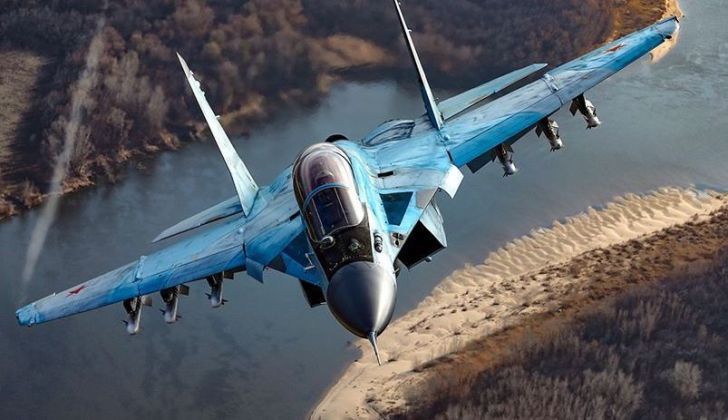
MiG-35
The MiG-35 ‘4++ generation’ medium fighter first entered service in the Russian Air Force in July 2019, and was developed primarily for the export market to succeed MiG-21, MiG-23 and MiG-29 fighters in the fleets of a number of export clients. The aircraft could provide a highly potent replacement for the MiG-23 jets currently in Ethiopian service, and are more sophisticated than any other aircraft on the African continent today. The aircraft have a low operational cost, being much lighter than the Su-27 and lacking the MiG-23’s complex variable swept wings, and will be able to operate highly capably in a strike role with advanced new standoff missiles types such as the Kh-58. It is not exaggeration to say that for a strike mission against well defend positions, one or two MiG-35 fighters could be more useful than Ethiopia’s entire MiG-23 fleet of around a dozen jets. The fighter is also highly capable in air to air combat, in many ways moreso than the Su-27 and Su-30 despite being much smaller, and benefits from three dimensional thrust vectoring engines, an AESA radar and access to R-37M long ranges air to air missiles. The aircraft also integrates limited artificial intelligence to assist pilots, and reportedly has an operational cost 80% lower than that of its predecessor the MiG-29 making it very cost effective.
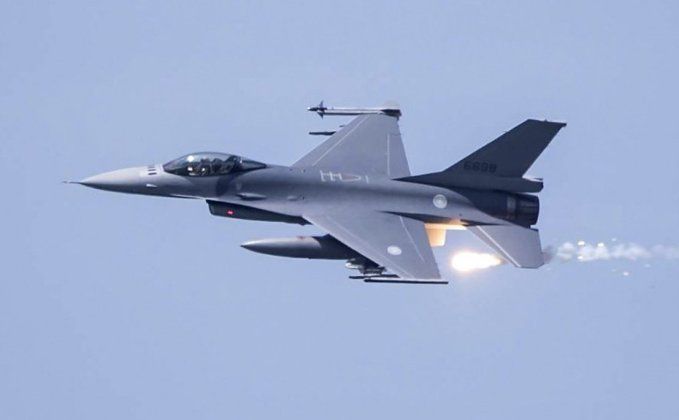
F-16V
Although far from an ideal choice from a purely military perspective, purchasing the F-16V from the United States does offer political benefits particularly since the Donald Trump administration has sought to use diplomatic pressure as a means of increasing American arms sales. The lightweight fighter has a low operational cost and could effectively replace the MiG-23 in a strike role, although its airframe design dates back to 1978 and neither that nor its engines have seen any outstanding changes since. The fighter does integrate an advanced AESA radar and formidable electronic warfare systems, although it is unlikely to hold its own against more advanced fighter designs such as the Su-30 or Su-35 and at closer ranges would even struggle against the older Su-27 Ethiopia already fields. For a basic strike role, however, Ethiopia may choose this aircraft for political reasons.
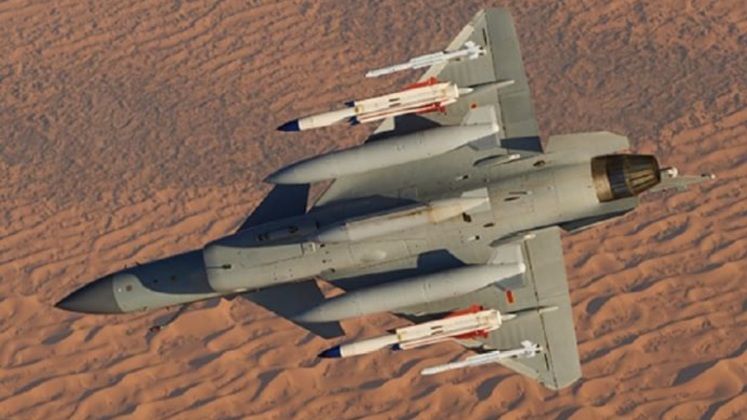
J-10C
A third potential replacement for the MiG-23, the J-10C may well be the most cost effective option and provides a range of next generation features which competitors lack. The fighter is a lightweight single engine ‘4++ generation’ jet which integrates a multiple of advanced features from thrust vectoring engines to stealth coatings and AESA radar guided PL-15 missiles.- which if acquired would be the most capable air to air missiles on the African continent. The fighter is also highly potent in a strike role, notably deploying the YJ-91 cruise missile and able to deploy a range of modern guided bombs. Ethiopia has not historically been a client for Chinese aircraft, but close relations and economic ties between the two states could lead to a J-10C purchase to further strengthen ties and to diversify the air force away from a heavy reliance on Russian hardware.
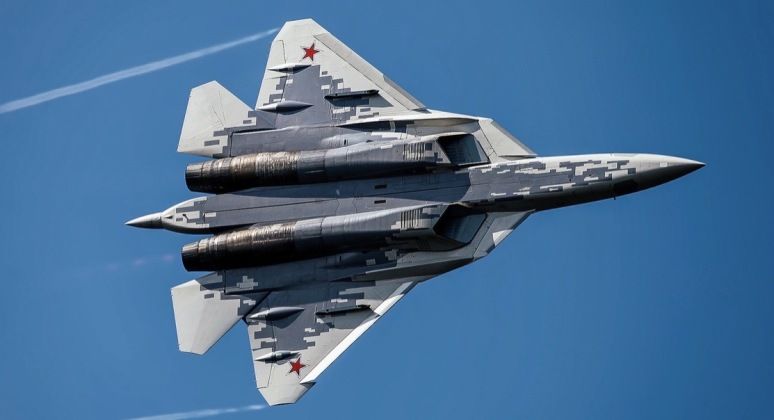
Su-57
The Su-57 was designed as a direct successor to the Su-27 and Su-30 for both the Russian Air Force and for export clients, with a number of Su-27 operators such as Vietnam, China, India and Algeria all showing interest in and expected to eventually place orders for the fighter. Although currently considered a fifth gyration fighter, the Su-57 integrates a wide range of features not found on any other fifth generation aircraft ranging from laser defence systems to cheek and rear mounted radars. The fighter is currently being used as a testbed for a range of sixth generation technologies, and will likely be available for purchase ‘off the shelf’ as a sixth generation fighter some time in the late 2020s or early 2030s. While the fighter’s heavy weight means it will have a high operational cost, this may not be much higher than that of the early Su-27 variants Ethiopia currently deploys which were built using much less sophisticated techniques, meaning a single Su-57 squadron could be affordable.
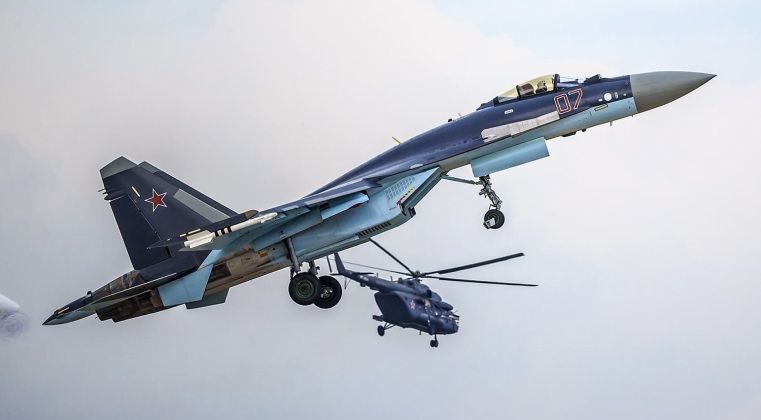
Su-35
As a replacement for the Su-27, the Su-35 ‘4++ generation’ jet represents a cheaper alternative to the Su-57 - although its design is far less revolutionary and has less room to incorporate upgrades over its lifetime. The Su-35 is directly based on the Su-27’s airframe design, but entered service 29 years later benefiting from the latest advances in engine, composite material, sensor and electronic warfare technologies. Should the Su-35 be purchased in the latter half of the 2020s, it is likely the fighter will boast considerably superior capabilities to those of Su-35s in production today including new AESA radars and more advanced armaments and electronic warfare systems. Although the Su-57 is arguably the more cost effective option, the Su-35 would also represent a major advance for Ethiopia’s arial warfare capabilities and an aircraft which it would be relatively easy to transition to from the Su-27.
