
Does Russia's MiG-35 Have a Future? Medium Weight Fighters May Struggle to Find Buyers
Military Watch Magazine Editorial Staff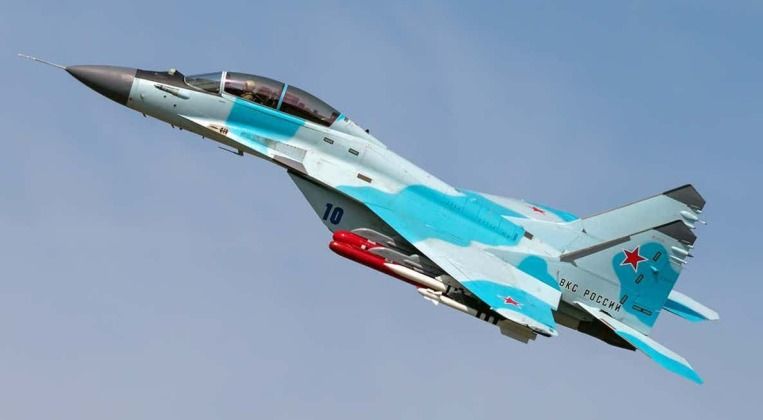
MiG-35
The less prolific of the two new Russian fighters which have entered service in the past half decade, the MiG-35 is a medium weight multirole aircraft with '4++ generation' capabilities developed as a lighter and cheaper counterpart to the better known Su-57. Where the Su-57 joined the Russian Air Force in December 2020, the MiG-35 was commissioned in June 2019 and is currently in low rate initial production. While the Su-57 was developed as a successor to the Su-27 fourth generation fighter of the Cold War era, the MiG-35 was developed as a successor to the MiG-29 and is closely derived from the design of its predecessor. What is perhaps most notable about the MiG-35 is that it is the first fighter outside the heavy weight range, as well as the first MiG fighter, to enter Russian service since the 1980s. The end of the Cold War and a severe shortage of funds forced Russia to sacrifice development of its lighter aircraft to divert funds towards the heavier Sukhoi fighters such as the Su-30, Su-34 and Su-35 - all of which are derived from the Su-27 airframe and comprise the bulk of the fleet today. As a result successors to the MiG-29 appeared for 37 years after the original jet was first commissioned into service in 1982, although the aircraft was developed into multiple enhanced derivatives most notably the MiG-29M and MiG-29SMT.
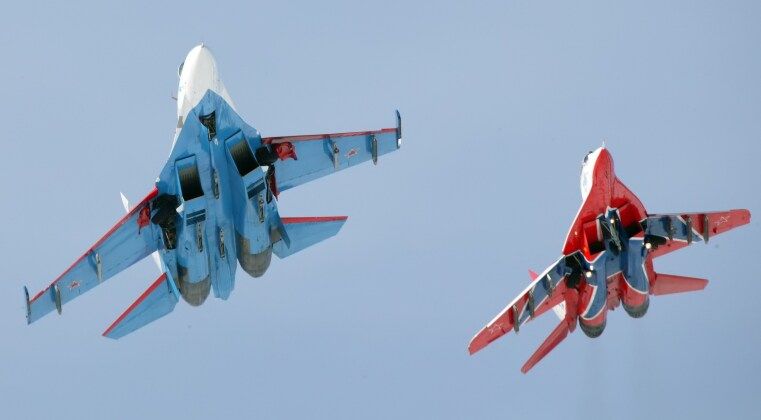
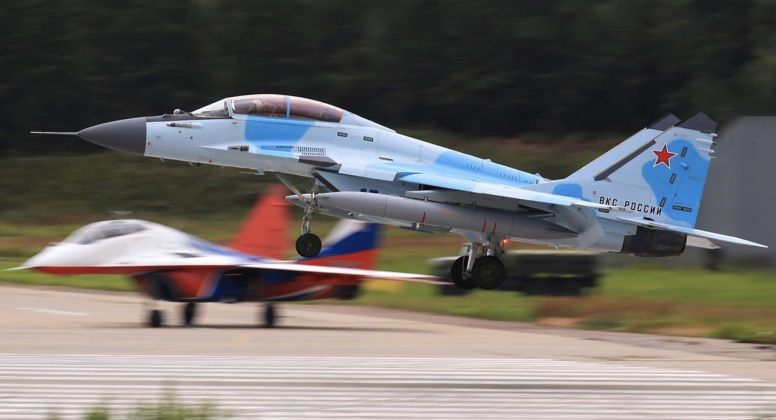
Perhaps the greatest attraction of the MiG-35 over the MiG-29 is that the fighter has been designed to reduce maintenance requirements significantly, making it far less costly to operate and pilots much cheaper to train. According to the Mikyoan Design Bureau's general director, Sergei Korotkov, the designers: "have done a lot to increase the life of the aircraft and to reduce the cost of its operation, which is essential for the light fighter. An additional competitive advantage of MiG-35 is the possibility to use the exploitation of MiG-29 infrastructure. We hope that the MiG-35 will go into Russian Aerospace Forces in the period of 2018-2020." With maintenance requirements reportedly being less than half those of the MiG-29, there is a strong incentive for operators of the older jets to replace their fleets with MiG-35s which will not only provide a significant performance upgrade, but will also reduce costs considerably in the long term.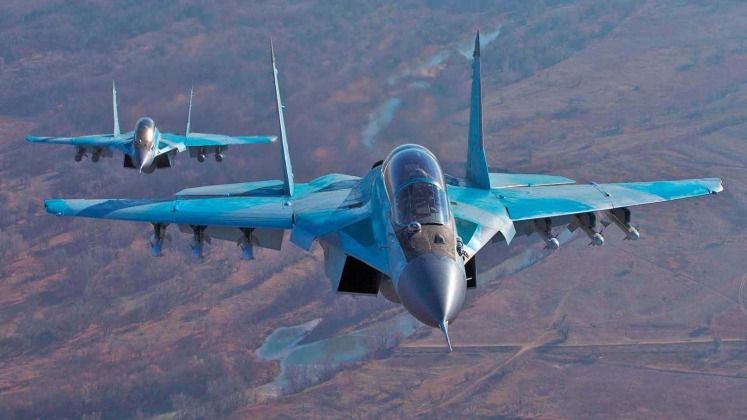
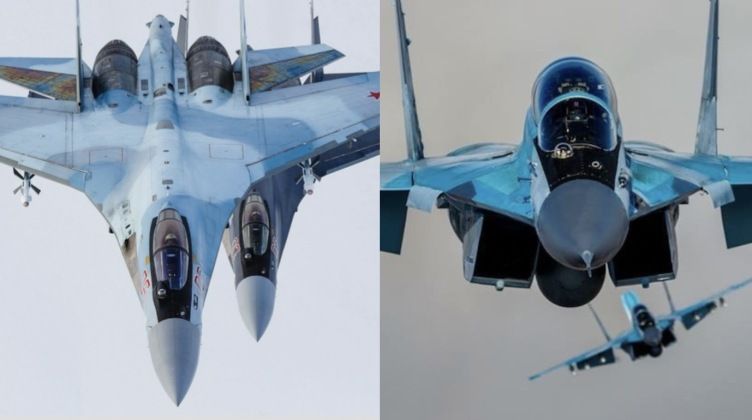
Among the fighter's leading potential clients are Iran, Egypt, India and Belarus, with India in particular considered likely to pursue a large contract which could include license production of the aircraft. The fighter nevertheless faces difficult competition both from MiG-29 variants, which are still on offer and are considerably cheaper, and from the Chinese J-10C jet which has many performance advantages and benefits from production on a much larger scale. Should the MiG-35 fail to gain substantial export contracts over the next decade, it is likely that Russia will only further neglect development of pre-fifth generation fighters in the medium and light weight ranges. With Algeria notably having favoured a heavily enhanced variant of the MiG-29M over the MiG-35, and with Russia itself developing a medium weight fifth generation fighter which will reportedly be built around a single Saturn 30 engine from the Su-57, the MiG-35 faces tough competition even within its weight range both from older and very soon from newer designs.
