
Russia to Field Su-57 With New Engine From 2022: Sources Claim Upcoming ‘Saturn 30’ Will Be Strongest Fighter Powerplant Ever
Military Watch Magazine Editorial Staff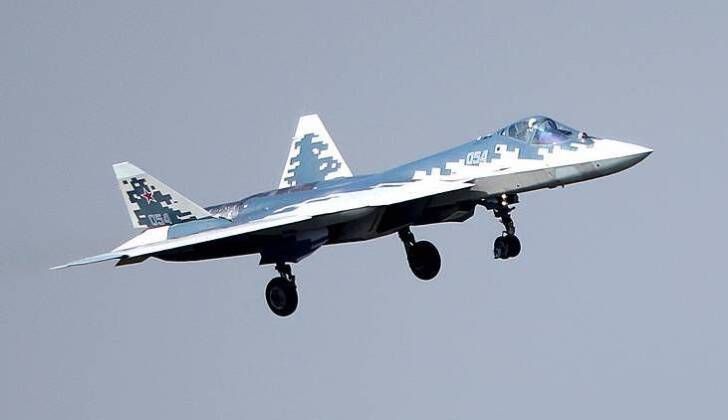
Su-57 Next Generation Fighter
Russian state media reports have indicated that the Russian Air Force will receive new variants of the Su-57 next generation fighter equipped with new Saturn 30 engines as early as 2022. The Su-57 currently uses a modified variant of the AL-41 engine deployed by the Su-35 fighter, although all aspects of its flight performance including range, climb rate, acceleration and many others will improve considerably with the newer engine. The Russian Air Force is set to receive its first serially produced Su-57 jets in December 2020, with the rate of production set to rise to over 15 aircraft per year for Russian service alone and potentially many more for export. Algeria is thought to have already placed an order for the fighters, with other parties such as China, Vietnam and Myanmar showing a strong interest. The Su-57 saw its first flight in January 2010, and it was initially expected to enter service and subsequently mass production much earlier with a longer production run using the AL-41 engine.
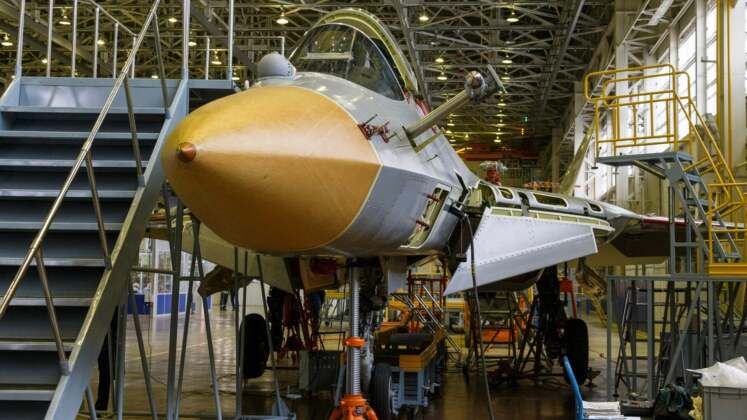
Delays in entering the jet into mass production may well have in part represented an effort to minimise the number of aircraft commissioned with the older AL-41, although this is still one of the most powerful fighter engines in the world. The older engine is only 9% less powerful than the F119 engine powering the American F-22 Raptor, which is currently the most powerful engine used by any twin engine fighter in the world. Russian sources have widely reported that the Saturn 30 will be the world's most powerful fighter engine - a title currently held by the F135 used to power America’s single engine F-35 fighter. While Russia held a significant lead over the U.S. during the Cold War in the power of its engines, which is still evident in its fourth generation jets which consistently have more engine power than their Western equivalents, the decline of its defence sector in the 15 years after the Soviet collapse left it in a disadvantaged position - albeit possibly only temporarily. The F135 is approximately 33% more powerful than the AL-41, meaning the Saturn 30 will need to surpass the power of its predecessor by more than one third.
It is possible that the Saturn 30 will only surpass the F119 in power, which is a highly achievable goal and would make it the strongest engine for a twin engine fighter. The F135 is a considerably larger engine which most twin engine jets would struggle to accommodate, and producing a similarly powerful engine for a twin engine fighter would be a difficult but truly revolutionary achievement. It is also possible that initial variants of the Saturn 30 could have a power level between that of the two next generation American engines, with only later variants expected to surpass the F135 in power. The engine could potentially be used to power other next generation Russian aircraft, including a single engine fifth generation fighter currently thought to be under development.
