
Japanese Navy vs. British Royal Navy: Contrasting Capabilities of Rising and Declining Naval Powers
Military Watch Magazine Editorial Staff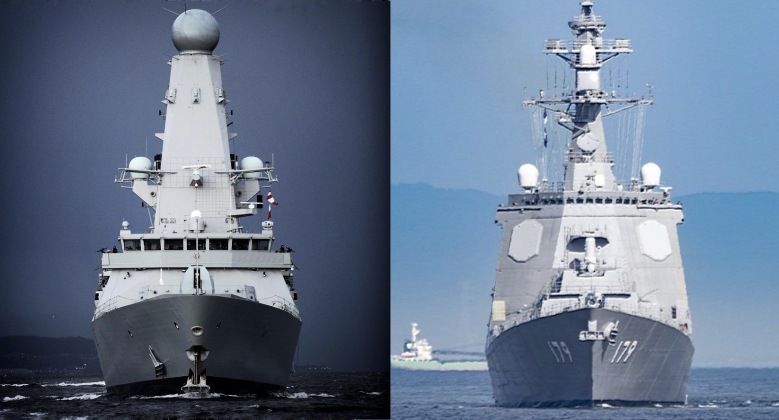
Type 45 (left) and Maya Class Destroyers
Among U.S.-aligned military powers, Japan and Britain have been considered leaders in terms of naval capabilities since the early years of the Cold War and have both been heavily relied on to ensure the balance of power at sea remains favourable to Western and allied interests. Since the Cold War's end, the two navies have evolved in opposite trajectories with Japan continuing to increase its capabilities and maintaining one of the world's largest fleets while the size of the British fleet has shrunk drastically. The primary cause for this has been a vast discrepancy in the efficiencies of the two countries' navies and defence sectors. Despite Britain spending much more on its armed forces than Japan, and the two having similar levels of purchasing power, the British Royal Navy is inferior to the Japanese Maritime Self Defence Force - the official name of the country's navy - in almost all metrics of performance.
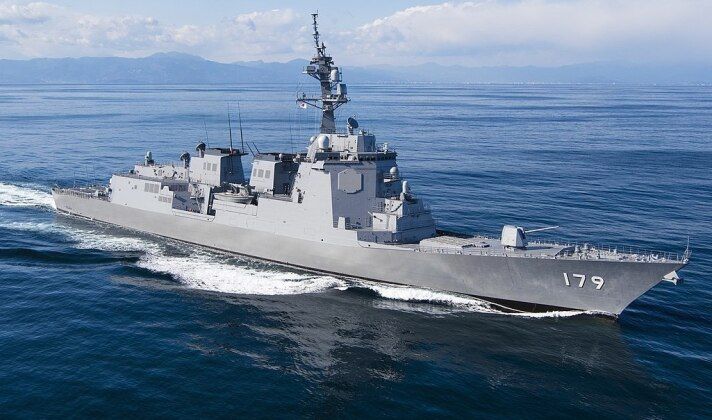
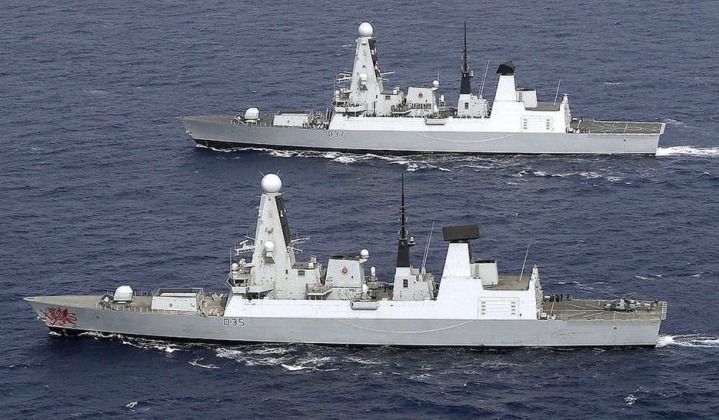
Looking to destroyers, which form the backbone of all the world's major navies, Japan fields the world's third largest destroyer fleet at 44 ships while Britain fields only six. Although Britain had fielded a much larger fleet of 13 destroyers when the Cold War ended, and originally planned to field twelve modern Type 45 Class destroyers to replace them, budgetary constraints and the Type 45's extreme cost led the fleet to be cut to nine and eventually to six. The Japanese destroyer fleet is larger than all those of Europe combined including that of Britain. Not only is the Japanese fleet larger, but its ships are overall considerably more sophisticated and capable than their British counterparts. Britain's sole destroyer class, the Type 45, deploys only 48 vertical launch cells compared to the 96 carried by most Japanese ships, meaning Japanese ships will each enjoy a 2:1 firepower advantage.
Japanese destroyers further benefit from the AEGIS system just as those from South Korea and the United States do, which allows them to fire multiple classes of weapon from their vertical launch cells ranging from anti-submarine missiles to anti aircraft, anti ship and even anti ballistic missile rounds. This contrasts to the Type 45 which uses a much older form of vertical launch system that is much less versatile and can only fire Aster 15 and Aster 30 surface to air missiles. These missiles are notably much slower and have considerably shorter ranges than those deployed by their Japanese rivals such as the SM-3 and SM-6, and are not capable of ballistic missile defence. Indeed, at 1200km, the latest SM-3 variant has ten times the engagement range of Britain's Aster 30. Japan's defence sector has also been a pioneer in anti ship missile and AESA radar technologies, and its ships, missiles and aircraft were all the first in the world to use such radars. This domestic industrial and R&D capability gives the Japanese destroyer fleet a considerable technological advantage over that of Britain.
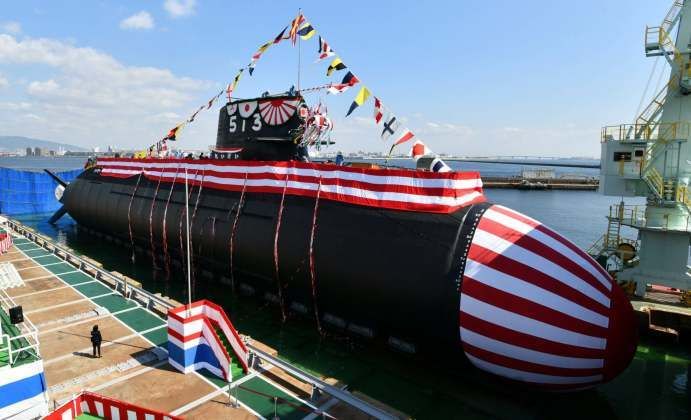
The Japanese Navy retains a considerable advantage in firepower not only in its surface combat fleet, but also in its submarine fleet where it fields 20 ships to Britain's 11. Unlike Britain, which relies heavily on sharing technologies with the U.S. Navy, Japan has been a pioneer in submarine technologies, a notable recent example being its integration of propulsion systems using lithium-ion batteries onto its ships. This is a feature no other country has yet adopted, and provides increased endurance at high speeds while allowing submarines to charge faster and extending battery life relative to lead-acid batteries. They are also less bulky and require less maintenance, meaning they are likely to be an attractive option for a number of navies in coming years. Japan's much greater military shipbuilding capacity and far more efficient shipyards mean that despite the high cost of pioneering very cutting edge systems, its armaments are still overall cheaper than their British counterparts and more reliably fall within their assigned budgets.
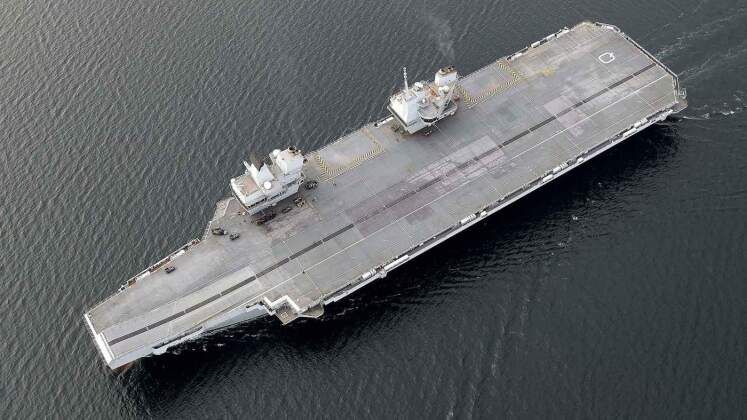
It is only in the field of carriers and strategic weapons that Britain retains some advantages, largely due to Japan's prohibition on developing nuclear weapons or offensive power projection assets. Japan fields four fully operational 21st century carriers including two each of the Hyuga and Izumo Class ships. The former class is considered one of the world's most capable anti-submarine warfare carriers, while the latter was reportedly built to be able to deploy F-35B fighter jets. Britain fields two much larger carriers which are technically operational, the Queen Elizabeth Class ships, although both have suffered from significant accidents and neither of them has anything approaching even half a full air wing of fighters or helicopters. To reduce costs and crew requirements, the British ships rely on deploying F-35B fighters with specialised vertical landing capabilities, which are much less combat capable than conventional carrier based aircraft such as the F-35C and provide a somewhat underwhelming complement for such large ships. Like the Izumo Class, Queen Elizabeth Class ships cannot deploy airborne early warning aircraft such as the American E-2 or Chinese KJ-600, and have capabilities more constrained those of more conventional carrier designs. While Japan is expected to commission many more carriers in future, however, the Queen Elizabeth Class is speculated to be Britain's last and has been surrounded by much greater controversy. The Type 45, similarly, is expected to be the country's last destroyer with the Royal Navy to subsequently depend on lighter and cheaper frigates to operate.
Japan's naval warfare capabilities remain far ahead of those of any Western power other than the United States, and as with Britain its navy is expected to continue to be prioritised for investment and modernisation over other services. Without the extensive cost overruns and delays which have plagued almost all British warship programs program from its strategic submarines to its surface combatants, Japan's military shipbuilding industry remains a world leader alongside those of China, the United States, South Korea, and in some fields possibly Russia. A broader decline in British industry since the 1970s in particular, which has led to the large majority of shipbuilding being outsourced including even some military shipbuilding, has undermined its ability to compete as a leading naval power despite tremendous spending by drastically reducing efficiency. Once the world's foremost naval power, the British Royal Navy's has struggled to service its fleet, faces growing cuts to its modernisation programs, and increasingly leaves much to be desired in its capabilities.
