
Britain Confirms Plans for Further F-35 Orders: Can it Meet Half of the Originally Planned Fleet Size?
Military Watch Magazine Editorial Staff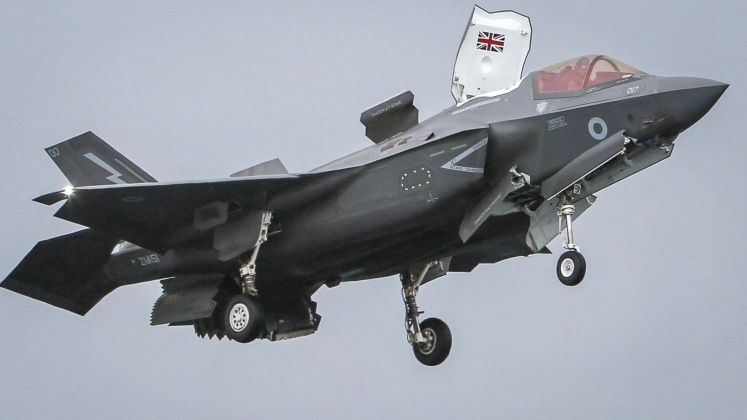
British F-35B Stealth Fighter
Britain has confirmed plans to place orders for an unspecified number of additional F-35B fifth generation stealth fighters, with the country initially having planned to acquire 138 of the aircraft but having as of yet ordered only 48. While the a fleet size of 138 fighters is highly unlikely to be reached, due to a number of factors including a sharp fall in the value of the pound in 2016 and economic crisis in 2020, it is now expected that the country’s will acquire between 60 and 80 fighters. Confirmation of plans for further orders was provided in response to a question by Member of Parliament John Healey, who had queried: “To ask the Secretary of State for Defence, when his Department plans to decide on the number of Lightning II F-35 aircraft to order in addition to those aircraft already ordered.” Jeremy Quin, Minister of State at the Ministry of Defence, replied: “Following the outcome of the Integrated Review and confirmation that the UK Lightning Force will grow beyond 48 F-35B aircraft, we are undertaking a period of further analysis to evaluate the scale and optimum delivery profile of our second tranche of F-35Bs as well as associated infrastructure and support equipment. Once complete, this activity will inform procurement timelines.”
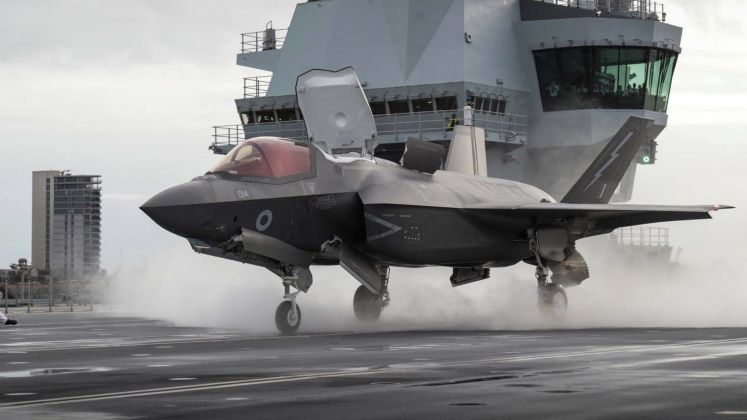
Britain’s First Sea Lord Admiral Tony Radakin stated in March that the Britain intended to purchase “around 60” F-35B jets, and then “maybe more up to around 80” to provide four deployable squadrons. The F-35B is less capable in combat than the cheaper F-35A and F-35C variants, with a lower endurance, lower weapons carrying capacity and inferior flight performance, but benefits from being able to perform short takeoffs and vertical landings. This allows the jets to deploy from the country’s Queen Elizabeth Class aircraft carriers, as well as from makeshift runways on land away from major airfields. The original plan to purchase 138 jets would have made Britain the largest foreign client for the F-35, and with the F-35B being the most expensive fighter in production anywhere in the world today and considerably more expensive than the more common F-35A variant, this would have been particularly expensive.
Britain’s investment in the F-35B was seen to be beneficial due to its status as a tier one partner in the program, allowing it to share many key technologies and contribute to manufacturing several hundred components. Even if 80 jets are acquired, the 42% decline in orders from the initially planned 138 aircraft would likely adversely affect local industry. Ordering 60 fighters would provide just 43% of the originally planned fleet size, and would be far from sufficient to make effective use of the country's two new aircraft carriers without a contribution of from foreign fighters on their decks.
