
British Type 45 Destroyers Can’t Do Ballistic Missile Defence - Small Arsenals Have Limited Versatility
Military Watch Magazine Editorial Staff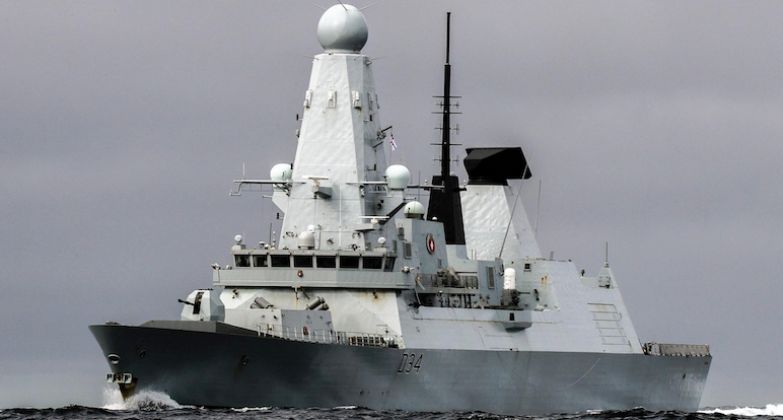
British Royal Navy Type 45 Destroyer
A number of questions regarding the capabilities of Britain’s sole class of destroyer, the Type 45 Class, were raised during a meeting of the Defence Select Committee - where the recent defence review white paper ‘Defending Global Britain in a Competitive Age’ was discussed. Britain currently fields a small destroyer fleet of six ships, with budgetary constraints leading to the size of the fleet being cut in half from an originally planned twelve ships. Although the Type 45 Class fields a formidable sensor suite particularly for an air defence role, its armament has increasingly been considered underpowered relative to high end warships fielded by leading naval powers such as the AEGIS destroyer of the U.S., Japan and South Korea or the Type 052D and Type 055 Class ships deployed by China which have similar features to the AEGIS system. Where U.S. and Japanese destroyer such as the Arleigh Burke and Maya and Atago classes field 96 vertical launch cells each, and high end Chinese and South Korean destroyers field over 100, the Type 45 integrates only 48 vertical launch cells. Moreover, these cells can only deploy two missile types - the Aster 15 and Aster 30 - both of which can only be used in anti air roles. This contrasts sharply to the vertical launch cells on AEGIS ships, on modern Chinese destroyers, and even on the latest Russian frigates and corvettes, which can deploy a wide range of missiles for air defence, anti submarine warfare, anti shipping and land attack.
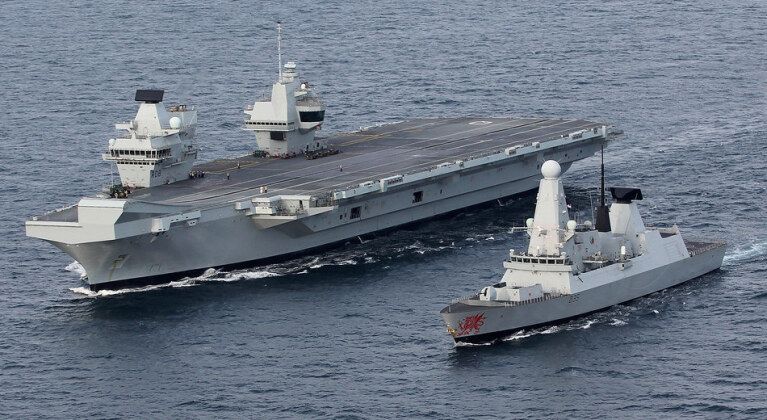
At the Defence Select Committee, it was highlighted that the Type 45’s lack of versatility had left Britain without a maritime ballistic missile defence capability - something the U.S. and Japan in particular were investing heavily in for their own AEGIS ships. Dr Sidharth Kaushal, a research Fellow at the Royal United Services Institute, noted to this effect: “The Navy, however, will need to look at two key questions: first, the absence of a capability to counter anti-ship ballistic missiles on the Type 45 destroyer. That was discussed in the 2015 strategic defence and security review, as part of a wider ballistic missile defence capability for the vessel, but it was absent in this review, which I thought was noteworthy.” Rear Admiral Alex Burton, who also attended the meeting, concurred stating: “I would just reinforce Dr Sidharth’s view on the anti-ballistic missile defence, which I think was a wrong absence within the review… one of the gaping holes within the defence review is an anti-ballistic missile defence mechanism, both at sea and ashore.” When further questioned, the admiral reiterated: “There is a gaping hole in our ability to defend a carrier against a ballistic missile without the support of our allies, so there is mitigation there, but it is mitigation that is reliant on our allies… The Navy has been clear that there has been a national capability gap, for the last 10 years, at least, in an anti-ballistic missile defence capability. That can be mitigated by working alongside our allies, just like the Americans use our capabilities to mitigate their capability gaps. Firstly, this is known, and, secondly, it can be mitigated.”
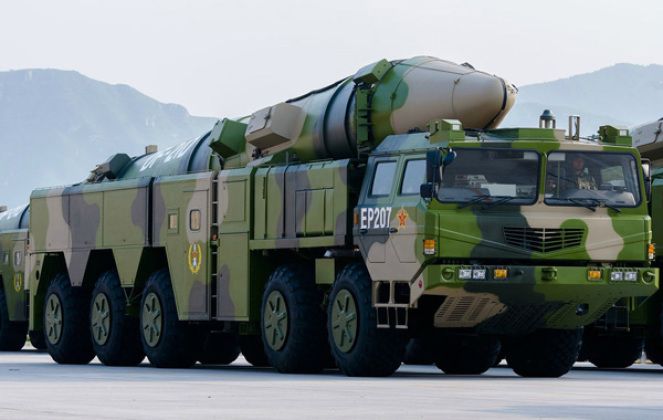
The possibility of arming the Royal Navy’s six destroyers with anti ballistic missiles was discussed in April 2019, when members of parliament stated that they were working to “investigate the potential” of equipping the Type 45 for ballistic missile defence. Parliamentary Under-Secretary of State for Defence, Stuart Andrew, stated regarding these efforts that the Defence Ministry was “investigating further the potential of the Type 45 Destroyers to operate in a Ballistic Missile Defence role. We will continue to support research and development initiatives and multinational engagement through the UK’s Missile Defence Centre.” While the SM-3 and SM-6 used by the U.S. and Japan were not compatible with British destroyers, a new missile class known as the Aster 30 Block 1NT could potentially provide the Type 45 with an area defence capability against ballistic missiles with a 1500km range. With Britain looking to increase its naval presence in East Asia, where it would face sizeable Chinese and North Korean ballistic missile arsenals including many missile designed to neutralise enemy warships, this capability may well be realised in future. The Type 45 would nevertheless remain a far less well armed destroyer than its competitors with much more limited versatility, and with many Chinese and Korean missiles such as the Hwasong-12 and DF-26 designed to engage target at much longer ranges than 1500km, the Aster 30 Block 1NT may itself prove underwhelming.
