
China Deploys Ship Hunting DF-26 Ballistic Missiles Near Coast in Response to U.S. Freedom of Navigation Patrols
Military Watch Magazine Editorial Staff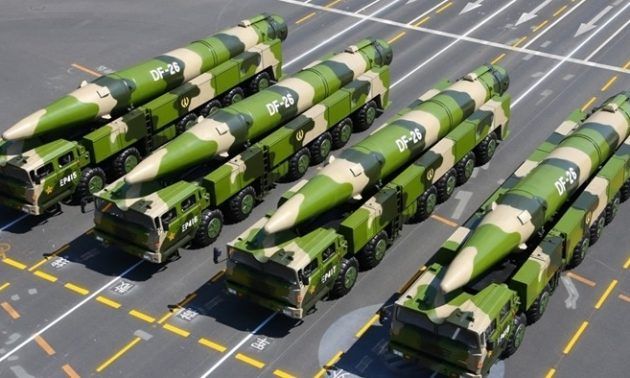
PLA Rocket Force DF-26 Ballistic Missiles
In response to the deployment of a U.S. Navy Arleigh Burke Class guided missile destroyer on a Freedom of Navigation mission to the Parcel islands in the South China Sea, which are claimed by China as part of its territorial waters, China’s People’s Liberation Army (PLA) Rocket Force has responded with the deployment of DF-26 anti ship ballistic missiles near its northwestern coast. Whether or not this deployment is intended to be permeant, and where these missiles have been mobilised from, remain uncertain - but according to the Global Times state paper they are "capable of mobile operations across the country." While the DF-26 is less well known for its anti ship capabilities than its shorter ranged counterpart, the DF-21D, the platform is reportedly highly capable of striking enemy warships with precision at extreme ranges. The deployment comes shortly after PLA Academy of Military Science Deputy Director Rear Admiral Luo Yuan suggested the military should consider sinking U.S. warships to resolve the South China Sea dispute.
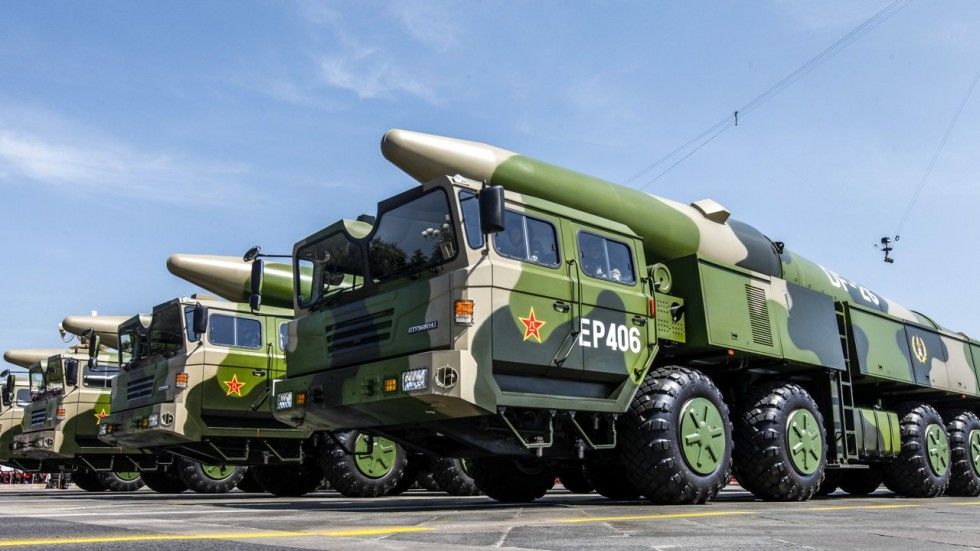
DF-26 Missiles on Parade in Tiananmen Square
The DF-26 first entered service with the PLA in 2015, and the missiles are deployed from 12 X 12 transporter erector launchers to maximise mobility. Unlike the DF-21D, which is specialised in an anti shipping role - gaining it the name ‘Carrier Killer,’ the DF-26 was designed to strike both enemy warships and ground targets. The missile thus has gained the name ‘Guam Killer’ due to its speculated primary target - critical U.S. military facilities on Guam. The types of warhead the missile can deploy remain unknown, but the DF-26 is widely though to be capable of deploying conventional as well as tactical nuclear warheads. The capabilities of the the DF-21 and DF-26 are often compared, as both have a tactical rather than a strategic purpose and retain intermediate ranges. The U.S. military, long restricted by the INF treaty with the USSR and Russia from deploying intermediate range ballistic missiles, has yet to deploy a weapons system with comparable capabilities to the Asia-Pacific.
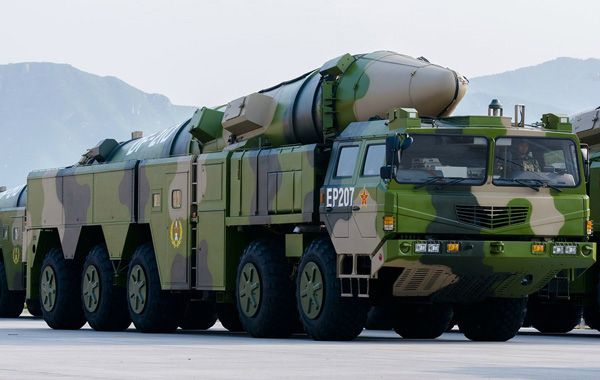
DF-21D Anti Ship Ballistic Missile
While the DF-26 retains coverage over the entire South China Sea even when deployed from deep within Chinese territory, deployment to the country’s coast both extends its coverage and sends a strong signal to the United States and its allies regarding Beijing’s ability to respond to future provocations. With U.S. missile defences already considered unable to intercept high speed cruise missiles such as the Russian-Indian Brahmos or Chinese YJ-12, which impact at speeds of over Mach 3, their ability to intercept a ballistic platform which impacts at high hypersonic speeds remain extremely limited. Deployment of such missiles to the South China Sea strengthens the PLA’s anti access area denial (A2AD) capabilities in the region considerably. Further deployments of this kind are expected to continue in future, as ever more capable ship hunting munitions continue to be developed for the PLA Rocket Force.
