
Iran Considering Major Foreign Arms Acquisitions Amid Growing U.S. Threats; Fighters and Air Defences Likely to be Prioritised
Military Watch Magazine Editorial Staff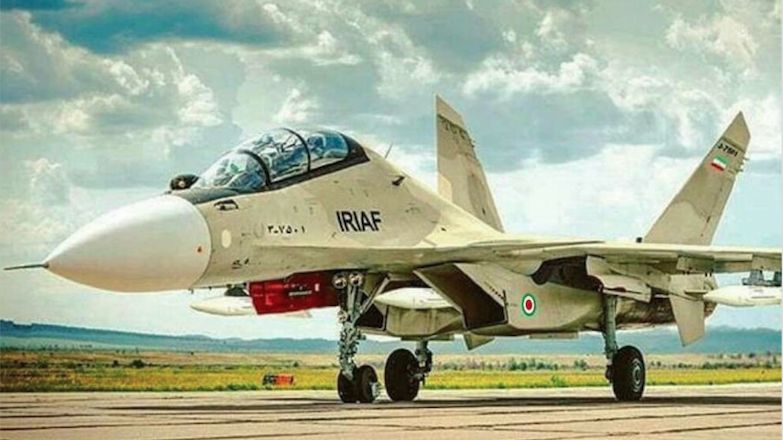
Iranian Air Force Su-30 Fighter - artwork
Amid growing tensions between Iran and the United States, Tehran has reportedly begun to consider a number of large defence contracts with unnamed foreign suppliers to strengthen its ability to deter and if necessary wage war with the its potential adversaries. The secretary of Iran's Supreme National Security Council, Ali Shamkhani, stated to this effect: “We currently face demonstrative threats. Nevertheless, when it comes to air defence of our country, we consider using the foreign potential in addition to our domestic capacities.” Though the secretary did not specify which system was under consideration, his statement came in response to a question as to whether Iran would consider purchasing the Russian S-400 air defence platform. Iran currently operates the S-300PMU-2 air defence system, a platform dating back to the mid 1990s while while formidable is considerably outmatched by the capabilities of the more modern Russian system. Iran's Air Defence Forces have also deployed a number of indigenous air defence systems, most notably the Khordad 15 which is speculated to have been derived from the North Korean KN-06. North Korea is currently a leading arms supplier to Iran, providing both finished weapons systems such as the Musudan ballistic missile which currently serves as the country’s most valuable deterrent and technologies which have been integrated onto a number of Iranian systems such as ballistic missiles and submarines.
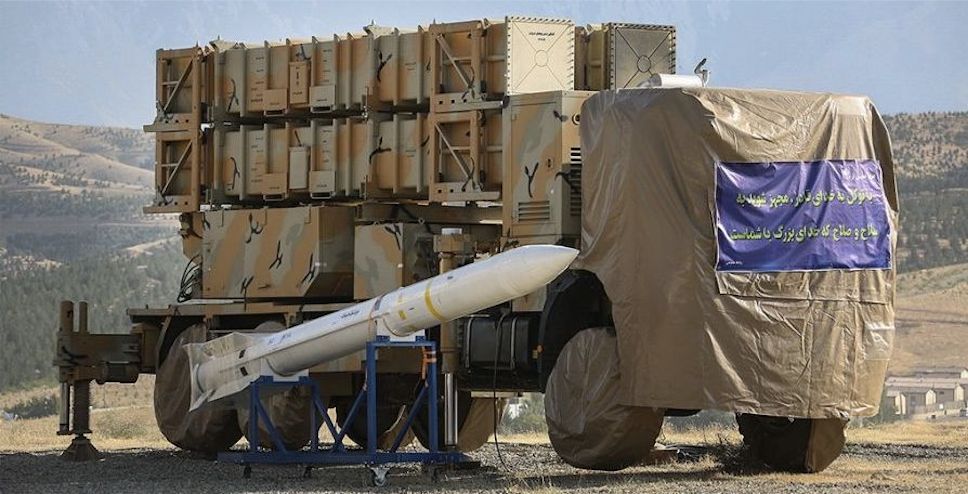
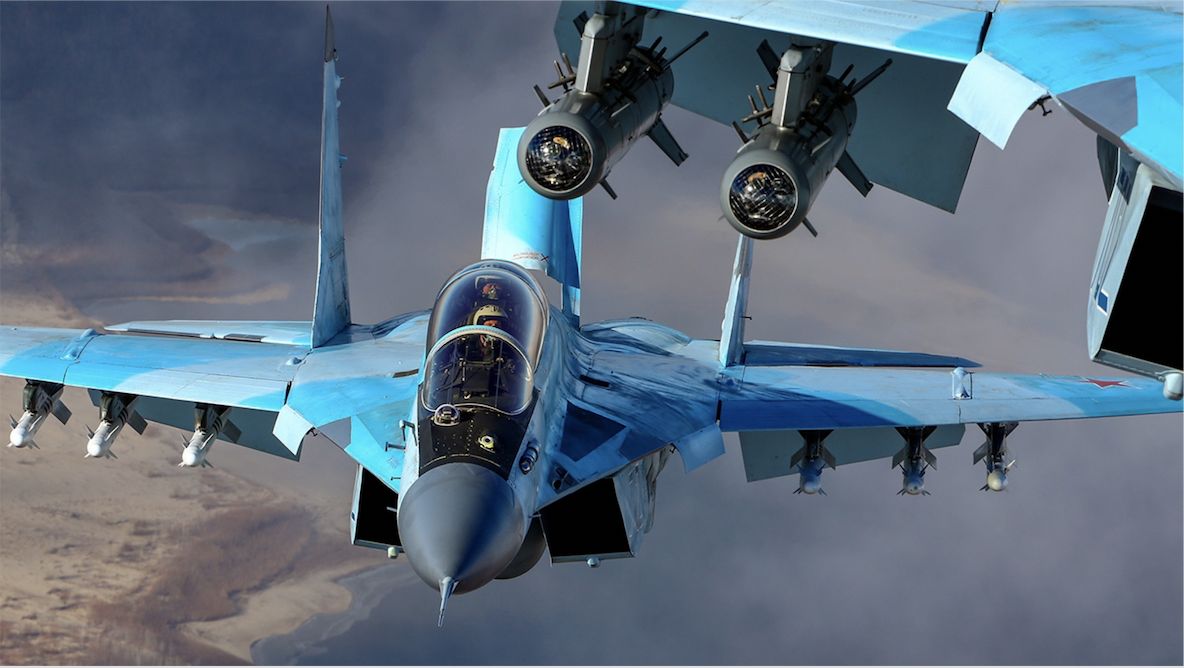
Acquisitions of higher end missiles, radars and aircraft capable of strengthening Iran’s air defence capabilities have long been speculated, with Iranian military sources indicating the possibility of a large acquisition of high end Russian fighter jets. Alongside, the S-400 system, these could potentially include the Su-30 or Su-35 air superiority fighters or the lighter MiG-35 multirole combat jets. Some analysts have even speculated that Iran could show interest in acquiring Su-57 fifth generation air superiority fighters from Russia - currently the most capable combat jets available for export anywhere in the world. Whether Tehran will be willing to allow for an expansion of its defence budget to facilitate such acquisitions remains to be seen - but remains a possibility given the fast growing deployments of Western and allied air units to the region. The U.S. alone has deployed multiple fighter squadrons - including five F-18E Super Hornet squadrons and a squadron each of the F-15E, F-15C and F-35 to the Persian Gulf region in recent months - alongside four B-52H heavy bombers. These are augmented by multiple F-15, F-16, F-35 and Eurofighter squadrons deployed by Saudi Arabia, the United Arab Emirates and Israel - Western aligned states expected to participate in a potential conflict with Iran. Only two of the Iranian Air Force's fighter squadrons are currently equipped with modern air to air missiles, while its air defence capabilities leave much to be desired given the scale of the threat. Furthermore, Iran lacks any airborne warning and control system (AWACS) squadrons - a valuable force multiplier deployed by the U.S. and its regional allies. North Korea, Russia and China all field indigenous AWACS platforms - and may be sought out to provide these to Iran's armed forces.
Regarding the potential for Russian mediation of dialogue with the United States over the Joint Comprehensive Plan of Action (JCPOA), secretary Shamkhani stated: "Mediation is out of question in the current situation. The United States has unilaterally withdrawn from the JCPOA, it has flouted its obligations and it has introduced illegal sanctions against Iran. The United States should return to the starting point and correct its own mistakes. This process needs no mediation.” He further elaborated that, in response to the unilateral American withdrawal from the nuclear agreement, Iran would continue to incrementally incase its uranium enrichment and heavy water production beyond the levels outlined in JCPOA until the United States ended its own violation and returned to compliance.
