
American Phantoms After 60 Years In Service: F-4s to Remain Operational Throughout the 2020s
Military Watch Magazine Editorial Staff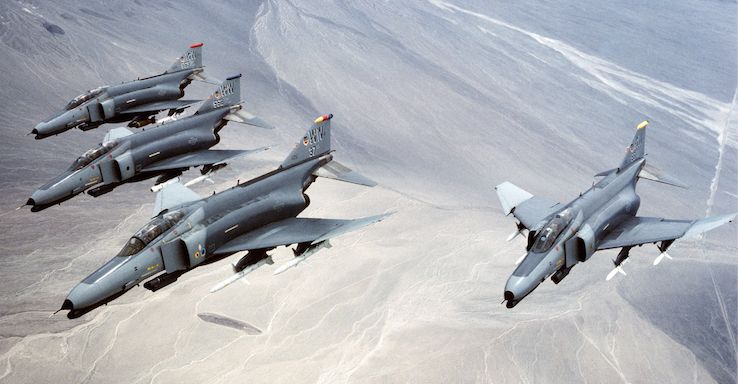
F-4 Phantom Air Superiority Fighters
The American F-4 Phantom first entered service in 1960 as a high speed high altitude interceptor designed to operate at long ranges and protect the U.S. mainland from Soviet heavy bombers such as the Tu-95. The aircraft were equipped with no cannon, but were among the first to deploy beyond visual range radar guided air to air missiles intended to target such bombers. Shortcomings in other American fighter jets such as the F-104 and F-86 against Soviet fighters such as the MiG-21 and MiG-15 led the F-4 to be pressed into service as an air superiority fighter, and while the aircraft found itself outmanoeuvred and took significant losses in the early years of the Vietnam War it was the best that American aviation had to offer its Air Force at the time. The design was thus refined throughout the 1960s, so that by the middle of the decade advanced variants with superior sensors and manoeuvrability and a cannon were developed as viable air superiority fighters - namely the F-4D and F-4E.
Although the Phantom’s role transformed from an interceptor to a high end fighter, later variants would inherit the original speed, altitude and endurance which allowed them to outperform all other Western fighters of their generation - and even many of the fourth generation that would follow. While the Phantom’s subsystems were less sophisticated, compared to the F-16 Fighting Falcon which would form the mainstay of the American fleet in the subsequent generation, it could carry a heavier radar, was faster and could fly considerably higher. The Phantom was surpassed by more modern Western fighters from the mid 1970s, namely the heavier F-14 and F-15, but it would continue to play an important role in the U.S. Air Force and in allied services for the remainder of the Cold War with approximately 600 fully active in American service alone when the Soviet Union collapsed in 1991.
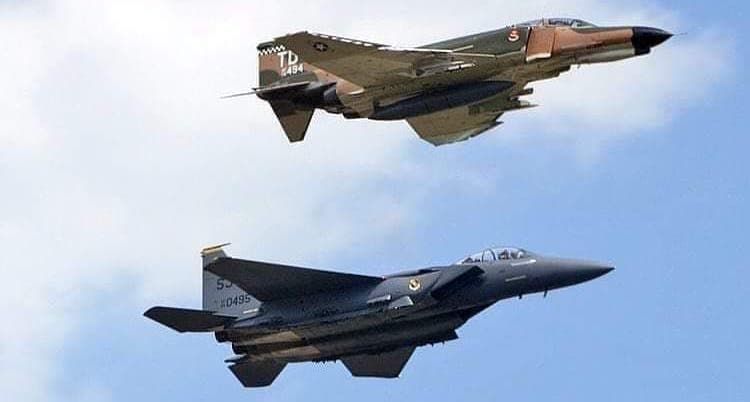
The end of the Cold War accelerated the retirement of the F-4 from American service, with the Air Force quickly contracting and even the more modern F-14 and F-15 jets being retired in their hundreds. Following their retirement from frontline service, many Phantoms repurposed as disposable QF-4 target drones to test new anti aircraft weapons. Others remain in storage today, and can be returned to the frontlines in the event of a major war. Outside American service however, the Phantoms would remain in service in other states and may well stay active throughout the 2020s. In Germany the aircraft would remain operational until the mid 2000s, and would be equipped with AIM-120B air to air missiles and modernised subsystems allowing them to contend in beyond visual range combat against fourth generation fighters. Similar upgrades were applied in the Greek Air Force, which continues to field the F-4 in frontline service. Perhaps the most impressive upgrade program however was that developed in Israel, albeit at great cost, which included reducing the weight of the aircraft substantially and replacing the fighter’s J79 turbofan with a PW1120 turbofan. This provided a drastically increased range, a 27% boost to its sustained turn rate at medium altitudes and manoeuvrability comparable to that of fourth generation fighters - compensation for a longstanding weakness in the design. New electronic warfare systems and sensors were also planned, but ultimately the Israeli ‘Super Phantom’ program was cancelled due to budgetary constraints and the aircraft was subsequently retired.
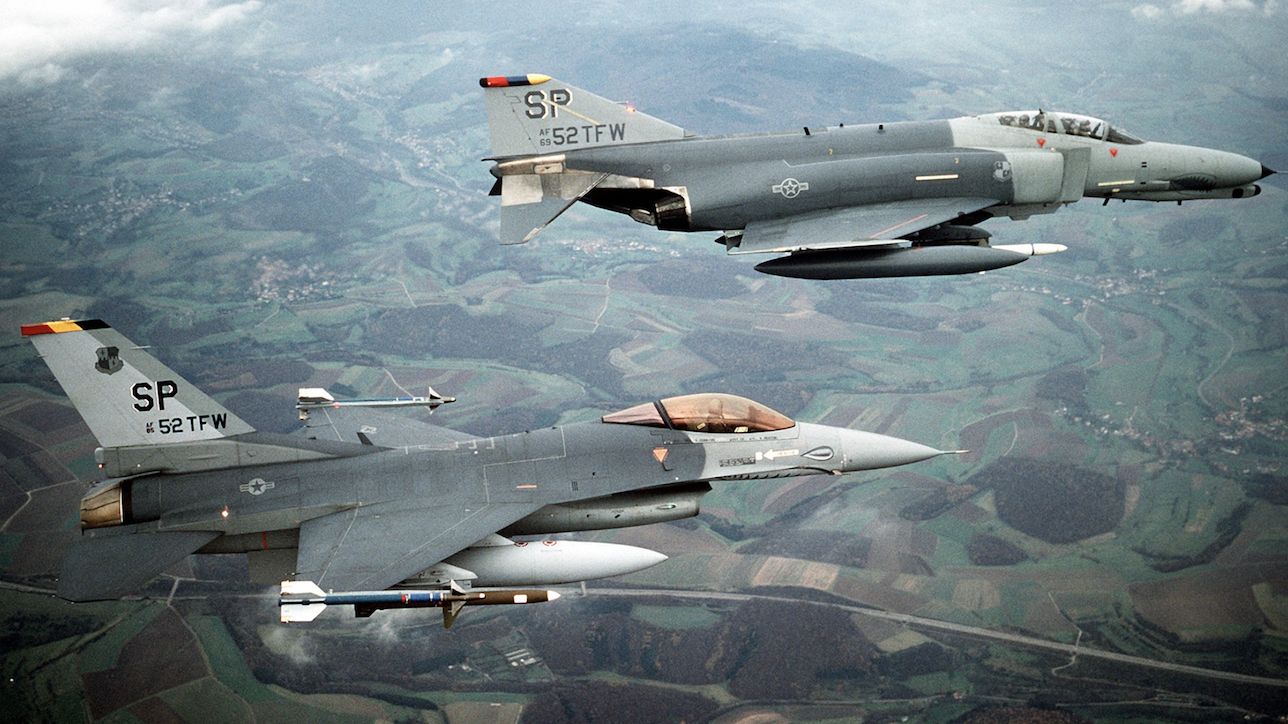
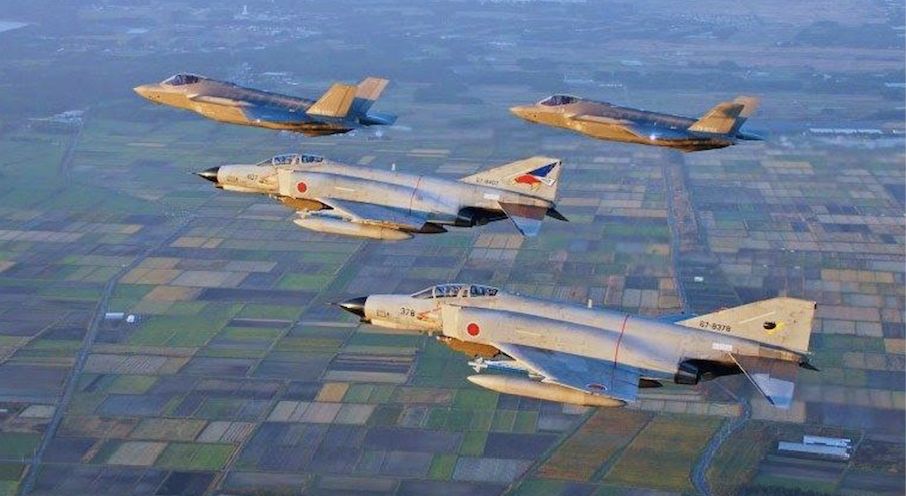
Another major operator of the F-4 throughout the 2010s was the Japanese Air Force, which deployed three squadrons alongside the newer and heavier F-15 Eagle and the lighter single engine F-2. The aircraft have begun to be phased out of service from 2018 and replaced with the F-35A - of which Japan plans to field over 100. Upgrades to the fighters in Japanese service were limited, and they continued to operate the ageing AIM-7 Sparrow missiles until their retirement. It is unclear how long the Japanese Air Force intends to retain the RF-4, a reconnaissance variant of the Phantom currently forming a single squadron, in frontline service. Like Japan, Turkey similarly planned to replace the F-4 with the F-35 in the early 2020s. Turkey's Air Force retains a single squadron in service primarily for a ground attack role and further aircraft for reconnaissance duties, although the country’s eviction from the program means these could be replaced by heavier twin engine jets such as the Russian Su-35. Egypt also retired its F-4 Phantoms, reportedly in 2018, with the ageing fighters replaced by advanced medium weight fourth generation fighters - French Rafale and Russian MiG-29M twin engine jets.
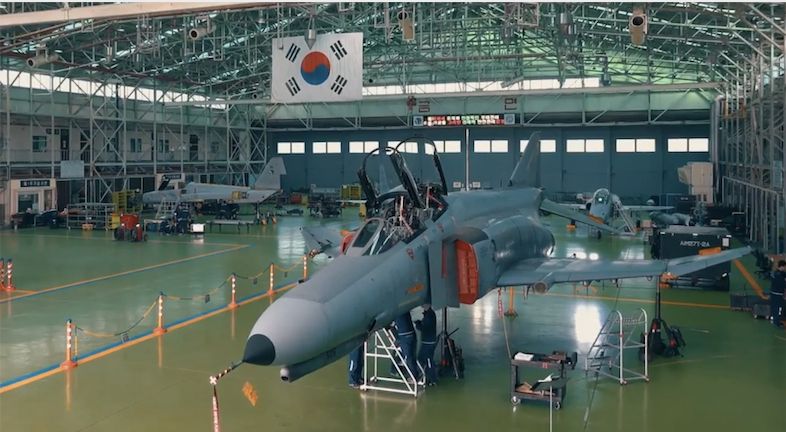
The F-4E remains among the most widely deployed fighters in the South Korean Air Force, other than the F-16 Fighting Flacon and F-5E Tiger II, with 60 Phantoms currently in service in three squadrons which between them form over 10% of the country's vast overall fighter fleet. With over 230 third generation Phantoms and Tigers in service, South Korea's large F-35 acquisition contracts and indigenous manufacturing of the F-50 light fighter are unlikely to be sufficient to phase them completely out of service while retaining the same fleet size for the foreseeable future. The Phantoms may well remain in service until the mid-late 2020s when the KF-X indigenous fifth generation stealth fighter enters service, which is expected to be produced in sufficient numbers to phase all third generation fighters and a good portion of the F-16 fourth generation fighters out of service.
Other than the Greek Air Force, which remains poorly placed to replace the F-4 with more modern fighters such as the F-35 or Rafale, the only service which is likely to operate the F-4 in a frontline combat role through the 2020s is the Iranian Air Force. The collapse of the Pahlavi dynasty in 1979 scuppered plans to replace the very large Iranian fleet of F-5E, F-4D and F-4E third generation fighters with next generation F-16 and F-14 jets. The Phantom thus continues to form the mainstay of the country’s fighter fleet to this day, although Iran was previously set too be the largest foreign operator of the F-16 with plans to order over 300. Iran is by far the largest operator of the F-4 with five squadrons and an additional reconnaissance squadron in service totalling over 70 aircraft. Phantoms in Iranian service have been modernised considerably, equipped with updated sensors and electronic warfare systems and with indigenous derivative of the AIM-7 Sparrow with improved electronic warfare countermeasures. Iran's Phantom fleet have seen more years of combat than any other, and formed the mainstay of the country's' fleet during the Iran-Iraq War.
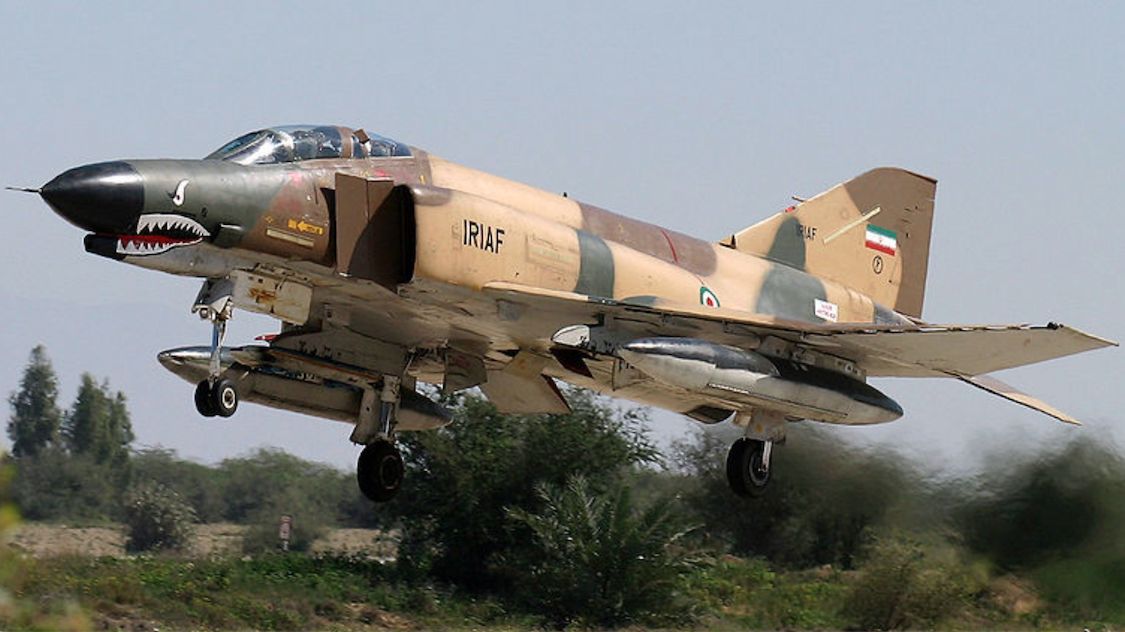
A significant portion of the Iranian fleet are relied on for a maritime strike role and have been equipped with modern cruise missiles such as the Nasr and Qader. These platforms are derivatives of the Chinese C-704 and C-802 respectively and are capable of threatening enemy warships at ranges of 35km and 200km. Indigenous derivatives of the AIM-7 have also been developed, and reportedly exceed the performance of the original Vietnam War era missiles. There remains a significant possibly that Iran will be unable to purchase sufficient numbers of modern aircraft in the near future to phase out its older third generation fighters, although smaller acquisitions to replace part of the fleet are likely from the early 2020s. Although the country’s indigenous Kowsar fighter was hailed as revolutionary by domestic media when it entered serial production in early 2019, the scale of production remains extremely limited. While Iran’s Phantoms may be phased out of an air to air combat role if the country succeeds in acquiring modern jets from abroad, most likely from Russia, they are likely to remain operational in strike and maritime strike roles for the foreseeable future where their high speeds and altitudes, long ranges and relatively high sortie rate and low operational costs make them ideal.
