
Terminator 2020; Why the F-4 Phantom is Still Turkey’s Fastest, Highest Flying and Most Heavily Armed Fighter Jet
Military Watch Magazine Editorial Staff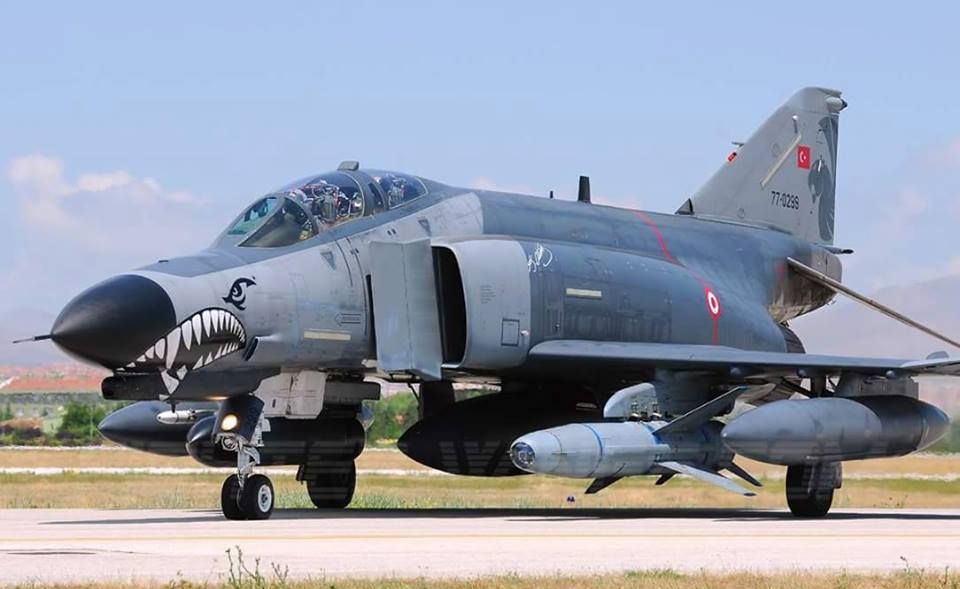
Turkish Air Force F-5 Phantom
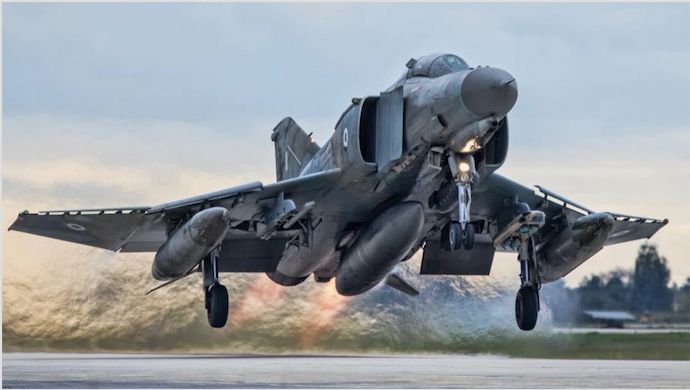
In service since 1960, the McDonnell Douglas F-4 Phantom II would come to set the standard for third generation military aviation and would serve as America’s prime fighter jet throughout the Vietnam War in the Navy, Air Force and Marines. The F-4 was designed as a high performance twin engine heavy fighter, fulfilling a complementary role to the lighter F-5 Tiger II, and the Phantom’s export was restricted to high level U.S. defence clients such as Japan, West Germany, Iran and Israel. Lower tier allies such as Singapore and South Vietnam were forced to rely on the lighter and less capable F-5. The F-4 still remains in service with a number of operators today, and has been heavily modernised to keep it viable in modern aerial warfare. Japan, Iran, Egypt, South Korea, Greece and Turkey remain the platform’s only operators today, almost sixty years after it first entered service, while Germany reportedly retains a vast reserve fleet of the fighters. Although most F-4 operators have since the Cold War era acquired more advanced fighter jets capable of better fulfilling the same role of an elite heavy fighter, in most cases the F-14 or F-15 fourth generation air superiority platforms which replaced the Phantom in American service in the 1970s, in the Turkish Air Force the F-4 still remains the only heavy fighter in service.
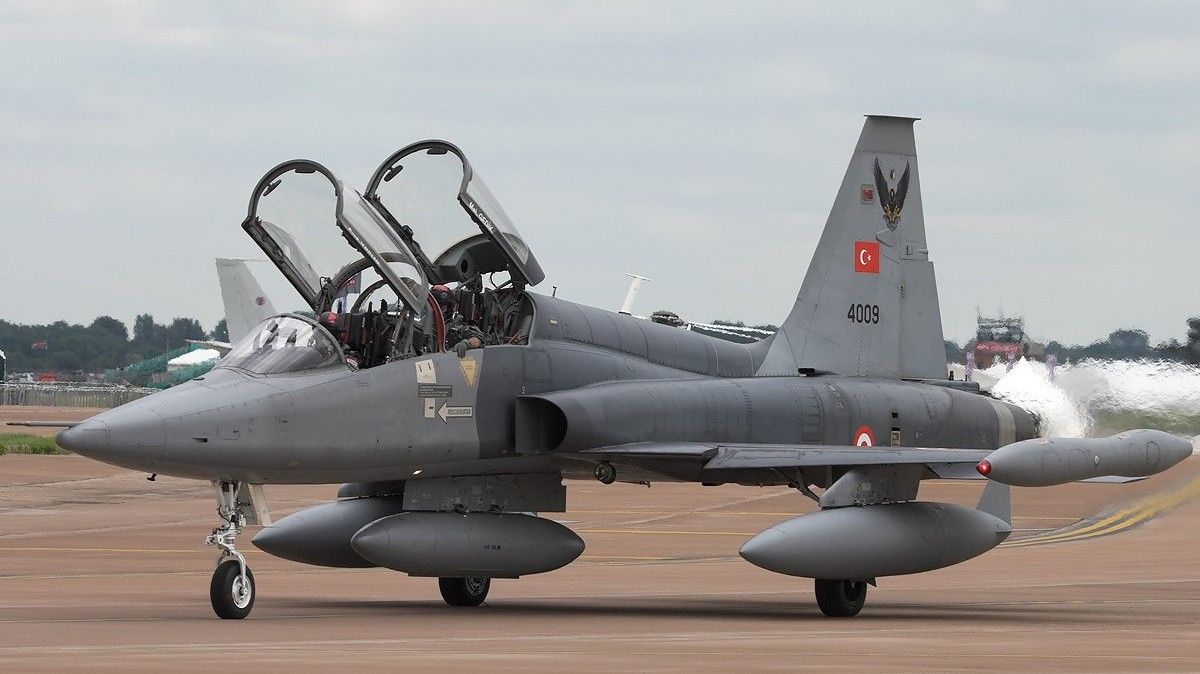
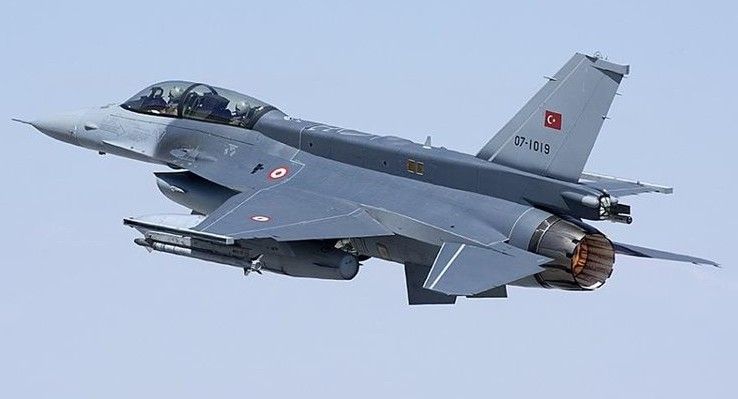
Turkey has taken steps to upgrade its fleet of light multirole fighters, replacing most of its fleet of over 200 F-5 aircraft with almost 250 F-16 single engine light platforms while retaining a small contingent of the F-5 in a supporting role. However, the Turkish Air Force has yet to acquire a replacement with comparable capabilities to the F-4. Turkey never took steps to acquire fourth generation heavy air superiority platforms such as the F-14 or F-15, and acquiring the fifth generation F-22 from the United Stats remains effectively impossible. With the coming of the F-35, the fifth generation successor to both the F-5 and the F-16, the Turkish light fighter fleet will have undergone two generations of upgrades wile still relying on third generation platforms for dedicated air superiority. Turkey’s Air Force modernisation has thus been highly unusual and imbalanced, and the Turkish Phantom fleet remains critical to the country’s aerial warfare capabilities and appears likely to continue to fly alongside the F-16 and the F-35 for some years to come.
While the F-16 and F-35 were designed decades after the F-4, as a high end air superiority platform the Phantom retains some significant capability advantages over the lighter platforms which make it an invaluable asset to the Turkish Air Force. The Phantom’s operational altitude is significantly higher than either the F-16 or the F-35, both of which are restricted to altitudes of little over 15km where the F-4 can operate at altitudes of 18km. This provides the Phantom with a significantly greater degree of survivability in air to air combat as well as when operating against enemy air defences. The F-4 is also considerably faster than the F-35, which restricted to speeds of Mach 1.6 is the slowest modern fighter in service, or the F-16 which retains a Mach 2 speed, with the Phantom able to engage adversaries at Mach 2.23 - one of the fastest Western fighters ever built. The Phantom also carries a heavier payload than its lighter counterparts, and due to its higher speed can impart more energy to the missiles it deploys than either the F-16 or the F-35 can.
The sole remaining F-4 squadron operated by the Turkish Air Force today have been extensively upgraded to give them capabilities comparable to early variants of the F-15, in many ways more capable than the F-16 or F-35 despite the airframe’s age. Turkish Phantoms, upgraded with Israeli assistance, have been designated F-4 Terminator 2020 and are perhaps the most lethal in the world rivalled only by the F-4EJ Kai operated by the Japanese Air Force. The fighters have had 20km of internal wiring replaced by lighter modern systems, reducing their weight by a phenomenal 750kg and thereby significantly enhancing the aircraft’s trust/weight ratio making it more manoeuvrable and better suited to air to air engagements. New attachment fittings allow the Turkish Phantoms to more effectively deploy modern weapons, while modern avionics including the Kaiser EL-OP HUD and HOTAS systems, an advanced EL/M-2032 pulse doppler radar and state of the art Israeli mission computers and navigation equipment have all been added. State of the art electronic warfare pods, targeting pods, and the ability to deploy modern munitions have made Turkey’s Phantoms viable as modern combat platforms. Whether Turkey will acquire new air superiority platforms to replace the F-4 in future, with the Russian Su-57, an analogue to the U.S. F-22, having been named as one possibility by Turkish sources, remains to be seen. Until that time the F-4 will be relied on heavily by the Turkish military to fulfil a complementary role to its ever expanding fleet of light fighters.
